Introduction to Two-Output Photoelectric Sensors
In the realm of industrial automation, precision and reliability are paramount. Photoelectric sensors have long been a cornerstone technology, providing non-contact detection of objects based on the modulation of light. A significant evolution in this field is the development and adoption of two-output photoelectric sensors. These advanced devices incorporate two independent output channels within a single housing, enabling more complex and versatile detection scenarios. Unlike traditional single-output models, they can simultaneously monitor two distinct conditions or control two separate processes, thereby streamlining system architecture and reducing the need for multiple sensor units. This dual-channel capability is particularly valuable in applications requiring synchronized operations, redundancy for safety, or differentiated responses based on object characteristics.
Core Operating Principles and Configurations
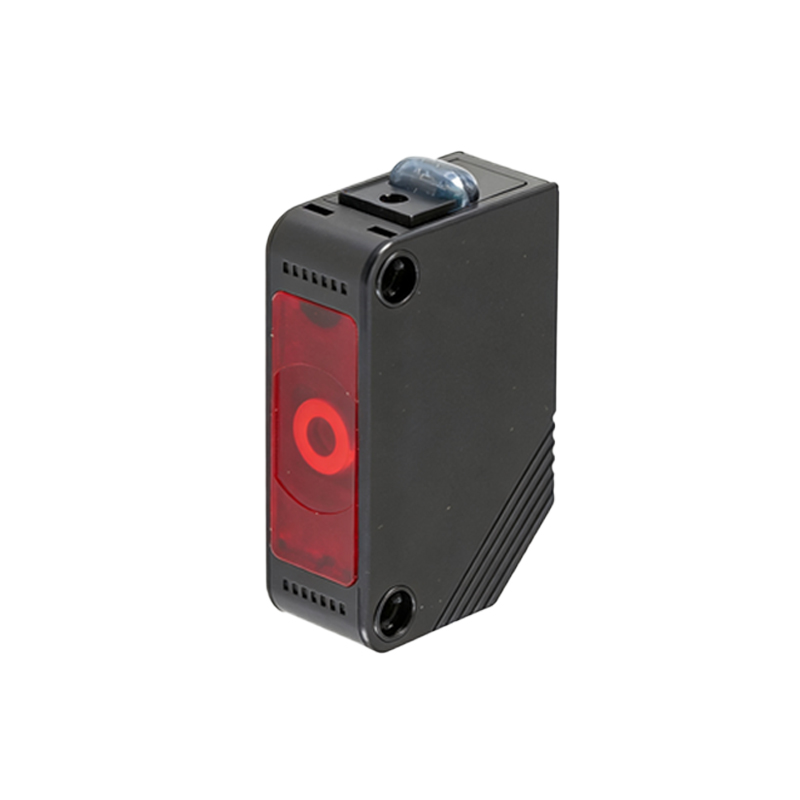
At their heart, two-output photoelectric sensors operate on the same fundamental principles as their standard counterparts: through-beam, retro-reflective, and diffuse (proximity) sensing modes. The critical distinction lies in the internal circuitry and logic. Each output channel can be independently configured, often via teach-in buttons or software interfaces. Common configurations include setting each output to respond to different detection thresholds (e.g., one for "object present" and another for "object absent beyond a certain distance" in a background suppression diffuse sensor), or to differentiate between object properties (like color or material in a color sensor variant). The outputs are typically solid-state (PNP or NPN) or relay-based, providing compatibility with a wide range of PLCs and control systems. This flexibility allows a single sensor to perform tasks that previously required two separate devices.
Key Advantages in Industrial Applications
The benefits of implementing two-output photoelectric sensors are substantial. Firstly, they contribute to space savings and simplified wiring. Installing one dual-output sensor instead of two single-output units reduces mounting points, cable ducts, and connection points, leading to cleaner cabinet layouts and lower installation costs. Secondly, they enhance system synchronization. Since both detection signals originate from the same physical point and sensing element, timing discrepancies are minimized, which is crucial in high-speed sorting, packaging, or assembly lines. Thirdly, they offer built-in diagnostic or redundancy functions. One output can signal the primary process state (e.g., part in position), while the second can provide a window function signal, a fault condition alert, or a redundant safety signal, thereby increasing overall system robustness and uptime.
Typical Use Cases and Industry Examples
Two-output sensors find application across diverse sectors. In material handling and packaging, they are used for precise box positioning; one output triggers a stop signal when a box reaches the correct position on a conveyor, while the second confirms the box height is within tolerance. In automotive assembly, they can verify the presence and correct orientation of two different components simultaneously. In the electronics industry, they facilitate PCB handling by detecting both the board's presence and its specific type or color-coded marker. Another prominent use is in edge detection on web materials (like paper or film), where one output tracks the material's leading edge to start a process, and the other monitors the trailing edge to stop it, all with millisecond precision from a single sensing head.
Selection Criteria and Integration Considerations
Choosing the right two-output photoelectric sensor requires careful analysis. Engineers must first define the sensing mode (through-beam for long range, diffuse for proximity) based on the application environment and target object. The sensing range, light source (typically red LED, laser for precision, or infrared for discretion), and response time must match process speed requirements. The output type (e.g., two PNP normally open, or one PNP and one NPN) must be compatible with the controller's input cards. Environmental factors like IP rating for dust/water resistance, temperature range, and resistance to ambient light interference are critical. Furthermore, features like adjustable sensing windows, time delays, and logic functions (AND/OR) for the outputs can provide additional control flexibility, making integration into complex PLC programs more efficient.
Future Trends and Technological Developments
The future of two-output photoelectric sensors is intertwined with Industry 4.0 and the Industrial Internet of Things (IIoT). Next-generation models are increasingly incorporating IO-Link communication, transforming them into smart sensors. Through IO-Link, not only can both output states be transmitted, but a wealth of parameter data (like signal strength, internal temperature, and operating hours) can be monitored remotely, enabling predictive maintenance. Furthermore, advancements in miniaturization and laser technology are allowing for more compact designs with even higher precision and faster response times. Integration with AI-based vision systems is also on the horizon, where the sensor's dual outputs could be driven by simple image analysis algorithms processed locally, blurring the lines between traditional photoelectric sensors and compact vision sensors.