Introduction to Sensing Technologies
In the realm of industrial automation and electronic control systems, sensors act as the critical interface between the physical world and digital control logic. Among the vast array of sensing solutions, photoelectric sensors and distance sensors are two fundamental categories frequently employed for detection and measurement tasks. While their end goals—gathering environmental data—may seem similar, their underlying operating principles, performance characteristics, and ideal applications differ significantly. Understanding these distinctions is paramount for engineers and system integrators to select the optimal sensor for a given task, ensuring reliability, accuracy, and cost-effectiveness in any automated system.
Fundamental Operating Principles
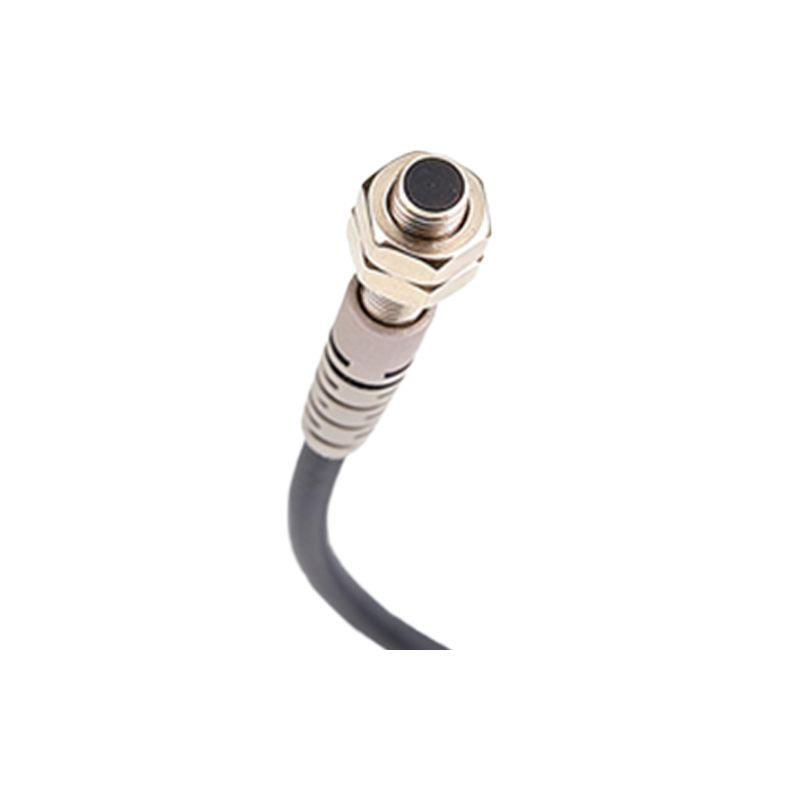
The core distinction lies in their method of operation. A photoelectric sensor fundamentally operates by utilizing a light source, typically an LED or laser diode, and a photoreceiver. It detects the presence, absence, or characteristics of an object based on the modulation of a light beam. This modulation can occur through through-beam (beam break), retro-reflective, or diffuse (proximity) modes. The output is typically a simple digital signal indicating an object is detected or not. In contrast, a distance sensor, specifically those like ultrasonic or laser distance sensors, is designed to measure the precise physical gap between the sensor and a target. It does this by emitting a signal (sound waves or laser light), measuring the time-of-flight or phase shift for the signal to reflect back, and calculating the distance based on the known speed of the signal. The output is an analog value or digital data representing a specific distance measurement.
Primary Function and Output
This leads to a clear functional difference. Photoelectric sensors are primarily binary presence detectors. They answer the question: "Is an object there or not?" or sometimes "Is the object transparent/opaque or of a certain color?" Their output is usually a simple switch signal (ON/OFF). Distance sensors, however, are analog measuring devices. They answer the question: "How far away is the object?" Their output is a continuous value representing distance, such as 4-20 mA, 0-10 V, or a digital value over a communication protocol like IO-Link or RS-485. Some advanced photoelectric sensors with background suppression or analog output can provide rudimentary distance information, but their primary design and optimization are for reliable detection, not precision measurement.
Key Performance Characteristics
Performance parameters highlight their specialized roles. For photoelectric sensors, critical specs include sensing range, response time, light source type (red, green, infrared, laser), and environmental resistance (to dust, water, or ambient light). They excel in high-speed detection, with response times in microseconds, and can detect very small or transparent objects. Distance sensors are characterized by measuring range, resolution, linearity, accuracy, and repeatability. Their response time is often slower due to the measurement cycle. Laser distance sensors offer very high accuracy and resolution, while ultrasonic sensors are more robust for challenging environments with dust, mist, or varying surface colors, which can severely affect standard photoelectric sensors.
Typical Applications in Industry
Application areas further differentiate them. Photoelectric sensors are ubiquitous in production lines for object counting, bottle cap detection, label verification, breakage detection, and position verification on high-speed conveyors. They are the workhorses for simple pass/fail checks. Distance sensors find their niche in applications requiring precise spatial information. This includes measuring coil diameter, controlling robot arm positioning, monitoring fill levels in tanks (non-contact), checking part dimensions, and guiding automated guided vehicles (AGVs). Here, the exact distance value is crucial for process control.
Environmental Considerations and Limitations
Both sensor types face environmental challenges, but of different natures. Photoelectric sensors can be impaired by highly reflective or absorbent surfaces, ambient light interference, fog, dust, and dirt on the lens. Through-beam types require precise alignment. Distance sensors also have limitations; ultrasonic sensors can be affected by temperature gradients, wind, and extremely soft materials that absorb sound. Laser-based distance sensors may struggle with transparent objects or shiny surfaces that cause specular reflection, leading to measurement errors. The choice often depends on which environmental factor is most prevalent in the application.
Cost and Integration Complexity
Generally, standard photoelectric sensors are lower in cost and simpler to integrate, requiring basic wiring for power and a switched output. Configurable or specialized variants (e.g., color sensors) increase the cost. Distance sensors, due to their more complex internal circuitry for signal processing and measurement, are typically more expensive. Their integration can also be more complex, often requiring parameter setting for measurement windows, scaling of analog outputs, or configuration via software tools to communicate digital values, adding to the system design overhead.
Conclusion and Selection Guidance
In summary, the choice between a photoelectric sensor and a distance sensor is fundamentally driven by the application requirement. Select a photoelectric sensor when the need is for high-speed, reliable detection of presence/absence, or basic object feature recognition. Opt for a distance sensor when precise, quantitative measurement of the gap to a target is required for control or monitoring purposes. In some advanced systems, they may even be used complementarily—a photoelectric sensor triggers a measurement cycle on a distance sensor. By carefully analyzing the parameters of range, accuracy, environmental conditions, required output, and budget, engineers can leverage the strengths of each technology to build robust and efficient automated systems.