Introduction to Proximity Sensing Technology
Proximity sensors are fundamental components in modern industrial automation, providing non-contact detection and precise position measurement of target objects. These devices operate by emitting an electromagnetic field or a beam of electromagnetic radiation and detecting changes in the field or return signal. The primary advantage lies in their ability to function without physical contact, eliminating mechanical wear and enabling high-speed, reliable operation in harsh environments filled with dust, oil, or moisture. Common types include inductive sensors for metallic objects, capacitive sensors for both metallic and non-metallic materials, ultrasonic sensors for distance measurement, and photoelectric sensors using light beams. The selection of the appropriate sensor type is the critical first step in any position measurement application, directly impacting accuracy, repeatability, and system robustness.
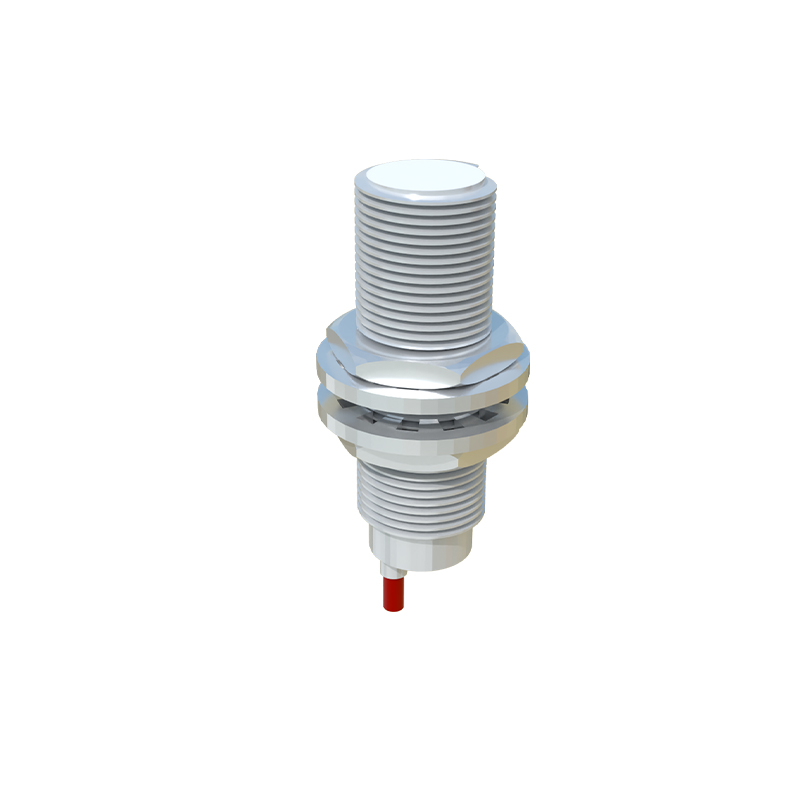
Inductive Proximity Sensors for Metallic Targets
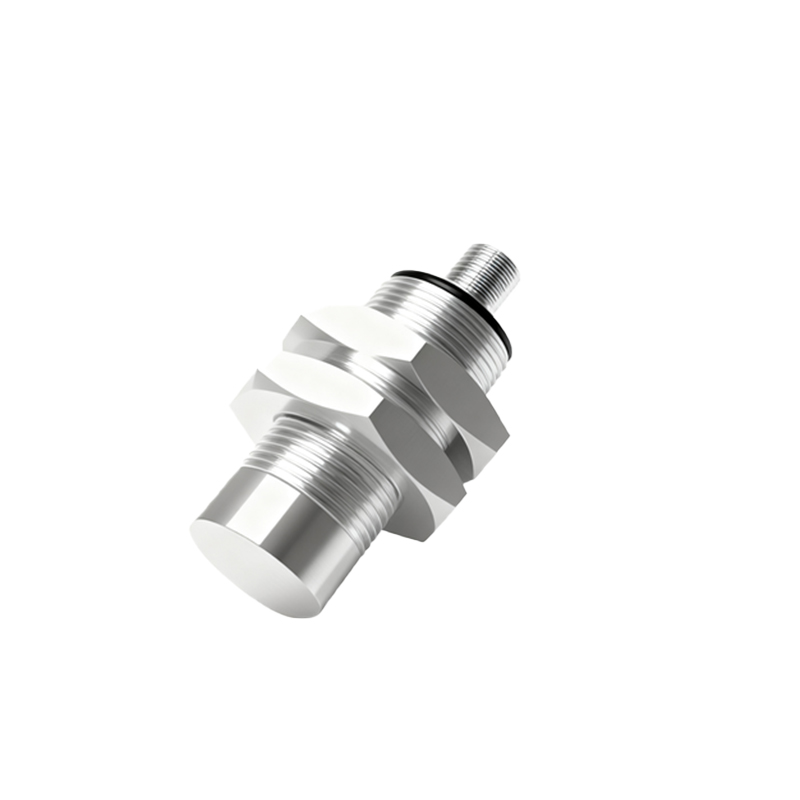
Inductive proximity sensors are the workhorses for detecting ferrous and non-ferrous metals. They generate an oscillating electromagnetic field from a coil in the sensor face. When a metallic target enters this field, eddy currents are induced in the target, which dampens the oscillation amplitude. The sensor's internal circuit detects this damping and triggers a switching output. For position measurement, these sensors are often used in binary applications—detecting whether an object is present or absent at a specific point, such as in end-of-travel limit switches on a linear actuator or confirming the position of a robotic arm. While primarily on/off devices, specialized analog inductive sensors provide a continuous voltage or current output proportional to the distance to the target, useful for measuring small gaps or monitoring wear.
Capacitive Proximity Sensors and Material Detection
Capacitive sensors function by generating an electrostatic field. They can detect virtually any material, including metals, plastics, glass, wood, and liquids, by sensing changes in capacitance. The sensor and the target act as two plates of a capacitor. As the target approaches, the capacitance increases until it reaches a threshold that triggers the output. This makes them exceptionally versatile for position measurement tasks involving non-metallic objects. For instance, they can detect the fill level of a liquid in a non-metallic tank by sensing the presence of the liquid at a specific sensor point. They are also used to detect the presence of a product on a conveyor belt made of plastic or to verify the position of a composite panel in an assembly fixture. Sensitivity adjustments allow tuning out unwanted backgrounds, such as the conveyor body itself.
Ultrasonic Sensors for Distance-Based Positioning
Ultrasonic sensors measure position by calculating the time-of-flight of sound waves. The sensor emits high-frequency ultrasonic pulses and listens for the echo reflected from a target. The time interval between emission and reception is directly proportional to the distance. This technology excels at precise, continuous distance measurement over longer ranges than inductive or capacitive sensors, from a few centimeters to several meters. Typical applications include measuring the position of a crane hook, controlling the unwind/rewind diameter of a material roll, or precisely positioning a gantry system. Advanced versions offer analog outputs (4-20 mA or 0-10V) representing the measured distance, or switching outputs at programmable setpoints for multi-position control. They are largely unaffected by target color, transparency, or material, though soft materials may absorb sound waves.
Photoelectric Sensors and Light-Based Methods
Photoelectric sensors use a light emitter (usually LED or laser) and a receiver to detect objects. They offer the longest sensing ranges and highest precision for position measurement among proximity types. There are three main configurations used for positioning: through-beam, retro-reflective, and diffuse. Through-beam sensors, with separate emitter and receiver units, provide the most reliable detection and can be used for precise edge detection or break-to-make positioning on high-speed lines. Diffuse sensors, with emitter and receiver in one housing, detect the reflection from the target itself and are often used for presence detection at a specific point. Specialized background suppression diffuse sensors and laser distance sensors can provide precise, continuous position data by triangulation or time-of-flight measurement of the light pulse, ideal for measuring object height or alignment.
Implementing Position Measurement Systems
Effective position measurement extends beyond selecting a sensor. It involves careful system integration. The mounting of the sensor is crucial; it must be rigid and vibration-free to maintain measurement integrity. The sensing face must be properly aligned with the target's path. For analog sensors providing continuous position feedback, signal conditioning and processing are vital. The analog signal is typically fed into a programmable logic controller (PLC) or a dedicated motion controller, which scales the signal to engineering units (e.g., millimeters). Hysteresis, the difference between the switch-on and switch-off point, must be considered