Introduction to Photoelectric Sensing Technology
Photoelectric sensors represent a cornerstone of modern industrial automation, offering non-contact detection capabilities for a vast array of applications. These devices operate on a simple yet powerful principle: they emit a beam of light, typically from an LED or laser diode, and detect changes in the received light signal caused by the presence, absence, or characteristics of a target object. The core components include an emitter, a receiver, and associated signal processing circuitry. This technology excels in environments where physical contact is undesirable, such as with fragile materials, high-speed production lines, or in sterile conditions. Its versatility allows for the detection of objects irrespective of their material composition—be it metal, plastic, glass, or liquid—provided there is a contrast in light reflectivity or transmissivity. The evolution from basic through-beam sensors to sophisticated background suppression and color recognition models has dramatically expanded their utility across manufacturing, packaging, material handling, and automotive sectors.
Core Operating Principles and Sensing Modes
The functionality of photoelectric sensors is defined by their specific sensing mode, each tailored for different operational challenges. The through-beam, or opposed mode, consists of separate emitter and receiver units placed opposite each other. Detection occurs when the target object interrupts the light beam traveling from the emitter to the receiver. This mode offers the longest sensing range and highest reliability, as it is largely immune to target color, reflectivity, or surface angle. The retro-reflective mode utilizes a single housing containing both emitter and receiver, along with a specialized reflector. The emitted light beam is bounced back by the reflector to the receiver. A target is detected when it breaks this reflected beam. This mode simplifies installation compared to through-beam but requires a clear line of sight to the reflector. Finally, the diffuse reflective, or proximity, mode is the most compact, with emitter and receiver in one unit. It detects objects by measuring the light reflected directly off the target's surface. While highly convenient, its performance is influenced by the target's color, texture, and distance, making advanced models with background suppression crucial for precise positioning.
Advanced Features of Modern Photoelectric Sensors
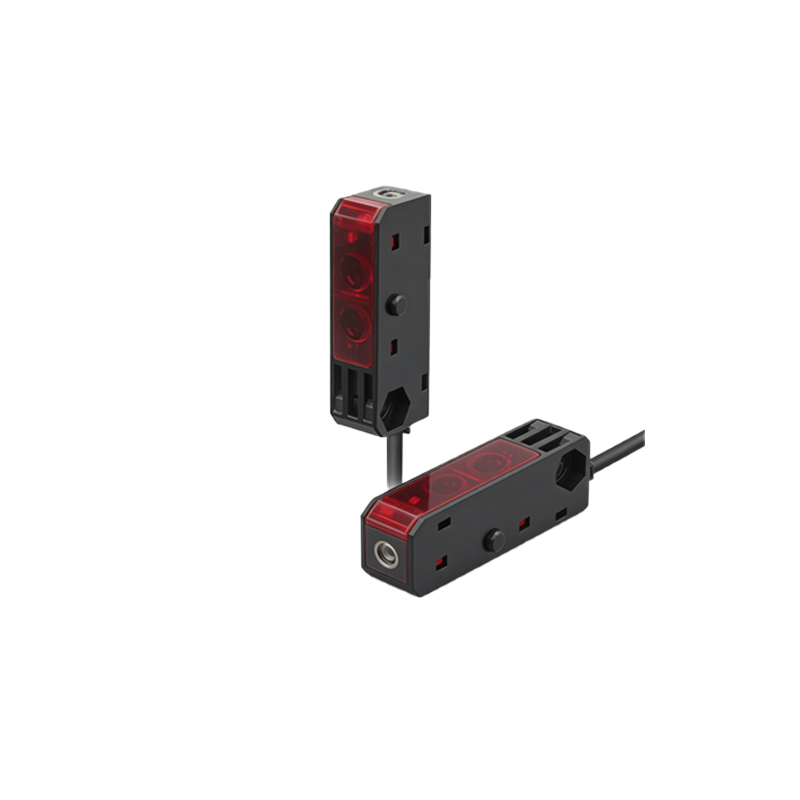
Contemporary photoelectric sensors, such as those developed by ZhiKai, incorporate advanced features that push the boundaries of performance and integration. Background suppression technology is a key innovation, allowing a sensor to ignore objects beyond a preset distance. This is achieved through triangulation principles or specialized receiver arrays, enabling precise detection of an object at a specific "window" regardless of its color or reflectivity. Another significant advancement is the development of sensors with teach-in functionality. This feature allows for quick and easy configuration by simply presenting the sensor to the desired target and background conditions, after which it automatically sets its optimal sensitivity thresholds. Furthermore, the integration of IO-Link communication protocol has revolutionized sensor connectivity. IO-Link provides a point-to-point serial connection that enables bidirectional data exchange, allowing for remote parameter setting, real-time diagnostics, and process data monitoring, seamlessly integrating the sensor into Industry 4.0 and smart factory ecosystems.
ZhiKai's Engineering Excellence and Product Portfolio
ZhiKai has established itself as a prominent provider of photoelectric sensors by focusing on robust engineering, reliability, and application-specific solutions. Their product portfolio is designed to meet the rigorous demands of industrial environments. It encompasses a wide range of models, including miniature sensors for space-constrained installations, heavy-duty sensors with high ingress protection (IP67/IP69K) ratings for washdown and outdoor applications, and specialized sensors for transparent object detection or precise color marking recognition. A hallmark of ZhiKai's design philosophy is the emphasis on environmental resilience. Their sensors are engineered to withstand extreme temperatures, intense vibration, electromagnetic interference, and exposure to dust, oils, and coolants. This durability ensures consistent operation and minimizes downtime in challenging settings like automotive assembly, food and beverage processing, and logistics automation. The company also provides comprehensive technical support, including detailed datasheets, application notes, and configuration software, empowering engineers to select and implement the optimal sensor for their specific task.
Critical Application Scenarios in Industry
The practical applications of ZhiKai photoelectric sensors are vast and critical to operational efficiency. In packaging machinery, they are indispensable for detecting the presence of boxes on a conveyor, verifying label placement, and counting products. Their high-speed response ensures no item is missed even at peak line speeds. Within the automotive industry, these sensors perform precise positioning tasks, such as verifying the correct placement of components on a robotic welding line or detecting the presence of brake fluid in transparent reservoirs on an assembly line. In material handling and logistics, they facilitate automated sorting by detecting parcels based on size or barcode presence, and ensure palletizing robots correctly stack goods. Furthermore, in the food and pharmaceutical sectors, sensors with high hygiene ratings are used to monitor fill levels in bottles, detect missing caps on containers, and ensure proper packaging integrity, all without any physical contact that could contaminate the product.
Selection Criteria and Implementation Best Practices
Selecting the right photoelectric sensor requires a systematic analysis of the application parameters. The primary considerations include the sensing distance required, the physical size and characteristics of the target (color, material, surface finish), the required response speed, and the environmental conditions (ambient light, temperature, contaminants). For instance, a glossy black target at a fixed distance is best detected by a diffuse sensor with background suppression, while detecting a clear glass bottle may require a polarized retro-reflective sensor. During installation, careful alignment is paramount, especially for through-beam and retro-reflective types. Engineers must also consider potential optical interference from other light sources or reflective surfaces nearby. Implementing proper mounting hardware and protective housings can shield the sensor from physical damage and accumulation of debris. Regular maintenance, primarily lens cleaning to prevent false triggers from dust or grime, is essential for long-term, reliable operation. Leveraging smart features like IO-Link can also preemptively alert operators to potential issues like lens contamination or gradual LED output degradation.
The Future Trajectory of Sensing Technology
The future of photoelectric sensing is intrinsically linked to the advancement of the Industrial Internet of Things (IIoT) and intelligent automation. Next-generation sensors will feature enhanced embedded intelligence, moving beyond simple switching to providing rich, contextual data about the process and their own health. We can anticipate greater integration of multi-spectral sensing, combining visible, infrared, and even laser-based measurement in a single device for more complex inspection tasks. Miniaturization will continue, enabling their use in increasingly compact machinery and collaborative robot (cobot) end-effectors. Furthermore, the convergence of photoelectric sensing with other technologies, such as vision systems and RFID, will create hybrid solutions for comprehensive object identification and tracking. As a forward-looking company, ZhiKai is poised to contribute to this evolution, developing sensors that are not only more precise and robust but also smarter and more deeply connected, driving efficiency and innovation in the automated factories of tomorrow.