Understanding the Core Function of Proximity Sensors
Proximity sensors are non-contact electronic devices designed to detect the presence or absence of an object within a defined sensing range without physical contact. They achieve this by emitting an electromagnetic field, beam, or ultrasonic waves and then monitoring for changes in the return signal or field. This fundamental principle makes them indispensable in industrial automation, robotics, automotive systems, and safety applications, where reliable detection is critical for process control, positioning, counting, and end-of-travel monitoring. The absence of mechanical wear and tear due to the non-contact nature significantly enhances their longevity and reliability compared to mechanical limit switches.
Sensing Distance: The Critical Nominal Range
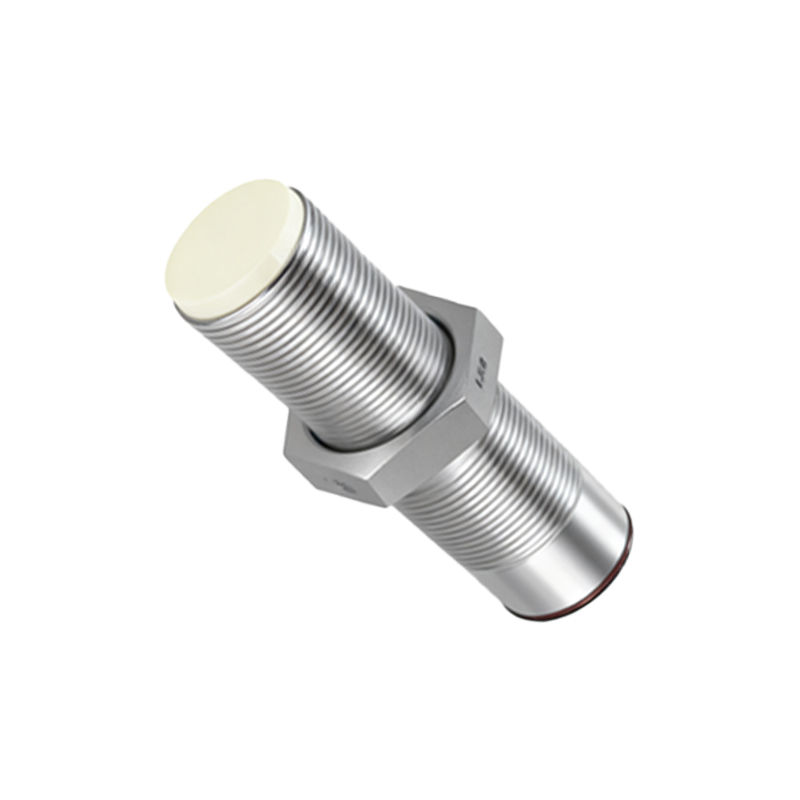
The rated sensing distance, often termed the nominal sensing distance (Sn), is arguably the most critical parameter. It specifies the ideal distance at which a standard target will be reliably detected under defined conditions. It is vital to note that this is a theoretical value. Engineers must always account for operational tolerances, including a reduction factor for different target materials (like stainless steel vs. aluminum) and environmental influences such as temperature drift. Never design a system where the target operates exactly at the nominal distance; a safety factor, typically utilizing 70-80% of Sn, is essential for robust operation. Furthermore, consider the repeat accuracy, which defines how consistently the sensor can detect a target at the same point.
Target Material and Size Influence
The composition and dimensions of the target object directly impact sensor performance. Inductive sensors, for instance, are designed to detect ferrous metals (like iron and steel). Non-ferrous metals (aluminum, copper, brass) and stainless steel have a reduced effective sensing distance, often requiring a correction factor. Capacitive sensors can detect non-metallic materials but are sensitive to environmental changes. The target size must also meet the sensor's minimum requirement; a target smaller than the sensor's active face diameter may not be detected reliably at the full nominal range. Always consult the sensor's datasheet for specific correction factors relative to a standard iron target.
Output Configuration and Electrical Characteristics
Selecting the correct electrical output is fundamental for integration with control systems like PLCs. The primary choices are digital outputs: NPN (sinking) and PNP (sourcing) for DC sensors, and AC/DC configurations. NPN outputs switch the negative (0V) line, common in Asian-designed systems, while PNP outputs switch the positive voltage line, prevalent in Europe and North America. Mismatching these can damage the sensor or controller. Additionally, consider the output type: a simple Normally Open (NO) or Normally Closed (NC) contact, or a complementary pair. The load current rating must not be exceeded, and protection against short-circuits, overloads, and reverse polarity is highly recommended for longevity.
Environmental and Mechanical Durability Factors
The operating environment dictates the required sensor housing and protection ratings. The Ingress Protection (IP) rating (e.g., IP67, IP69K) defines resistance to dust and liquids. For washdown areas in food processing or outdoor use, a high IP rating is mandatory. Temperature range specifications ensure the sensor functions correctly in both ambient and extreme conditions. Resistance to chemicals, oils, and coolants is crucial in machining applications. Mechanically, the housing material (often stainless steel or PBT plastic) and the ability to withstand vibration and shock loads must align with the installation environment. Ignoring these factors leads to premature sensor failure.
Switching Frequency and Response Time
This parameter defines how quickly a sensor can react and is measured in Hertz (Hz) or milliseconds. The switching frequency indicates the maximum number of on/off cycles the sensor can perform per second. For high-speed applications like counting small parts on a fast conveyor or monitoring gear teeth, a sensor with a high switching frequency (e.g., 5 kHz) and fast response time (<0.1 ms) is essential. Using a sensor with a slow response in a high-speed application will result in missed detections and system errors. Always ensure the sensor's response time is an order of magnitude faster than the process requires.
Mounting Considerations and Form Factor
Proximity sensors come in various shapes: cylindrical (threaded barrels), rectangular, and ring-shaped. The choice affects flush or non-flush mounting capabilities. Shielded (flush-mountable) sensors can be installed embedded in metal without affecting their sensing field, offering mechanical protection. Non-shielded (non-flush) sensors have a longer sensing range but require a clear area around the sensing face. The physical dimensions and mounting hardware (nuts, brackets) must be compatible with the machine design.