Proximity sensors are indispensable components in modern automation, robotics, and consumer electronics, silently enabling features from touchless faucets to collision avoidance in machinery. At the heart of their reliable operation lies a critical, yet often overlooked, parameter: the operating current. Understanding this current draw is not merely a technical detail but a fundamental aspect of designing efficient, responsive, and long-lasting systems.
The operating current of a proximity sensor refers to the continuous electrical current it requires from its power supply to function correctly. This current powers the sensor's core circuitry, which typically includes an oscillator, amplifier, signal processor, and output stage. The magnitude of this current is not a fixed value; it is a dynamic characteristic influenced by a confluence of factors intrinsic to the sensor's technology and its application environment.
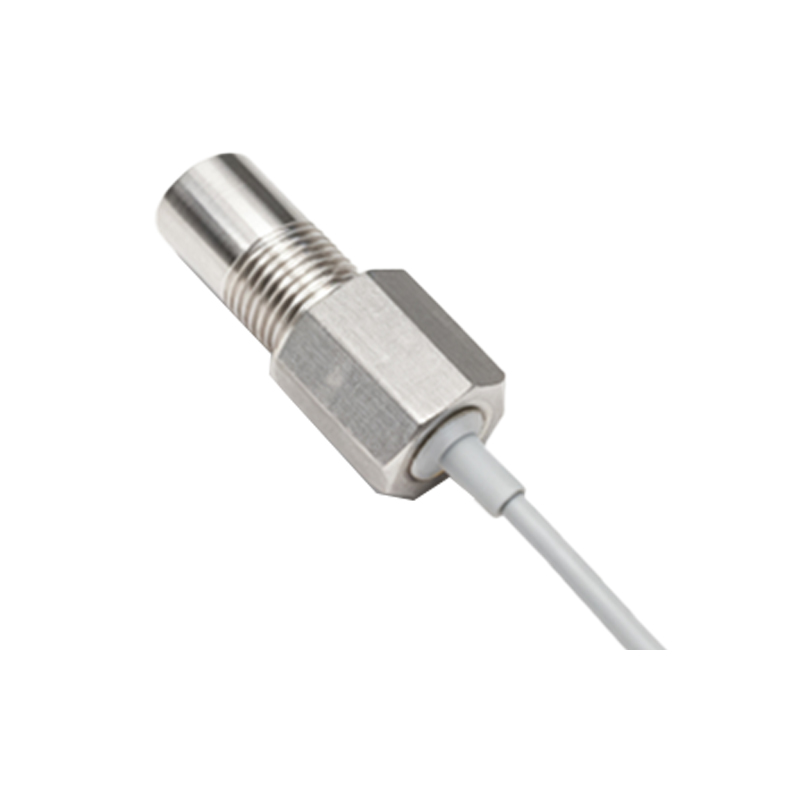
Primarily, the sensing technology dictates the baseline current consumption. Inductive proximity sensors, designed for metallic target detection, generate an electromagnetic field. Their current draw is heavily influenced by the oscillation frequency and coil design, often ranging from 5mA to 20mA in standard models. Capacitive sensors, used for non-metallic materials, measure changes in capacitance and can have similar or slightly higher current ranges depending on their sensitivity settings. Photoelectric sensors, employing LEDs or laser diodes, have a significant portion of their current dedicated to powering the light emitter. Here, current can vary widely, from less than 10mA for modulated infrared types to over 50mA for long-range, high-power visible laser models. Ultrasonic sensors, which generate sound pulses, also exhibit current draws in the 10mA to 30mA range, spiking during pulse transmission.
Beyond the core technology, several key factors cause the operating current to vary. Supply voltage is paramount. Most sensors are designed for a voltage range (e.g., 10-30V DC). While the current may decrease slightly at the lower end of this range due to internal regulation, the relationship is not strictly linear, and datasheet specifications must be consulted. The switching frequency or response time is another major driver. A sensor tasked with detecting objects passing at high speed must process signals more rapidly, often requiring higher internal processing power and thus higher current. Conversely, a sensor in a slow, static application can often operate in a lower-power mode.
Output configuration plays a crucial role. A standard two-wire DC sensor incorporates the switching element directly in the power line, and its current draw includes the load current when active. A three-wire NPN or PNP sensor has separate power and output lines. Its stated operating current is for the sensor electronics alone; the load current on the output switch is additional. Furthermore, built-in features like short-circuit protection, diagnostics (e.g., LED indicators), and analog output circuitry all add to the quiescent current drain.
The physical state of the sensor also affects current. For instance, an inductive sensor's current may increase marginally when a metal target is within its sensing range due to increased eddy current losses in the target, which loads the oscillator circuit. Ambient temperature, too, has an effect; semiconductor leakage currents generally increase with temperature, leading to a slight rise in operating current.
Why does this matter? Optimizing operating current is critical for several reasons. In battery-powered devices—such as wireless sensors, portable instruments, or IoT edge nodes—every milliamp saved directly translates to extended operational life. Designers must balance sensor performance (range, response time) with power budget constraints, sometimes employing pulsed operation modes where the sensor wakes up, takes a measurement, and returns to sleep. In large-scale industrial panels with hundreds of sensors, cumulative current draw determines the sizing of power supplies, wiring, and circuit protection. An undersized power supply can lead to voltage drops, causing sensors to behave erratically or reset.
To manage and optimize operating current, engineers should start with the manufacturer's datasheet, which specifies typical and maximum values under defined conditions. Selecting a sensor with a current rating appropriate for the application's speed and environmental needs is the first step. For power-sensitive designs, consider sensors with programmable modes or those specifically marketed as low-power. In wiring, ensure adequate conductor size to minimize voltage drop, especially over long cable runs, as a lower terminal voltage can sometimes force the sensor to draw more current to maintain internal regulation. Implementing external power management, such as using a microcontroller to gate power to sensors only when needed, can yield significant system-wide savings.
In conclusion, the operating current of a proximity sensor is a vital performance and design parameter. It is a fingerprint of the sensor's technology, capabilities, and operational state. By moving beyond a simple compliance check and developing a nuanced understanding of the factors that influence current draw—from core technology and switching frequency to output type and environment—designers can make informed selections. This knowledge empowers the creation of systems that are not only functionally robust but