Introduction to Flat Photoelectric Sensors
Flat photoelectric sensors, characterized by their slim and compact design, have become indispensable components in the landscape of industrial automation. These devices operate on the fundamental principle of converting light signals into electrical outputs. Typically, they consist of an emitter, which projects a light beam (often infrared, visible red, or laser), and a receiver, which detects the presence or absence of this beam. The "flat" or "thin" form factor is their defining physical attribute, allowing for installation in spaces where conventional bulky sensors would be impractical. This design innovation addresses the growing demand for high-density, space-constrained machinery layouts across various manufacturing and packaging lines. Their versatility in sensing modes—including through-beam, retro-reflective, and diffuse reflective—makes them adaptable to a wide array of detection tasks, from object presence and counting to edge detection and level monitoring.
Core Functions and Operational Advantages
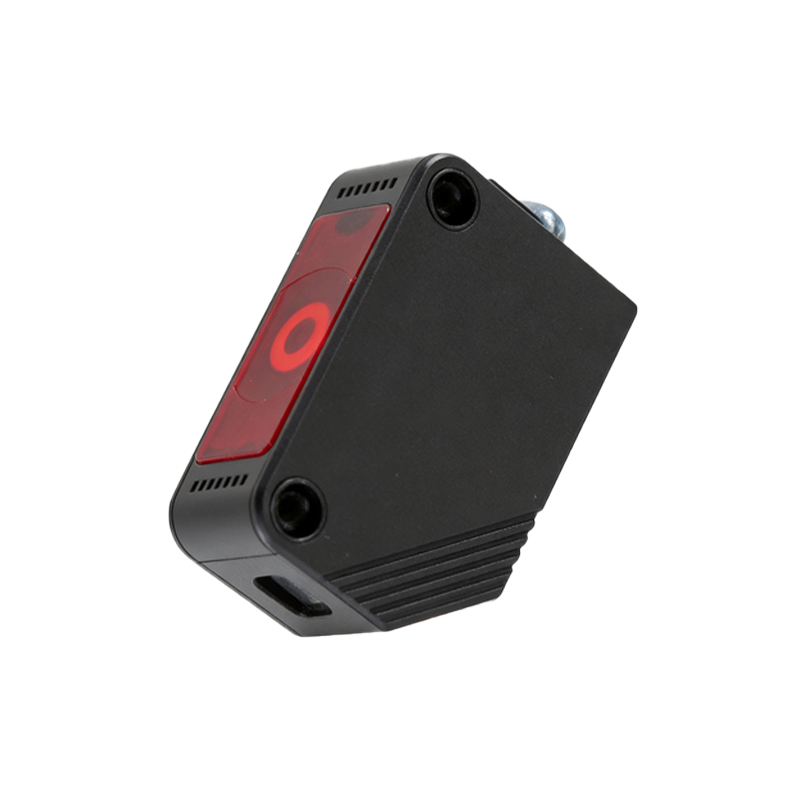
The primary function of a flat photoelectric sensor is reliable object detection without physical contact. This non-contact sensing eliminates mechanical wear and tear, significantly enhancing the sensor's longevity and reducing maintenance needs. The slim profile offers distinct operational advantages. It minimizes the sensor's protrusion into a machine's working area, thereby reducing the risk of collision with moving parts or products. This is particularly crucial in high-speed automation environments where every millimeter counts. Furthermore, the flat design often contributes to improved hygiene, as there are fewer crevices where dust, debris, or liquids can accumulate. This makes them suitable for applications in food and beverage, pharmaceutical, and cleanroom settings where contamination control is paramount. Their ability to detect small, thin, or transparent objects with high precision is another key benefit, enabling quality control processes that were previously challenging.
Key Application Areas in Industry
The application spectrum for flat photoelectric sensors is remarkably broad. In the packaging industry, they are extensively used for detecting the presence of labels, monitoring film webs for tears or breaks, and ensuring precise carton flap positioning. Within automated assembly lines, these sensors verify the correct placement of components, count parts on conveyors, and control robotic arm trajectories by providing precise positional feedback. The electronics manufacturing sector relies on them for PCB board positioning, component insertion verification, and detecting miniature connectors. In material handling, they facilitate edge guiding for webs and films, monitor fill levels in bins or hoppers, and act as safety curtains or light barriers to protect personnel in hazardous areas. Their robust construction often includes ratings for IP67 or higher, allowing reliable operation in environments with dust, moisture, or occasional washdowns.
Technical Considerations for Selection and Integration
Selecting the appropriate flat photoelectric sensor requires careful consideration of several technical parameters. The sensing range, which varies significantly between models, must be matched to the application's distance requirements. The type of light source (e.g., red LED, laser) influences the size of the detectable spot and the sensor's ability to discern fine details or see through certain materials. Response time is critical in high-speed applications to ensure no events are missed. Output configuration (e.g., NPN/PNP, analog, IO-Link) must be compatible with the existing programmable logic controller (PLC) or control system. Environmental factors such as ambient light interference, temperature extremes, and potential exposure to chemicals must also be evaluated. Proper alignment during installation is essential for through-beam and retro-reflective types, and many modern sensors feature built-in alignment indicators (like signal strength LEDs) to simplify this process. Integration often involves connecting to a controller via standard M8 or M12 connectors, emphasizing their plug-and-play capability in modern industrial networks.
Future Trends and Evolving Capabilities
The evolution of flat photoelectric sensors is closely tied to advancements in Industry 4.0 and smart manufacturing. Future trends point toward sensors with enhanced intelligence and connectivity. Integrated IO-Link communication is becoming a standard feature, enabling not just binary detection but also the transmission of detailed diagnostic data, parameter setting from the controller, and process values like signal strength. This facilitates predictive maintenance, as the control system can monitor sensor performance degradation over time. Miniaturization continues to be a driving force, with even thinner sensors entering the market to fit into increasingly compact machinery. There is also a growing focus on developing sensors with exceptional background suppression capabilities, allowing them to ignore reflective backgrounds and reliably detect objects at a precise, fixed distance. As machine vision and simple photoelectric sensing converge, some flat sensors are incorporating advanced functions like color detection or contrast recognition, blurring the lines between traditional sensors and basic vision systems.