Introduction to Photoelectric Sensor Technology
Photoelectric sensors are fundamental components in modern industrial automation, utilizing light beams to detect the presence, absence, or distance of objects. These sensors operate by emitting a light source, typically an LED or laser, and measuring the change in the received light signal. The core principle involves the interaction between light and matter, where an object's presence interrupts, reflects, or refracts the light beam, triggering an electrical output signal. This technology offers non-contact detection, making it ideal for applications involving fragile, hot, or fast-moving objects where physical contact is impractical or damaging. The evolution from basic through-beam sensors to advanced, intelligent models with background suppression and fiber optic capabilities has significantly expanded their utility across diverse sectors, from packaging and material handling to automotive assembly and pharmaceutical production. Their reliability, speed, and versatility form the backbone of countless automated processes, ensuring precision and efficiency.
Current Market Landscape and Key Drivers
The global market for photoelectric sensors is experiencing robust growth, driven primarily by the accelerated adoption of Industry 4.0 and smart factory initiatives. The demand for higher productivity, improved quality control, and reduced operational downtime is pushing manufacturers to integrate more sophisticated sensing solutions. Key market drivers include the proliferation of automated guided vehicles (AGVs) and collaborative robots (cobots), which rely heavily on precise object detection for navigation and operation. Additionally, stringent safety regulations in industries like automotive and food & beverage mandate the use of reliable sensors for machine guarding and process monitoring. The miniaturization of components and the integration of IoT connectivity are also shaping the market, enabling sensors to provide not just detection but also diagnostic data for predictive maintenance. However, challenges such as intense price competition, especially from regional manufacturers, and the complexity of selecting the right sensor for specific environmental conditions (e.g., dust, steam, or ambient light interference) remain significant considerations for end-users and OEMs alike.
Strategic Technological Advancements
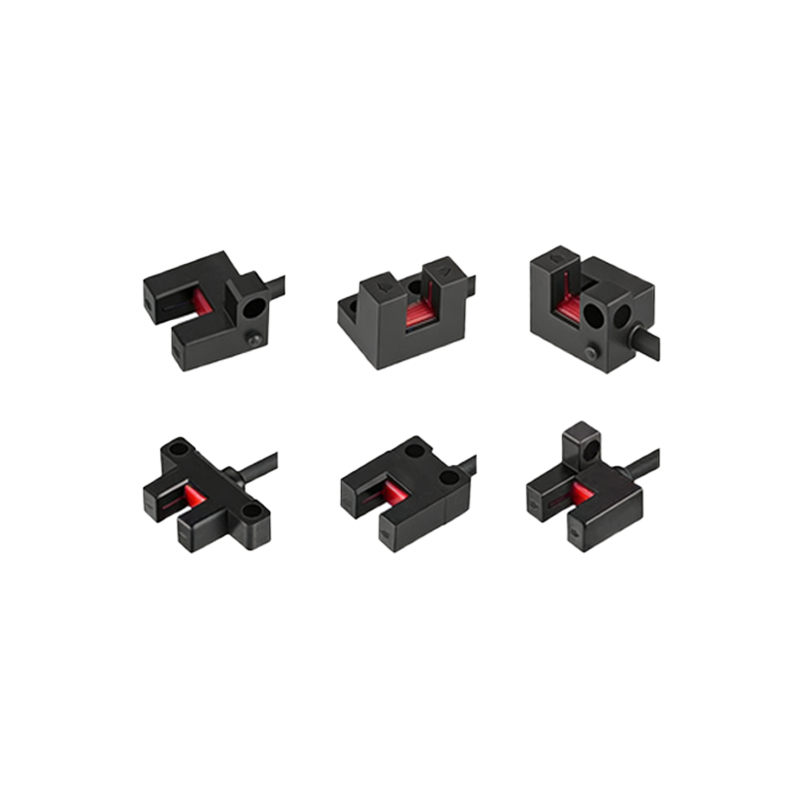
Strategic innovation in photoelectric sensor technology is focused on enhancing intelligence, connectivity, and robustness. The development of sensors with integrated IO-Link communication is a game-changer, allowing for bidirectional data exchange. This enables remote configuration, real-time parameter adjustment, and the transmission of process and diagnostic data directly to control systems, facilitating condition-based monitoring. Another critical advancement is in the area of background suppression and true background suppression (TBS) technology, which allows sensors to ignore irrelevant distant objects and reliably detect targets within a precise, defined range. Furthermore, the use of laser light sources and specialized optics has improved sensing ranges and spot size accuracy, enabling detection of minute objects. For harsh environments, sensors with increased ingress protection (IP) ratings, robust housings, and immunity to electromagnetic interference are becoming standard. The strategic integration of these technologies ensures that photoelectric sensors can meet the demands of increasingly complex and data-driven industrial applications.
Application-Specific Strategies and Solutions
A one-size-fits-all approach is ineffective in the photoelectric sensor domain. Successful implementation requires a strategic, application-specific selection process. For logistics and packaging, diffuse reflective sensors with background suppression are crucial for accurately detecting variably colored and textured packages on high-speed conveyors, regardless of the background. In the automotive industry, through-beam sensors provide highly reliable detection for precise positioning of parts in robotic welding and assembly stations, where failure is not an option. The food and beverage sector demands sensors with hygienic, washdown-ready designs (often stainless steel) that can withstand high-pressure cleaning and corrosive environments while detecting transparent objects like glass or plastic bottles. For electronic assembly, miniature sensors are deployed to detect tiny components on PCBs. Developing a deep understanding of the application's environmental challenges, target object properties, required sensing distance, and response time is paramount for specifying the optimal sensor type—be it through-beam, retro-reflective, diffuse, or a specialized variant.
Future Outlook and Strategic Recommendations
The future of photoelectric sensors is inextricably linked to the broader trends of digitalization and artificial intelligence. We anticipate a stronger convergence of sensing and data analytics, where sensors will not only detect but also classify objects based on simple visual characteristics. The integration of rudimentary vision capabilities or the pairing with compact vision systems will create more versatile hybrid solutions. Energy efficiency will also become a greater focus, with sensors designed for lower power consumption to support battery-operated mobile applications. Strategically, manufacturers must invest in R&D for smarter, more connected, and application-optimized products while providing comprehensive technical support and selection tools to ease customer adoption. For end-users, the strategy should involve partnering with suppliers who offer a broad portfolio and expertise to navigate the selection process, future-proofing installations by choosing sensors with open communication protocols like IO-Link, and investing in training for maintenance personnel to leverage the full diagnostic potential of modern photoelectric sensors, thereby maximizing return on investment and operational resilience.