Introduction to Photoelectric Sensors
Photoelectric sensors are indispensable components in modern industrial automation, offering non-contact detection of objects. These devices operate by emitting a light beam, typically from an LED or laser diode, and detecting changes in the received light intensity caused by the presence, absence, or characteristics of a target object. Their versatility allows for application across diverse environments, from clean rooms to harsh manufacturing floors. The fundamental principle involves the conversion of light signals into electrical outputs, enabling seamless integration with control systems like PLCs. This technology provides a reliable solution for tasks ranging from simple object detection to complex positioning and quality inspection, forming the backbone of efficient, automated processes.
Key Operating Principles and Types
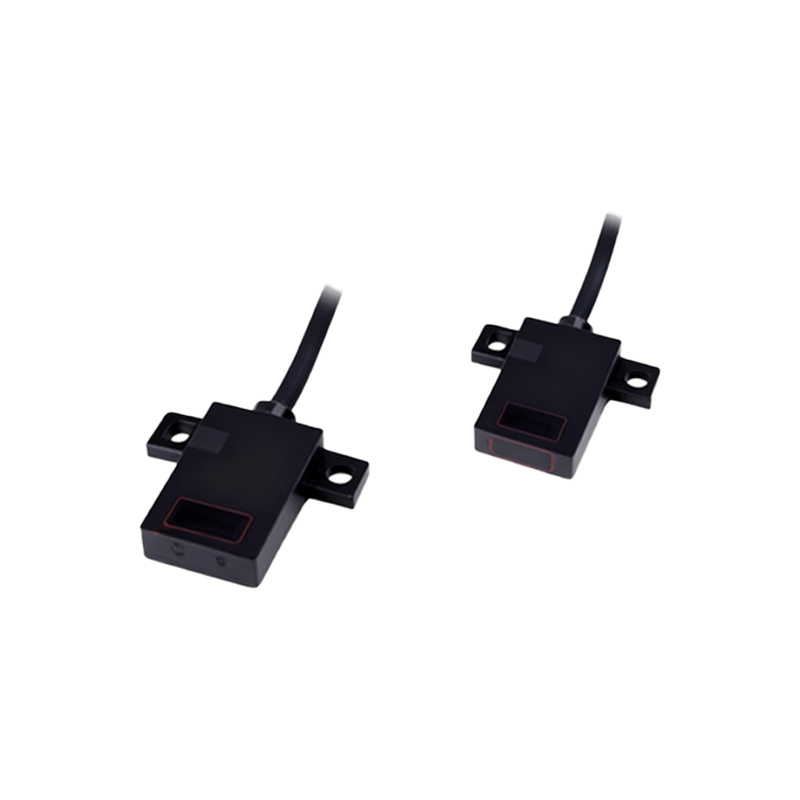
The functionality of photoelectric sensors is defined by their operating mode. The three primary types are through-beam, retro-reflective, and diffuse reflective sensors. Through-beam sensors consist of separate emitter and receiver units. The emitter projects a light beam directly to the receiver; an object is detected when it interrupts this beam. This type offers the longest sensing range and highest reliability, as it is largely immune to object color, reflectivity, or surface angle. Retro-reflective sensors house both emitter and receiver in a single housing, using a reflector to bounce the light beam back. Detection occurs when an object blocks the beam's path to the reflector. Diffuse reflective sensors also have a combined emitter and receiver, but they detect light reflected directly off the target object itself. This mode is highly dependent on the object's color, texture, and distance, making it suitable for applications where the target is close and has consistent reflective properties.
Superior Sensing Range and Accuracy
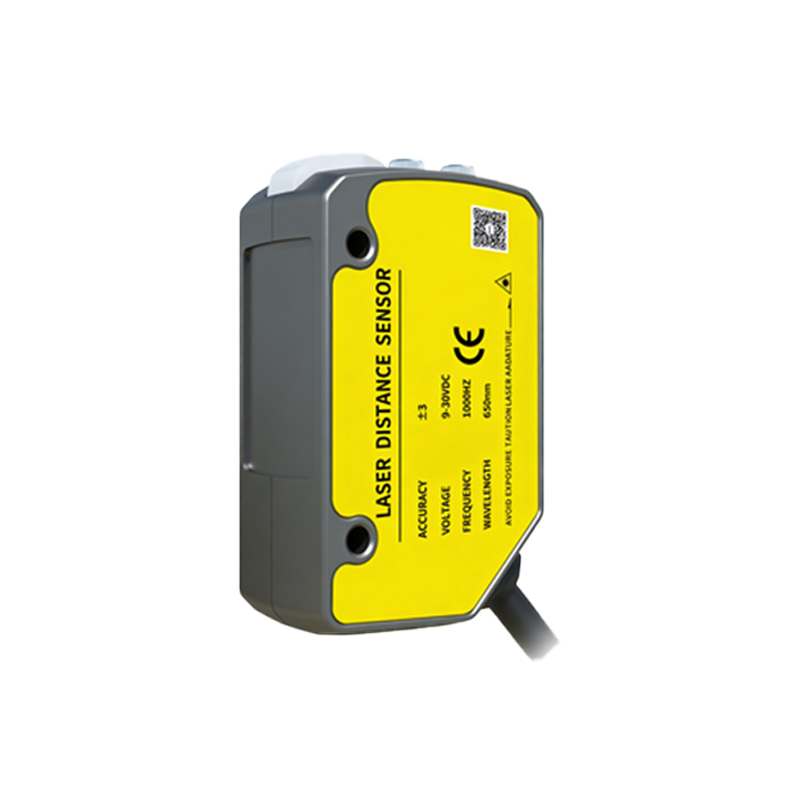
One of the most significant features of advanced photoelectric sensors is their extended and precise sensing range. Laser-based sensors, in particular, can achieve detection ranges of several tens of meters for through-beam models, with a highly focused beam spot. This allows for the detection of very small objects or precise edge positioning. Accuracy is further enhanced by background suppression technology in diffuse sensors, which uses triangulation to measure distance, ensuring the sensor only triggers for objects within a specific, programmable range while ignoring the background. This feature is critical in applications like robotic palletizing or detecting objects on a conveyor belt, preventing false triggers from the conveyor surface or distant objects.
Robust Environmental Durability
Industrial environments pose challenges such as dust, moisture, vibration, and temperature extremes. High-quality photoelectric sensors are engineered with robust housings, often rated at IP67, IP68, or IP69K, providing complete protection against dust ingress and high-pressure water jets. The optical lenses are treated with special coatings to resist fouling from oils or cutting fluids. Furthermore, these sensors are designed with wide operating temperature ranges, typically from -25°C to +70°C, ensuring stable performance in both freezer warehouses and foundries. Advanced models incorporate diagnostic LEDs and IO-Link communication for real-time monitoring of lens contamination or performance degradation, enabling predictive maintenance.
Advanced Functionality and Programmability
Modern photoelectric sensors transcend simple on/off detection. They offer sophisticated, programmable functionalities that enhance system intelligence. Key features include teach-in capability, which allows for easy setup by simply presenting the target object to the sensor. Timer functions provide adjustable ON-delay, OFF-delay, or one-shot timing for precise control logic. Many sensors also offer programmable switching outputs (light/dark operate) and sensitivity adjustments. The integration of IO-Link, a point-to-point serial communication protocol, enables detailed parameter setting, real-time process data access (such as measured distance or signal strength), and advanced diagnostics directly from the controller, simplifying commissioning and troubleshooting.
Application Versatility Across Industries
The application scope for photoelectric sensors is vast. In packaging, they detect labels, count bottles, and monitor fill levels. In automotive assembly, they verify part presence and position robots. In material handling, they control conveyor flow, detect jams, and position pallets. Specialized variants include color sensors that distinguish hues, contrast sensors for mark detection, and luminescence sensors for detecting invisible materials. Their ability to work with virtually any material—metal, plastic, glass, wood, or liquid—makes them a universal tool for solving diverse detection challenges, contributing directly to improved productivity, quality control, and machine safety.
Conclusion and Selection Guidance
Selecting the optimal photoelectric sensor requires careful analysis of the application requirements. Key factors to consider are the required sensing range, the size and surface properties of the target object, the required response speed, and the environmental conditions. Through-beam sensors are ideal for long-range, high-reliability needs. Retro-reflective sensors offer a good balance of range and easy installation. Diffuse sensors provide a compact, cost-effective solution for short-range detection. Ultimately, consulting technical datasheets and leveraging supplier expertise is recommended to match the sensor's features—such as sensing mode, housing material, light source type, and output configuration—precisely to the operational demands, ensuring long-term reliability and system efficiency.