Introduction to KGS Photoelectric Sensors
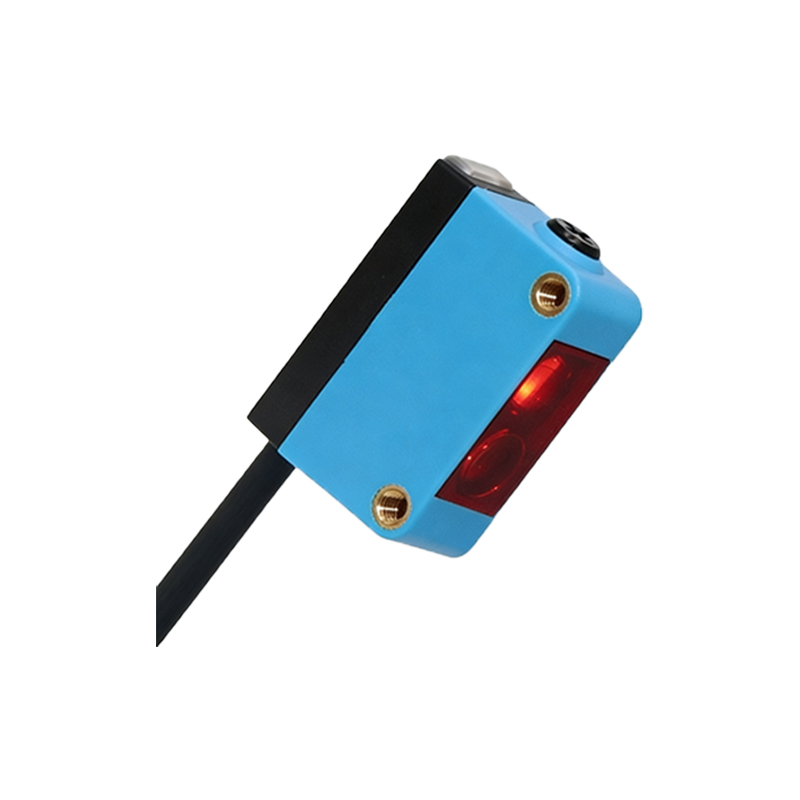
KGS photoelectric sensors represent a cornerstone technology in industrial automation, offering reliable object detection across diverse applications. These sensors operate on the fundamental principle of converting light signals into electrical outputs. By emitting a beam of light—typically infrared, visible red, or laser—and detecting changes in the received light intensity, they can sense the presence, absence, or position of an object without physical contact. This non-contact detection method is crucial for maintaining product integrity and ensuring high-speed operation in manufacturing lines, packaging machinery, and material handling systems. The versatility and robustness of KGS sensors make them indispensable in environments where precision and durability are paramount.
Core Operating Principles and Technologies

The functionality of KGS photoelectric sensors is based on three primary sensing modes: through-beam, retro-reflective, and diffuse reflective. Through-beam sensors consist of separate emitter and receiver units. Detection occurs when an object interrupts the light beam traveling between them, providing long-range and highly accurate sensing. Retro-reflective models house both emitter and receiver in a single housing, utilizing a reflector to bounce the light beam back. They are ideal for detecting objects that may not fully break the beam. Diffuse reflective sensors, also single-unit devices, detect light reflected directly off the target object itself. This mode is suited for short-range detection and can be sensitive to the object's color, reflectivity, and surface texture. Advanced KGS models incorporate background suppression and foreground suppression technologies to enhance detection accuracy by ignoring objects beyond or before a set distance.
Key Features and Technical Specifications
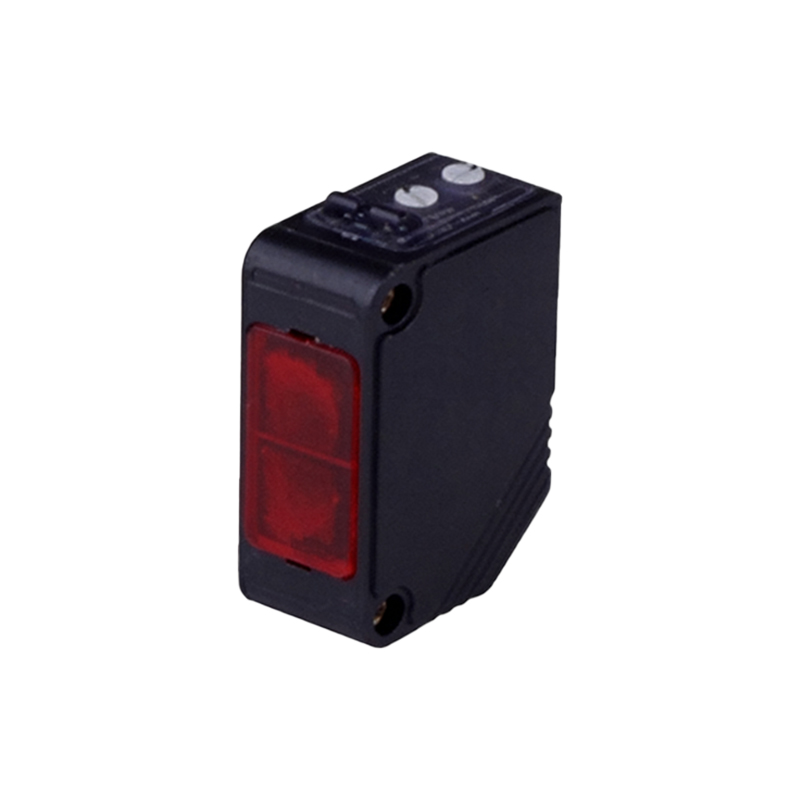
Modern KGS photoelectric sensors are engineered with features that address complex industrial challenges. Key specifications include sensing distance, which can range from a few centimeters to several meters depending on the model and mode. Response time is another critical parameter, with high-speed sensors capable of microsecond-level switching, essential for fast-moving production lines. Many units feature adjustable sensitivity via potentiometers or teach-in functions, allowing fine-tuning for specific applications. Enclosure ratings, such as IP67 and IP69K, ensure protection against dust, water jets, and harsh cleaning chemicals, guaranteeing reliable operation in demanding environments like food processing or automotive manufacturing. Additionally, output types—including NPN, PNP, analog, and IO-Link—provide flexible integration with various programmable logic controllers (PLCs) and control systems.
Application Scenarios in Industrial Automation
The application spectrum for KGS photoelectric sensors is vast. In assembly automation, they are used for precise part positioning, verifying component presence, and counting. On packaging lines, sensors detect label positions, control fill levels, and monitor film breakage. Within the automotive sector, they facilitate robot guidance, verify weld nut presence, and inspect part dimensions. Logistics and warehousing systems rely on them for parcel dimensioning, conveyor jam detection, and pallet positioning. A particularly critical application is in safety systems, where safety-rated photoelectric curtains create presence-sensing protective fields around hazardous machinery, preventing operator injury. Their ability to detect transparent objects, such as glass or plastic films, further expands their utility in pharmaceutical and consumer goods packaging.
Advantages Over Other Sensing Technologies
Compared to proximity sensors (inductive or capacitive) and mechanical limit switches, KGS photoelectric sensors offer distinct advantages. Their non-contact nature eliminates mechanical wear and tear, leading to longer service life and reduced maintenance. They provide a much longer sensing range than standard proximity sensors, which are typically limited to metallic objects or very short distances. Photoelectric sensors can detect virtually any material—metal, plastic, wood, glass, or liquid—regardless of color in many advanced models. This material versatility is a significant benefit. Furthermore, their fast response speed and ability to detect small or fast-moving objects make them superior for high-throughput applications where other technologies might fail.
Selection Criteria and Installation Best Practices
Selecting the appropriate KGS photoelectric sensor requires careful analysis of the application requirements. Engineers must consider the target object's size, material, color, and surface finish. The required sensing distance and the environmental conditions—such as ambient light, temperature, humidity, and potential contaminants like dust or steam—are equally vital. For instance, a through-beam sensor is preferred for long-range detection in a dirty environment, while a diffuse sensor with background suppression might be chosen for detecting objects on a conveyor against a varying background. Proper installation is crucial for optimal performance. This includes ensuring stable mounting, precise alignment of through-beam components, avoiding sensor face contamination, and implementing protective measures like mounting brackets or shrouds in high-vibration areas. Regular maintenance, primarily lens cleaning and functional verification, ensures sustained reliability.
Future Trends and Innovations
The evolution of KGS photoelectric sensors is closely tied to Industry 4.0 and smart manufacturing trends. Future developments are focused on enhanced intelligence and connectivity. Sensors with integrated IO-Link communication are becoming standard, enabling detailed parameter setting, remote monitoring, and predictive maintenance data transmission directly to control systems. Miniaturization continues, allowing sensors to fit into increasingly compact machinery. There is also a growing emphasis on developing sensors with exceptional resistance to challenging conditions, such as intense ambient light or heavy contamination. Furthermore, the integration of multi-technology sensing—combining photoelectric, ultrasonic, or vision-based principles in a single device—is on the horizon, promising even greater application flexibility and diagnostic capabilities for the automated factories of the future.