Fundamental Operating Principle
At its core, a capacitive proximity sensor functions by detecting changes in capacitance. The sensor essentially forms one plate of a capacitor, with the target object acting as the other plate. The sensor generates an electrostatic field. When a target enters this field, it alters the dielectric constant between the sensor's active face and the ground, leading to a measurable change in the circuit's capacitance. This change triggers the sensor's output switch. Unlike inductive sensors, capacitive sensors can detect a wide range of materials, including metals, plastics, wood, liquids, and granular substances, as they all affect the dielectric properties of the sensing field.
Internal Component Architecture
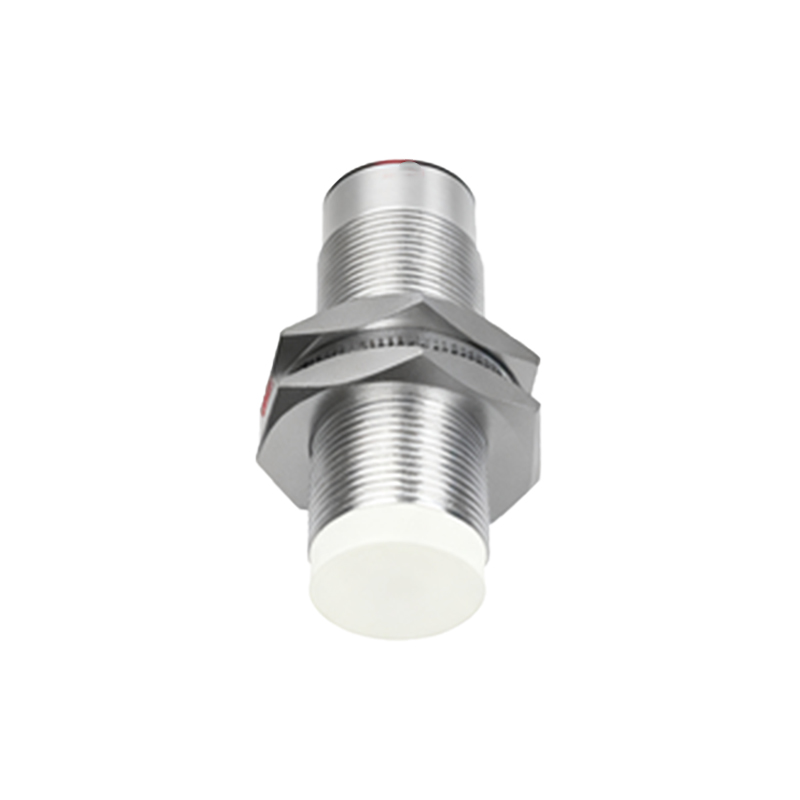
The internal structure of a capacitive proximity sensor is meticulously engineered for sensitivity and stability. The primary components include the sensing electrode, oscillator circuit, signal evaluator, and output stage. The sensing electrode, often a metallic plate or ring, is the front-line component that establishes the electrostatic field. It is typically embedded behind the sensor's face, which is made from a material like PTFE or epoxy to protect the electrode while allowing the field to penetrate. The oscillator circuit generates a high-frequency signal that is applied to the sensing electrode. The signal evaluator, a sophisticated comparator circuit, continuously monitors the amplitude of the oscillator. When the capacitance increases due to a target's presence, the oscillator's amplitude drops. Once this drop exceeds a predefined threshold, the evaluator sends a signal to the output stage.
The Sensing Electrode and Dielectric Field
The design of the sensing electrode is critical for performance. Its size, shape, and placement directly influence the sensor's sensing range and field shape. Engineers often shield the electrode on the sides and back to direct the field forward, creating a more focused detection zone and reducing susceptibility to false triggers from adjacent objects. The dielectric field extends from the active face, and its characteristics can be adjusted via a potentiometer on the sensor body. This adjustment allows users to fine-tune the sensitivity, enabling the sensor to ignore certain background materials (like a container wall) and detect only the target material inside.
Oscillator and Evaluation Circuitry
The heart of the sensor's electronics is the oscillator-evaluation system. The oscillator operates at a constant high frequency, typically in the range of several hundred kilohertz. The sensing electrode is part of this oscillator's resonant circuit. The introduction of a target increases the circuit's effective capacitance, which in turn loads the oscillator, causing a decrease in its signal amplitude. The evaluation circuitry is designed to be highly stable against temperature variations and electrical noise. It filters out minor fluctuations and only reacts to sustained changes that indicate a genuine target presence, ensuring reliable operation in industrial environments.
Output Stage and Housing Design
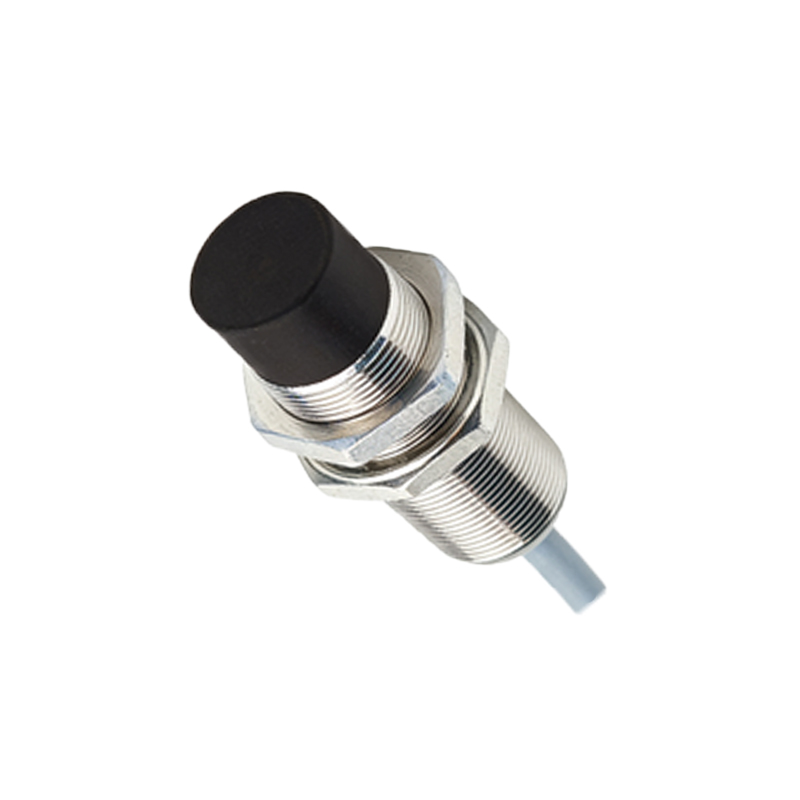
Upon detection, the processed signal activates the output stage. Common output types include analog (4-20 mA, 0-10 V) for distance-proportional measurement, and discrete switching outputs like NPN, PNP, or relay contacts. The output circuit is often equipped with short-circuit and overload protection. The sensor's housing is equally important. It is usually constructed from robust materials like nickel-plated brass, stainless steel, or high-grade plastics (PBT) to withstand harsh conditions involving dust, moisture (with IP67 or IP69K ratings), and chemical exposure. The housing design also ensures proper shielding to prevent electromagnetic interference (EMI) from affecting the sensitive internal circuits.
Key Performance Characteristics
Several structural factors dictate a capacitive sensor's key specifications. The nominal sensing range (Sn) is determined by the electrode size and oscillator power. The presence of a non-conductive but high-dielectric material (like water) at a distance can be detected as easily as a metal object at a closer range. Hysteresis, a built-in differential between the switch-on and switch-off points, is crucial for preventing output chatter when a target is at the detection boundary. Response time, the speed at which the sensor reacts, is influenced by the evaluation circuit's design and is typically in the microsecond to millisecond range, suitable for high-speed applications.
Application-Specific Structural Variations
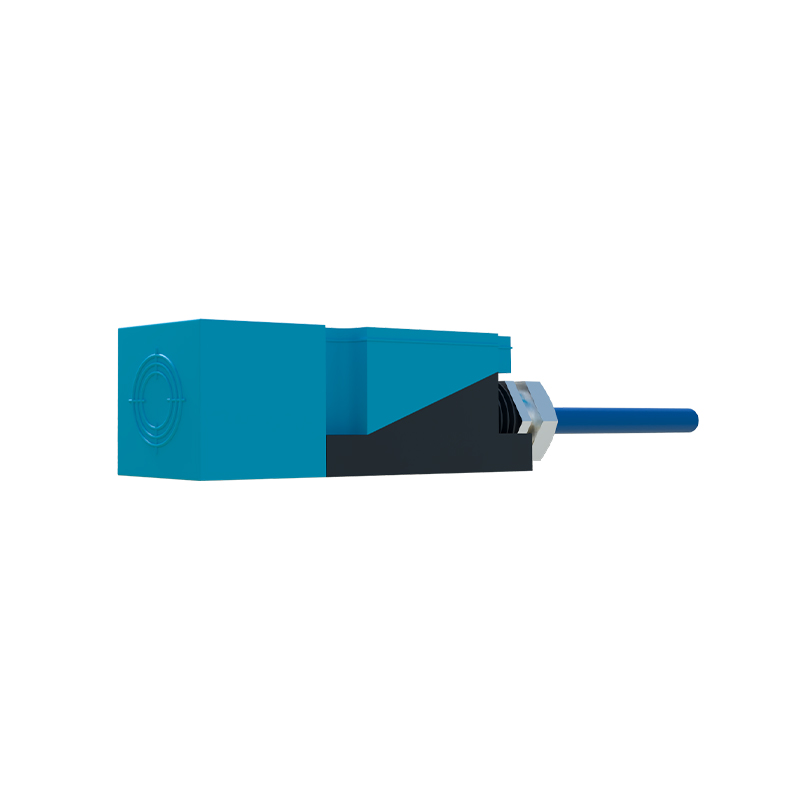
Manufacturers design structural variations to suit diverse applications. Cylindrical threaded barrels are common for easy mounting. Flat-pack or rectangular sensors offer a compact profile for tight spaces. Some sensors feature a separate, remote amplifier unit for high-temperature environments, allowing only the rugged sensing head to be exposed to heat. For level detection in tanks, specially shaped sensors with extended fields or cable probes are used. Furthermore, analog-output sensors have a linearized evaluation circuit that provides a continuous signal proportional to the distance or material quantity, requiring more precise internal calibration.