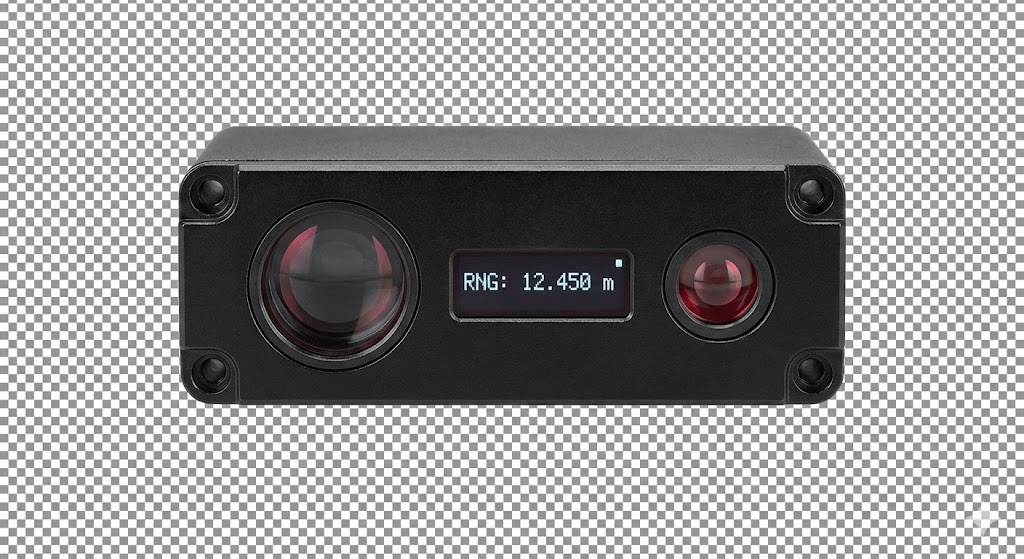
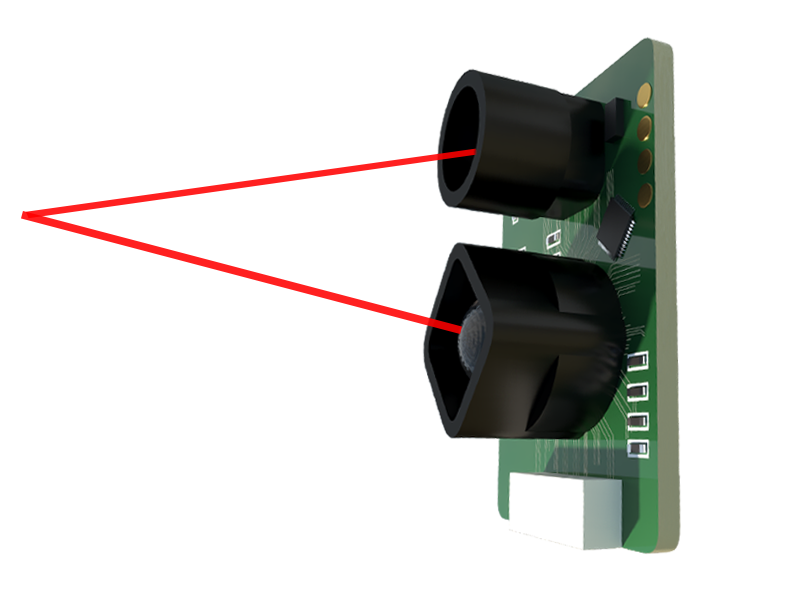
In the world of industrial automation and precision measurement, reflex laser sensors play a pivotal role. An image of a reflex laser sensor often reveals a compact, robust device, typically housed in a rectangular or cylindrical casing. Unlike through-beam sensors that require separate emitter and receiver units, a reflex laser sensor combines both into a single housing. The key visual component is the front face, which features a lens for emitting a highly focused, visible red or infrared laser beam and a receiving lens to detect the reflected light. The emitted beam travels to a retro-reflector—a specialized prism or tape that returns the light directly to its source regardless of the angle of incidence. The sensor's internal photoelectric receiver then analyzes the returned signal.
Examining a detailed image, one can appreciate the engineering. The housing is usually made of metal or high-grade plastic, rated for IP67 or higher to withstand harsh industrial environments like dust, moisture, and vibration. Status LEDs are commonly visible, indicating power, output state, and alignment quality. The laser dot itself, when projected onto a surface in an image, appears as a precise, bright point, demonstrating its collimation and focus. This visual characteristic is crucial for applications requiring exact positioning.
The operational principle is elegantly simple yet highly effective. The sensor continuously emits its laser beam towards the fixed retro-reflector. When an object interrupts this beam path, the light ceases to return to the receiver. This change in state triggers the sensor's output, signaling the presence of the object. This "break-the-beam" logic makes it exceptionally reliable for object detection, counting, and positioning over long ranges—often several meters—far exceeding the range of diffuse reflective sensors.
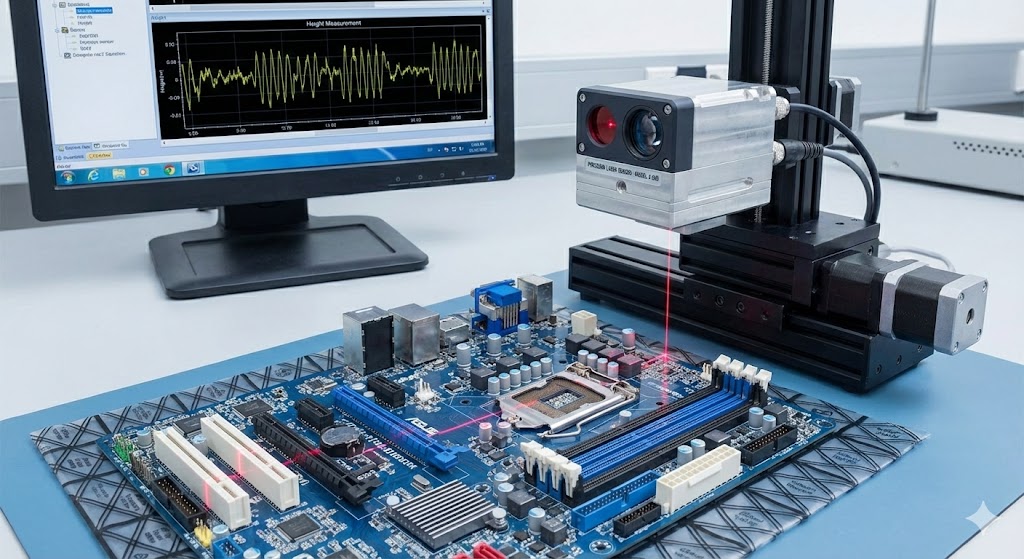
Applications for reflex laser sensors are vast and varied, as suggested by their common use-case imagery. In logistics and packaging, images show them mounted on conveyor systems, detecting the presence of boxes, bottles, or pallets without physical contact, ensuring smooth automation. In automotive assembly lines, they are pictured verifying the correct placement of components like windows or doors. Another critical application is in safety systems; images often depict them creating invisible light curtains at machine entrances or hazardous areas, where beam interruption triggers an immediate machine shutdown.
Selecting the right reflex laser sensor involves interpreting technical images and specifications. Key parameters visible or implied in product imagery include sensing range, beam spot size, response time, and output type (e.g., NPN/PNP). The beam spot size, often illustrated with comparative diagrams, is vital for detecting small objects. High-resolution images might also show adjustable sensitivity potentiometers or teach-in buttons for easy configuration.
A significant advantage visible in system setup images is the simplified installation. Only one device and a reflector need to be wired and aligned, reducing complexity and cost compared to through-beam systems. Alignment is facilitated by the visible laser dot; installers simply adjust the sensor until the beam hits the center of the retro-reflector, often confirmed by a stable LED indicator. This practical aspect is a major reason for their widespread adoption.
In conclusion, a reflex laser sensor image is more than just a picture of a device; it is a window into a fundamental technology enabling modern automation. Its design embodies reliability, precision, and simplicity. From ensuring efficient production flows to safeguarding personnel, the reflex laser sensor, as captured in these images, remains an indispensable tool across countless industries. Understanding its visual cues and operational context from photographs and diagrams is the first step toward leveraging its full potential in solving real-world detection challenges.