Accurate measurement of laser power is fundamental in numerous fields, from industrial manufacturing and telecommunications to medical applications and scientific research. The core of this process lies in the sensor used for detection and the precise formula applied to convert the sensor's response into a reliable power reading. Understanding the interplay between sensor characteristics and the governing mathematical principles is essential for obtaining trustworthy data.
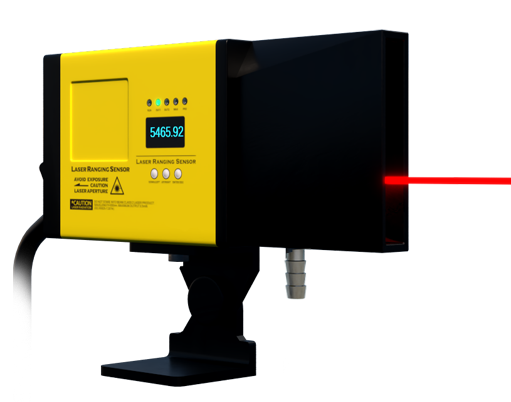
A laser power sensor, typically a photodiode or a thermal sensor, converts incident optical energy into an electrical signal. The type of sensor dictates the underlying physical principle and, consequently, the specific considerations for the power calculation. Photodiode sensors operate on the photoelectric effect, generating a current proportional to the incident light flux for a given wavelength. Their response is highly wavelength-dependent. Thermal sensors, such as pyroelectric or thermopile detectors, absorb radiation, causing a temperature change that generates a measurable voltage or current. Their response is generally broader across wavelengths but may have slower response times.
The fundamental formula relating the sensor's output to the incident laser power (P) is often expressed as:
P = V / R
Where:
* P is the incident laser power (usually in Watts).
* V is the voltage output from the sensor (in Volts).
* R is the responsivity of the sensor (in Volts/Watt or Amps/Watt, depending on output type).
The responsivity (R) is the critical calibration factor. It is not a universal constant but a parameter specific to each sensor and dependent on operational conditions. For a photodiode, the responsivity (typically in A/W) varies significantly with the wavelength of the laser light. Manufacturer calibration data usually provides a responsivity curve. Therefore, the formula must account for this: P = I / R(λ), where I is the photocurrent and R(λ) is the wavelength-specific responsivity.
For thermal sensors, the responsivity (often in V/W) is more stable over a wide spectral range but can be influenced by factors like ambient temperature and the laser's pulse characteristics (for pulsed lasers). In practice, the formula may incorporate additional correction factors:
P = (V - V_offset) / R * C_temp * C_linearity
Here, V_offset accounts for any dark or ambient background signal, C_temp is a temperature compensation factor, and C_linearity corrects for any non-linear response at very high or low power levels.
The testing procedure to validate and apply this formula is systematic. First, the sensor must be selected appropriately for the expected power range, beam size, and laser wavelength. Operating the sensor outside its specified parameters, such as exceeding the maximum power density, can cause damage or inaccurate readings. Before measurement, the sensor and meter should be warmed up and zeroed to establish a stable baseline (V_offset).
During testing, ensuring the entire laser beam is incident on the sensor's active area is crucial for accurate total power measurement. For spatially non-uniform beams, this is particularly important. The output voltage or current is then recorded. The incident power is calculated by applying the core formula P = V / R, using the responsivity value appropriate for the test conditions (e.g., the specific laser wavelength).
Calibration is the cornerstone of accuracy. Sensor responsivity is traceably calibrated, often by national metrology institutes, against primary standards. Regular recalibration is recommended to account for potential sensor degradation over time. Furthermore, understanding measurement uncertainty is vital. Contributors to uncertainty include the calibration uncertainty of the responsivity (R), electrical noise in the measured voltage (V), instability in the laser output, and environmental factors.
For pulsed lasers, the formula and testing approach become more complex. Average power is commonly measured using a sensor with a sufficiently fast response or by integrating energy over multiple pulses. The formula adapts to P_avg = E_pulse * f, where E_pulse is the energy per pulse (measured by an energy sensor) and f is the pulse repetition frequency. Specialized sensors and different formulas are required for measuring peak power or pulse energy directly.
In conclusion, the laser power formula P = V / R is deceptively simple. Its accurate application hinges on a deep understanding of the sensor's operational principles, careful attention to its calibrated responsivity under the specific test conditions, and meticulous measurement technique. By rigorously controlling these variables, engineers and scientists can ensure their laser power measurements are reliable, forming a solid foundation for process control, product qualification, and groundbreaking research.