Introduction to 20mm Proximity Sensors
Proximity sensors with a 20mm diameter housing represent a cornerstone of modern industrial automation. These robust, non-contact devices are engineered to detect the presence or absence of metallic objects within a defined sensing range without any physical contact. The 20mm form factor offers an optimal balance between sensing performance, mechanical strength, and installation flexibility, making it one of the most prevalent and versatile sizes in factory environments. From conveyor lines and robotic cells to machine tools and packaging machinery, the 20mm inductive proximity switch provides reliable detection of ferrous and non-ferrous metals, ensuring precise control and safety in countless automated processes.
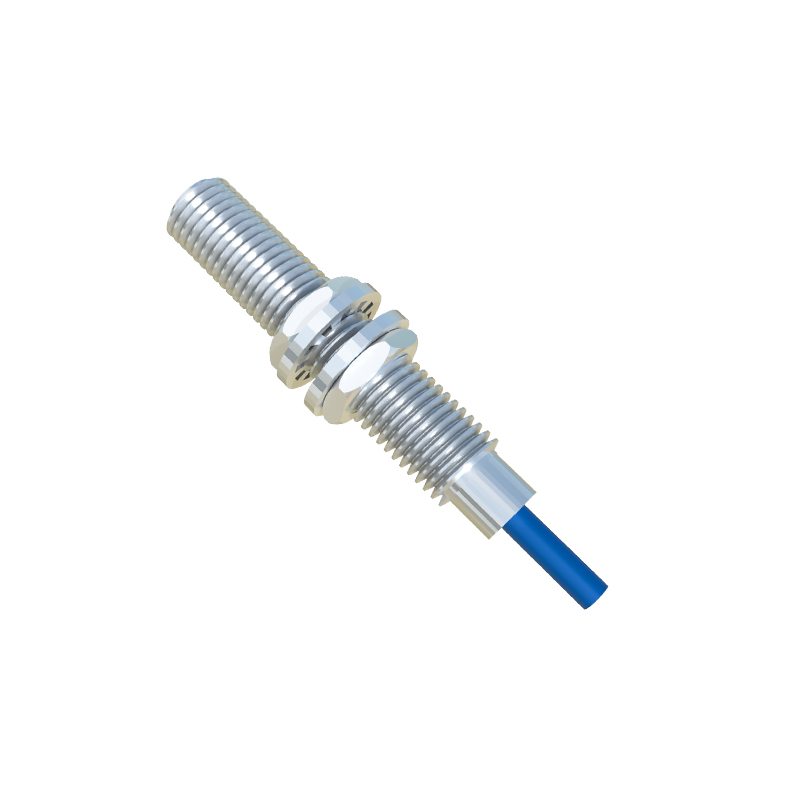
Key Technical Specifications and Operating Principles
The fundamental operation of a standard 20mm inductive proximity sensor is based on the principle of electromagnetic induction. The sensor's face contains an oscillator circuit that generates a high-frequency electromagnetic field. When a metal target enters this field, eddy currents are induced on the target's surface. This causes a change in the oscillation amplitude, which is detected by the sensor's circuitry, triggering a solid-state output switch. Key specifications for a typical 20mm unit include a nominal sensing distance (Sn) of 5mm to 8mm, depending on the target material and sensor design. They are commonly available in both shielded (flush-mountable) and unshielded (non-flush) versions, with operating voltages spanning 10-30V DC or 20-250V AC, and output configurations like PNP (sourcing), NPN (sinking), or NO/NC (normally open/normally closed).
Advantages of the 20mm Diameter Design
The 20mm diameter provides significant advantages over smaller or larger form factors. Mechanically, it offers superior robustness and resistance to vibration and shock, which is critical in harsh industrial settings. The larger housing allows for more powerful sensing coils and electronics, often resulting in longer sensing ranges and better temperature stability compared to 12mm or 8mm sensors. Simultaneously, it remains compact enough for installation in space-constrained applications where an 18mm or 30mm sensor might not fit. The standardized 20mm size also ensures wide compatibility with pre-existing mounting brackets, nuts, and holes in machinery, simplifying retrofits and maintenance. This balance makes it a universally accepted industry workhorse.
Selection Criteria for Specific Applications
Selecting the correct 20mm proximity sensor requires careful consideration of several application parameters. First, the target material (steel, aluminum, brass, etc.) directly affects the effective sensing range; a correction factor must be applied for non-ferrous metals. The required sensing distance must be less than the rated Sn to account for tolerances and environmental factors. Environmental conditions are paramount: sensors with IP67 or IP68 ratings are essential for washdown areas or outdoor use, while high-temperature models are needed near furnaces or welding stations. The electrical load (relay, PLC input, solenoid) dictates the choice of output type (AC/DC, PNP/NPN, 2-wire/3-wire/4-wire). For high-speed counting or positioning, a sensor with a fast switching frequency (e.g., 1.5 kHz) is necessary.
Installation, Wiring, and Configuration Best Practices
Proper installation is crucial for optimal performance and longevity. For shielded (flush-mountable) sensors, they can be installed flush with a metal mounting surface without affecting the sensing field. Unshielded sensors require a clear space around the sensing face to achieve their full range. Always ensure the target approaches the sensor's active face perpendicularly for maximum repeatability. Wiring must follow the manufacturer's diagram precisely; incorrect polarity for DC sensors or mixing AC/DC loads can cause immediate failure. Maintain adequate cable separation from high-voltage power lines to prevent electrical noise interference. For adjustable models, use a non-metallic tool to set the sensitivity or hysteresis potentiometer, and consider sensors with built-in LED status indicators for easy diagnostics.
Common Troubleshooting and Maintenance Tips
Despite their durability, proximity sensors can encounter issues. A complete failure to detect is often due to wiring errors, incorrect power supply, or physical damage to the sensing face. Intermittent operation may stem from a loose connection, electrical noise, or a target that is too small, too slow, or outside the sensor's switching hysteresis window. Reduced sensing range frequently indicates buildup of metallic dust, swarf, or other contaminants on the sensor face, which must be cleaned regularly. For maintenance, periodically verify the sensing distance with a standard target and check for any corrosion on the housing or connector. Always refer to the sensor's datasheet for