Introduction to Photoelectric Sensor 3DU50
The 3DU50 photoelectric sensor is a highly reliable and versatile component widely utilized in industrial automation and control systems. Designed for precision detection, this sensor operates on the principle of converting light signals into electrical outputs. It features a compact housing, making it suitable for integration into various machinery and equipment where space constraints are a concern. The 3DU50 is known for its robust construction, ensuring durability in harsh environments such as manufacturing floors, warehouses, and outdoor installations. Its ability to detect objects with high accuracy and speed makes it a preferred choice for applications requiring consistent performance and minimal maintenance.
Technical Specifications and Operating Principles
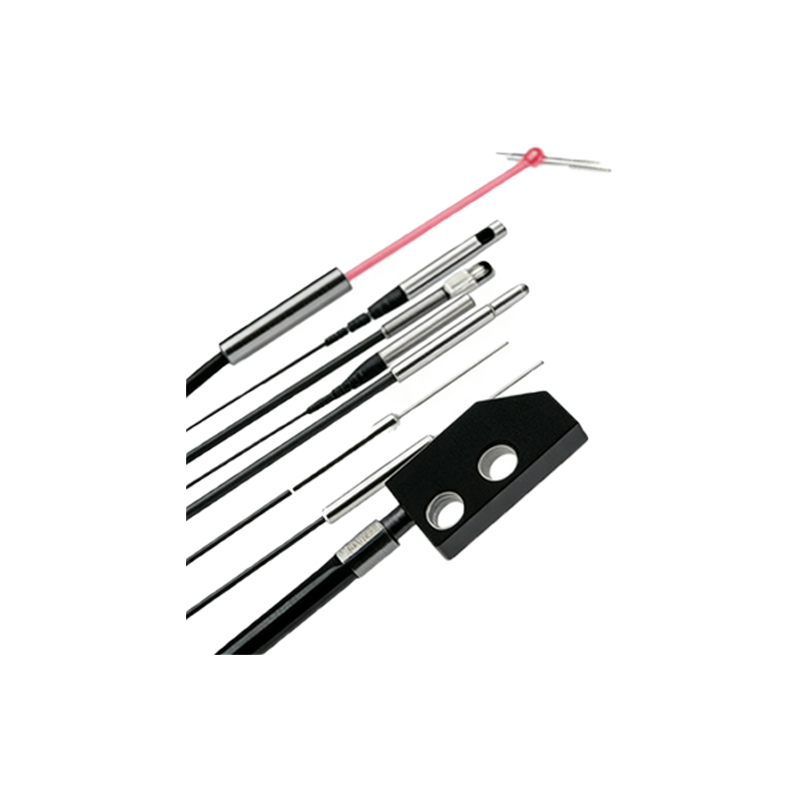
The 3DU50 sensor typically operates within a voltage range of 5V to 24V DC, providing flexibility for different electrical setups. It utilizes an infrared LED as the light source and a phototransistor as the receiver, enabling it to detect objects based on light reflection or interruption. The sensing distance can vary depending on the model, often ranging from a few centimeters to several meters, with adjustable sensitivity to fine-tune detection thresholds. Key parameters include response time, which is usually in the millisecond range, ensuring rapid feedback for real-time control systems. Additionally, the sensor offers output options such as NPN or PNP transistor configurations, allowing compatibility with various programmable logic controllers (PLCs) and microcontrollers.
Key Features and Advantages
One of the standout features of the 3DU50 is its high immunity to ambient light interference, thanks to modulated infrared technology that filters out noise from other light sources. This ensures reliable operation even in brightly lit conditions or fluctuating environments. The sensor also boasts a wide operating temperature range, typically from -25°C to 70°C, making it suitable for both indoor and outdoor applications. Its IP67-rated enclosure provides protection against dust and water ingress, enhancing longevity in demanding settings. Furthermore, the 3DU50 is easy to install and calibrate, with mounting brackets and alignment indicators that simplify setup. These advantages contribute to reduced downtime and improved efficiency in automated processes.
Common Industrial Applications
In industrial contexts, the 3DU50 photoelectric sensor finds extensive use in object detection, counting, and positioning tasks. For instance, it is employed in conveyor belt systems to monitor product flow, trigger sorting mechanisms, or prevent jams by detecting item presence. In packaging machinery, the sensor ensures accurate label placement or verifies package closure by sensing reflective surfaces. It also plays a crucial role in safety systems, such as light curtains that halt equipment when an obstruction is detected, protecting workers from hazards. Other applications include liquid level sensing in tanks, edge guiding in printing presses, and part verification in assembly lines, showcasing its adaptability across sectors like automotive, food processing, and logistics.
Installation and Maintenance Guidelines
Proper installation of the 3DU50 sensor involves aligning the emitter and receiver correctly to avoid misalignment issues that could affect performance. It is recommended to mount the sensor on stable surfaces, away from vibrations or excessive heat sources, and to use shielded cables to minimize electromagnetic interference. Regular maintenance includes cleaning the lens with a soft cloth to prevent dust buildup, which can attenuate light signals and reduce sensitivity. Users should periodically check electrical connections for corrosion or looseness and verify output signals using diagnostic tools. By following these practices, the sensor can maintain optimal functionality over its lifespan, which often exceeds 100,000 hours of continuous operation under normal conditions.
Comparison with Other Sensor Types
Compared to inductive or capacitive sensors, the 3DU50 photoelectric sensor offers distinct benefits, such as the ability to detect non-metallic objects like plastic, glass, or liquids, which may be invisible to other technologies. However, it may be less effective in environments with heavy fog or smoke, where light transmission can be obstructed. In contrast, ultrasonic sensors provide an alternative for such scenarios but might have slower response times. The choice between sensor types depends on specific application requirements, including material properties, environmental factors, and cost considerations. The 3DU50 stands out for its balance of speed, accuracy, and versatility, making it a cost-effective solution for many industrial automation challenges.
Future Trends and Innovations
As Industry 4.0 advances, photoelectric sensors like the 3DU50 are evolving to incorporate smart features such as IoT connectivity and self-diagnostic capabilities. Future iterations may include integrated communication protocols like IO-Link, enabling real-time data exchange and remote configuration for predictive maintenance. Enhancements in miniaturization and energy efficiency are also expected, allowing for deployment in compact, battery-powered devices. Research into new materials and optical designs could further improve sensing ranges and resistance to extreme conditions. These innovations will likely expand the sensor's role in automated systems, contributing to smarter factories and more efficient industrial operations worldwide.