In the realm of industrial automation and smart device design, proximity sensors play a pivotal role in enabling non-contact detection. Among the various options available, HXH proximity sensors have carved out a significant reputation for reliability and performance. These sensors are engineered to detect the presence or absence of an object within a specific range without any physical contact, utilizing electromagnetic fields, light, or sound. This fundamental principle allows for wear-free operation, high switching frequencies, and the ability to function in challenging environments where dirt, oil, or moisture might render mechanical switches ineffective.
The core technology behind many HXH proximity sensors is based on the inductive principle. They generate an oscillating electromagnetic field from a coil located at the sensing face. When a metallic object enters this field, eddy currents are induced within the object, which in turn dampens the oscillation of the sensor's own circuit. This change is detected and triggers a solid-state output switch. This makes HXH inductive sensors exceptionally suited for detecting metals, such as steel, aluminum, or copper, with detection ranges typically specified for standard mild steel. Key specifications to consider include the sensing distance, which is often rated nominally (e.g., 5mm, 10mm), the type of output (PNP/NPN, NO/NC), and the supply voltage range (commonly 10-30V DC). Their robust construction, often in nickel-plated brass or stainless steel housings, ensures resistance to vibration, shock, and industrial contaminants.
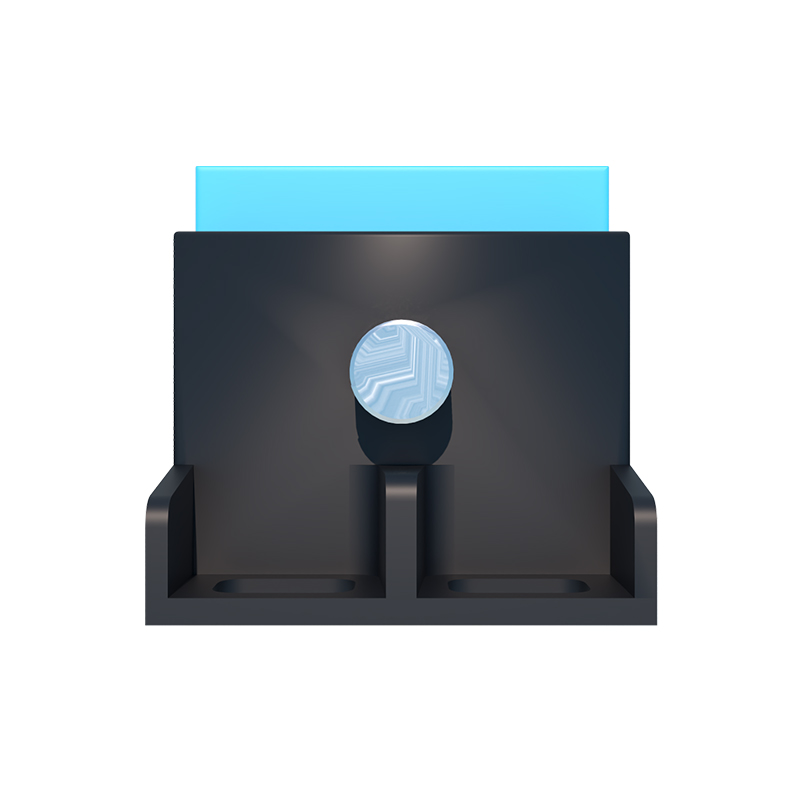
Beyond the standard inductive type, HXH also offers capacitive proximity sensors. These work on a similar principle but can detect both metallic and non-metallic materials, such as liquids, plastics, glass, and wood. They sense changes in the capacitance of a plate that forms part of an oscillator circuit. The arrival of any material with a different dielectric constant than air alters this capacitance, triggering the output. This versatility makes HXH capacitive sensors ideal for level detection in tanks, material handling, and packaging applications.
Another critical variant is the magnetic proximity sensor, or reed sensor, often used in conjunction with a permanent magnet. These are frequently employed for detecting the position of cylinders in pneumatic systems or as door/window sensors in security systems. HXH's range in this category provides compact, low-power solutions for precise position sensing.
The application spectrum for HXH proximity sensors is vast. In manufacturing, they are ubiquitous on assembly lines for part counting, position verification, and end-of-travel detection for robotic arms. In the automotive industry, they monitor robotic welding processes and verify component placement. Within consumer electronics, they enable features like automatic screen turn-off when a phone is held to the ear. Their sealed designs allow for use in washdown environments in food and beverage processing. Furthermore, their fast response time and lack of moving parts make them perfect for high-speed counting tasks in packaging machinery.
Selecting the right HXH sensor requires careful analysis of the application. Engineers must define the target material, required sensing distance, environmental conditions (temperature, presence of chemicals), electrical interface needed by the controller (PLC), and the required housing shape (barrel, rectangular, or ring-shaped). Proper installation is equally crucial; sensors should be mounted securely, with adequate clearance from surrounding metal to prevent false triggering, a phenomenon known as "shielding."
In summary, HXH proximity sensors represent a critical component in modern sensing technology. Their ability to provide accurate, maintenance-free, and non-contact detection across a diverse range of materials and harsh environments makes them an indispensable tool for engineers and designers. From optimizing complex industrial automation processes to enabling simple yet smart features in everyday devices, the precision and durability of HXH sensors continue to drive innovation and efficiency across countless sectors. Understanding their operating principles, types, and key selection criteria is essential for leveraging their full potential in any project.