Introduction to Photoelectric Sensors
Photoelectric sensors are indispensable components in modern industrial automation, utilizing light beams to detect the presence, absence, or distance of objects. Their operation is based on the emission of light from a transmitter, which is then received by a receiver. The interaction of this light beam with a target object alters the received signal, enabling detection. These sensors are prized for their non-contact operation, high speed, and reliability across diverse environments, from clean rooms to harsh manufacturing floors. Understanding their core performance indicators is crucial for engineers and system integrators to select the optimal sensor for a specific application, ensuring process efficiency, safety, and cost-effectiveness.
Operating Principle and Sensing Modes
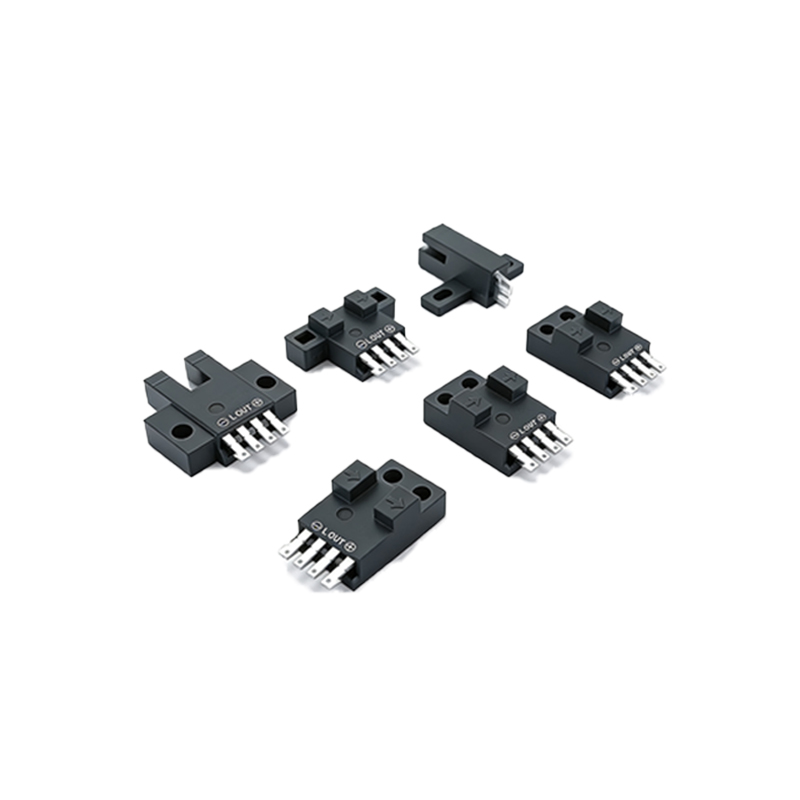
The fundamental principle involves a light source, typically an LED or laser diode, and a photodetector. The three primary sensing modes are through-beam, retro-reflective, and diffuse reflective. Through-beam sensors offer the longest sensing range and highest reliability, with separate emitter and receiver units. Retro-reflective types use a single unit and a reflector, suitable for detecting objects that break the beam. Diffuse reflective sensors detect light reflected directly from the target itself, making them compact and easy to install but with a shorter range. The choice of mode directly impacts performance parameters like sensing distance and environmental immunity.
Critical Performance Indicator: Sensing Distance
Sensing distance, or operating range, is a paramount specification. It defines the maximum distance at which the sensor can reliably detect a standard target. For through-beam sensors, this is the distance between emitter and receiver. For diffuse types, it is the distance to the target. Engineers must consider both the nominal sensing distance and the practical setting distance, which accounts for factors like target color, material, and ambient conditions. Exceeding the specified range can lead to unstable operation or failure to detect. Data sheets typically provide detailed graphs showing the relationship between sensing distance and target characteristics.
Critical Performance Indicator: Response Time
Response time measures how quickly the sensor's output changes state after a detection event. It is usually specified in milliseconds (ms) or microseconds (µs). A fast response time is essential for high-speed production lines, packaging machinery, or sorting systems where objects move rapidly. The total response time includes the light reception time, circuit processing time, and output switching time. Selecting a sensor with a response time significantly faster than the minimum time between detected events is critical to avoid missed detections and ensure system throughput.
Critical Performance Indicator: Repeatability
Repeatability refers to the sensor's ability to consistently detect the same target at the same position under unchanged conditions. It is a measure of precision and stability, often expressed as a percentage of the sensing distance or as an absolute distance (e.g., ±0.1 mm). High repeatability is vital in precision assembly, robotic positioning, and quality control applications where minute variations matter. Factors affecting repeatability include temperature drift, power supply stability, and aging of the light source. Sensors with superior optical design and stable electronics offer excellent repeatability.
Critical Performance Indicator: Environmental Resistance
Industrial environments present challenges like dust, moisture, vibration, and electromagnetic interference (EMI). Ingress Protection (IP) ratings (e.g., IP67, IP69K) define a sensor's resistance to solids and liquids. Operating temperature range is another key specification. Furthermore, sensors must be designed to resist optical interference from ambient light (sunlight, factory lighting) and electrical noise from motors or drives. Models with modulated LED light, robust housings, and conformal-coated circuit boards provide enhanced durability and reliable operation in demanding conditions.
Critical Performance Indicator: Light Source and Beam Type
The choice of light source—red LED, infrared LED, laser, or visible green LED—affects performance. Red LEDs are common and cost-effective. Infrared sensors are discreet and less susceptible to ambient light. Laser sensors provide a precise, collimated beam for small object detection or exact positioning. Visible green LEDs are excellent for detecting transparent objects like glass or plastic. The beam shape (spot, line, or array) also matters. A focused spot enables precise detection, while a diffuse beam or array pattern is better for detecting uneven surfaces or overcoming minor alignment issues.
Output Configuration and Connectivity
The electrical output determines how the sensor interfaces with controllers like PLCs. Common outputs include NPN/PNP transistors (sinking/sourcing), analog current (4-20 mA) or voltage (0-10 V), and relay contacts. IO-Link is becoming a standard for smart sensors, enabling digital bidirectional communication for parameter setting, diagnostics, and process data exchange. The output type must match the input requirements of the control system. Additionally, features like teach-in functionality (for easy setup), adjustable sensitivity, and diagnostic LEDs greatly enhance usability and maintenance.
Application-Specific Selection Guidelines
Selecting the right sensor requires a holistic analysis of the application. For conveyor belt object counting, a diffuse sensor with a fast response time may suffice. For precise bottle cap placement on a filling line, a through-beam laser sensor with high repeatability is ideal. In a washdown food processing area, a stainless steel housing with IP69K rating and a visible light source for detecting clear packaging is necessary. Always consult the sensor's detailed technical data, considering all performance indicators in conjunction, and factor in a safety margin for reliable long-term operation.
Conclusion and Future Trends
A thorough understanding of photoelectric sensor performance indicators—sensing distance, response time, repeatability, environmental resistance, and light source characteristics—is fundamental for successful industrial automation. As Industry 4.0 advances, sensors are evolving with enhanced intelligence, connectivity via IO-Link and Ethernet, and improved form factors. Future developments may include higher levels of integrated diagnostics, AI-based pattern recognition, and even greater robustness. By meticulously evaluating these KPIs against application demands, engineers can build more efficient, reliable, and intelligent automated systems.