In the realm of industrial automation and smart device design, the ability to detect the presence or absence of an object without physical contact is fundamental. This is where proximity sensors come into play, and among the diverse range of models available, the Proximity Sensor 672 stands out as a particularly versatile and reliable component. This guide delves into the core aspects of this sensor, exploring its operational principles, key specifications, and the wide array of applications where it proves indispensable.
At its core, the Proximity Sensor 672 is a non-contact sensing device designed to detect the presence of metallic objects within its defined sensing range. It typically operates on the inductive sensing principle. The sensor generates an oscillating electromagnetic field from its active face. When a metallic target enters this field, it induces eddy currents within the metal, which in turn dampens the oscillation of the sensor's internal circuit. This change is detected and processed by the sensor's electronics, resulting in a clean, switched output signal. This solid-state design, devoid of moving parts, grants the 672 series exceptional durability, high switching speeds, and immunity to wear and tear, making it ideal for harsh industrial environments.
The performance of the Proximity Sensor 672 is defined by several critical specifications. Its sensing distance, often rated between 2mm to 15mm depending on the specific variant, is a crucial parameter for installation and application design. It is important to note that this nominal sensing distance is calibrated for a standard mild steel target. Factors like target material, size, and shape can influence the effective range. The sensor commonly features a shielded or embeddable design, allowing it to be flush-mounted in metal without affecting its performance, unlike unshielded models which require a clearance zone. Output configurations are flexible, typically available in NPN (sinking) or PNP (sourcing) transistor outputs, as well as Normally Open (NO) or Normally Closed (NC) logic, providing compatibility with a vast range of programmable logic controllers (PLCs), microcontrollers, and other control systems.
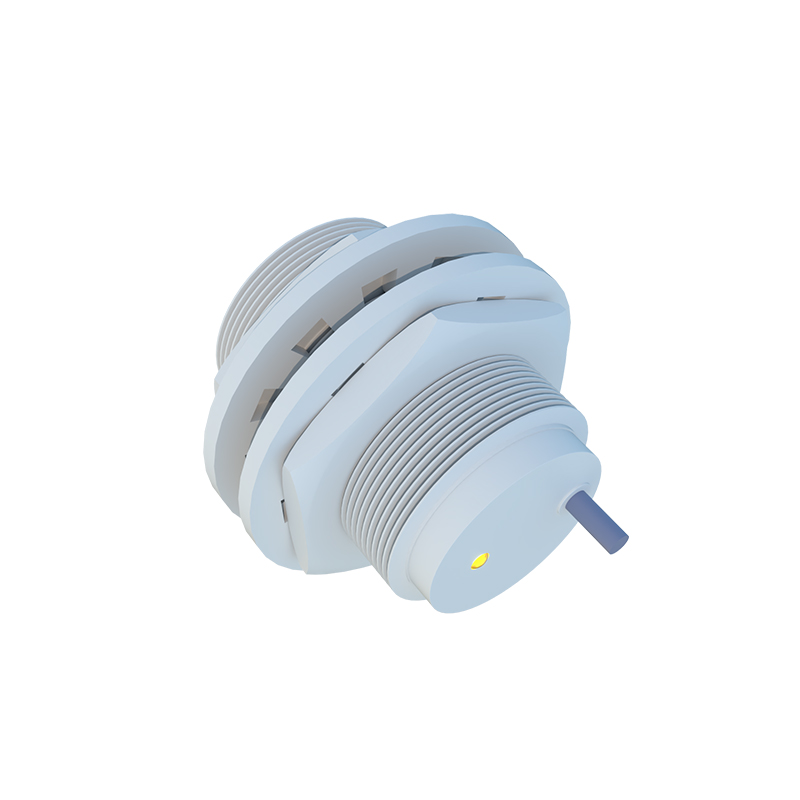
Environmental robustness is a hallmark of the 672 series. These sensors are frequently housed in rugged, nickel-plated brass or stainless-steel casings, offering high resistance to corrosion, oils, and coolants. Many models boast an IP67 or higher ingress protection rating, meaning they are completely dust-tight and can withstand temporary immersion in water. This makes them suitable for use in washdown areas, machine tools, and outdoor equipment. Furthermore, they are designed to operate reliably across a broad temperature range and are resistant to electrical noise commonly found in industrial settings with motors and variable frequency drives.
The applications for the Proximity Sensor 672 are extensive and cross multiple industries. In automated manufacturing and assembly lines, they are used for precise object detection, part counting, and verifying the position of machine components like cylinders. They serve as end-of-travel limit switches in robotic arms and conveyor systems, providing reliable feedback without the mechanical failure points of traditional switches. Within the automotive industry, these sensors monitor the position of gears, cams, and pistons. They are also integral to packaging machinery for detecting metal lids, cans, or foil seals. Beyond heavy industry, variants of this sensor technology find use in consumer appliances for door position detection and in building automation for elevator floor leveling.
Selecting and installing the Proximity Sensor 672 requires attention to detail. Choosing the correct sensing distance, output type (NPN/PNP), and housing material for the environment is the first step. During installation, ensuring a stable power supply within the sensor's rated voltage (commonly 10-30V DC) is essential. The target object must be within the specified sensing range and made of a detectable material (ferrous metals like steel and iron are most sensitive, while non-ferrous metals like aluminum or copper have a reduced range). For optimal performance and longevity, it is advisable to follow the manufacturer's wiring diagrams precisely and avoid placing the sensor in direct contact with or extremely close to other metal objects besides the intended target to prevent false triggering.
In conclusion, the Proximity Sensor 672 represents a mature and highly effective solution for non-contact metallic object detection. Its combination of inductive sensing technology, robust construction, and flexible electrical interfaces ensures reliable operation in demanding conditions. From streamlining complex industrial processes to enabling simple positional feedback, this sensor continues to be a cornerstone of modern automation. Understanding its features and proper application guidelines allows engineers and technicians to leverage its full potential, enhancing system efficiency, safety, and reliability.