Introduction to Reed Proximity Sensors
Reed proximity sensors, fundamental components in industrial automation, operate on a simple yet highly reliable principle. At their core, these sensors consist of two ferromagnetic reed contacts, hermetically sealed within a glass capsule filled with an inert gas. When an external magnetic field from a permanent magnet or an electromagnet approaches, the reeds magnetize, attract each other, and make contact, closing an electrical circuit. Upon removal of the magnetic field, the reeds' inherent spring force separates them, opening the circuit. This binary, non-contact switching mechanism makes them ideal for detecting the presence or absence of a magnetic target, such as a magnet embedded in a cylinder piston or mounted on a moving machine part. Their design ensures immunity to dust, oil, and other contaminants common in harsh industrial environments.
Key Advantages and Operational Characteristics
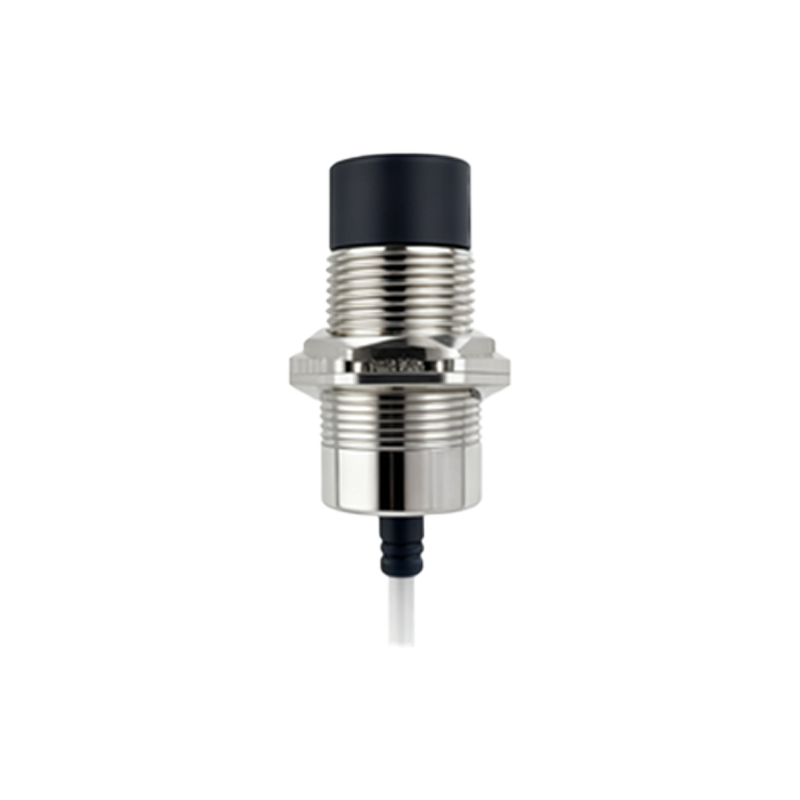
The primary advantage of reed sensors lies in their exceptional reliability and long operational life, often exceeding millions of cycles. Since the switching contacts are sealed, they are not exposed to oxidation or environmental pollutants, which is a common failure point for standard mechanical switches. They consume zero power in their passive state, making them energy-efficient. Furthermore, they offer a fast response time and can switch low-voltage, low-current signals directly, often without the need for additional amplification. Their compact size allows for installation in space-constrained locations. However, engineers must consider their operating parameters, including switching current and voltage ratings, maximum switching frequency, and the required magnetic field strength (often specified as operate and release points in milliTesla or Ampere-turns) to ensure compatibility with the application.
Comparison with Other Proximity Sensor Technologies
While inductive and capacitive proximity sensors are prevalent, reed sensors hold a distinct niche. Inductive sensors detect metallic objects but require a ferrous or non-ferrous metal target; they are ineffective against non-metallic materials or magnets alone. Capacitive sensors can detect various materials but are sensitive to environmental changes like humidity. Reed sensors, in contrast, respond solely to a magnetic field. This makes them the definitive choice for applications involving non-metallic barriers. For instance, they can detect a magnet through a plastic wall, a glass window, or a stainless-steel housing, where inductive sensors would fail. Their simplicity often translates to lower cost for magnetic-sensing applications compared to more complex solid-state Hall-effect sensors, though Hall sensors offer more precision in position detection.
Critical Design and Selection Considerations
Successful implementation requires careful selection. First, identify the sensor type: unipolar sensors activate with a single magnetic pole (typically the south pole), while bipolar versions respond to either pole, offering more flexible mounting. The sensing distance is relatively short, typically a few millimeters, and is highly dependent on the magnet's strength and size. Engineers must calculate the magnetic field at the sensor location, considering the magnet's grade, orientation, and any intervening materials. The sensor's electrical characteristics—whether normally open (NO), normally closed (NC), or changeover—must match the control logic. Environmental factors like temperature extremes can affect the glass seal and magnetic properties; thus, selecting sensors with appropriate temperature ratings is crucial. Vibration resistance is generally high, but extremely high shock or vibration can cause contact chatter.
Common Industrial Applications and Use Cases
Reed proximity sensors are ubiquitous across industries. In fluid power, they are the standard for detecting the end-of-stroke position in pneumatic and hydraulic cylinders, providing feedback to programmable logic controllers (PLICs). In the automotive sector, they are used in gearbox position sensing, seatbelt buckle detection, and door/window open-close status. Security systems employ them in door and window contact sensors. Consumer appliances like washing machines use them for lid safety switches and water level detection. In manufacturing, they monitor the position of robotic arms, count products on conveyor belts (when fitted with a magnet), and serve as limit switches in various machinery. Their ability to function in explosive atmospheres (with proper housing) also makes them suitable for some hazardous locations.
Installation Best Practices and Troubleshooting
Proper installation maximizes performance and longevity. Ensure the sensor is mounted securely to prevent movement that could alter the critical air gap between the sensor and the magnet. The magnet must travel directly past the sensor's active face, maintaining the correct orientation (axial or lateral depending on sensor design). Use non-ferrous mounting brackets and hardware to avoid distorting the magnetic field. Wiring should follow standard practices: use shielded cable in electrically noisy environments and ensure connections are tight to prevent voltage drop. Common troubleshooting issues include failure to actuate, often due to insufficient magnetic field strength, misalignment, or an increased air gap from mounting drift. Intermitt