Introduction to Proximity Sensing
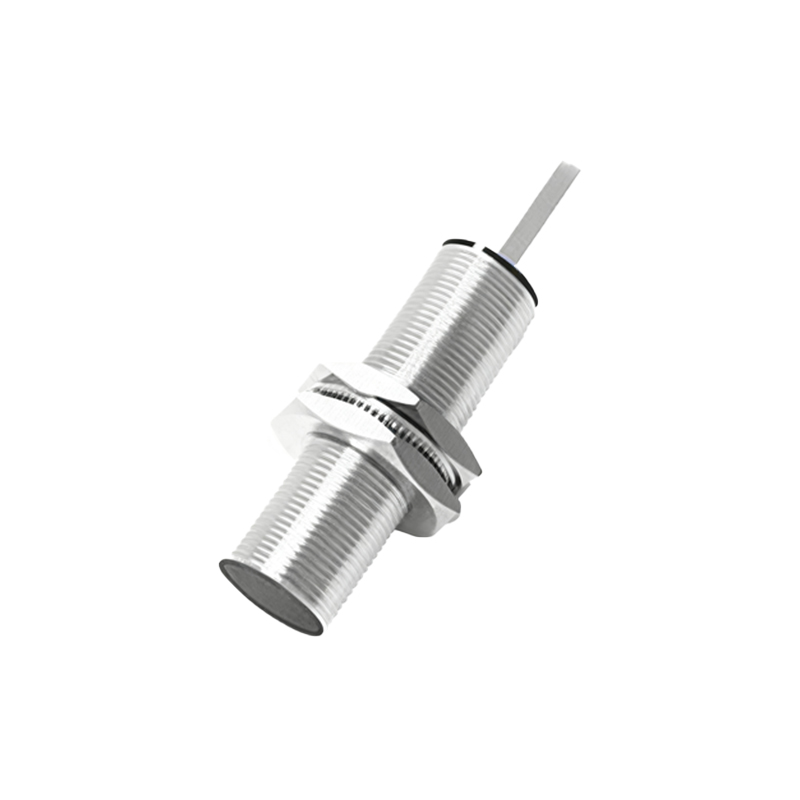
Proximity sensors are fundamental components in modern industrial automation, designed to detect the presence or absence of an object within a specified range without physical contact. Large-scale proximity sensors extend this capability to monitor significant distances or cover expansive areas, making them indispensable in sectors like logistics, automotive manufacturing, heavy machinery, and warehouse management. These sensors operate on various principles, including inductive, capacitive, ultrasonic, and photoelectric technologies, each suited to specific applications and environmental conditions. Their primary function is to provide reliable, non-contact detection to enhance safety, optimize processes, and enable sophisticated control systems in complex industrial setups.
Core Operating Principles and Technologies
The performance of a large-scale proximity sensor is dictated by its underlying technology. Inductive sensors are ideal for detecting metallic objects at close to medium ranges, utilizing an electromagnetic field to sense ferrous and non-ferrous metals. Capacitive sensors can detect both metallic and non-metallic materials, such as liquids, plastics, or wood, by measuring changes in capacitance. For the longest ranges, ultrasonic and photoelectric sensors are typically employed. Ultrasonic sensors use sound waves to measure distance to an object and are effective in harsh environments with dust or vapor. Photoelectric sensors, including through-beam, retro-reflective, and diffuse types, use light beams (often infrared or laser) to detect objects over distances that can exceed several tens of meters, providing high precision for large-scale applications.
Key Specifications and Performance Metrics
Selecting the appropriate large-scale proximity sensor requires a thorough understanding of key specifications. Sensing range, or the maximum distance at which the sensor can reliably detect a target, is the most critical parameter. Other vital metrics include response time, which affects the speed of the control loop; repeatability, ensuring consistent detection at the same point; and environmental ratings like IP (Ingress Protection) codes for dust and water resistance. Operating temperature range, supply voltage, and output type (e.g., PNP, NPN, analog, or IO-Link) are also crucial for system integration. For large-scale applications, factors like beam shape, sensitivity adjustment, and background suppression (for photoelectric sensors) become paramount to avoid false triggers from distant or irrelevant objects.
Industrial Applications and Use Cases
Large-scale proximity sensors are deployed across diverse industrial landscapes. In automated storage and retrieval systems (AS/RS), they are used for pallet detection, vehicle positioning, and height control of cranes over vast warehouse spaces. The automotive industry utilizes them on assembly lines for robot guidance and part presence verification over long conveyors. In material handling, they monitor the fill levels of bulk silos or the position of containers on large gantry cranes. Outdoor applications include vehicle detection at gate entrances, ship docking assistance, and traffic management systems. Their robustness allows them to function reliably in challenging conditions, from freezing temperatures to areas with significant vibration or electromagnetic interference.
Installation, Calibration, and Best Practices
Proper installation is essential for optimal sensor performance. Mounting stability is critical to prevent misalignment, especially for sensors with long ranges. For photoelectric sensors, keeping the lens clean from dirt and debris is necessary to maintain signal integrity. Calibration often involves setting the sensing range or teaching-in a reference distance to account for specific target properties or environmental factors. Best practices include ensuring a stable power supply, using shielded cables in electrically noisy environments, and providing adequate protection from physical damage. Regular maintenance schedules should include functional checks and cleaning to ensure long-term reliability and prevent unplanned downtime in critical processes.
Integration with Industrial Networks and IoT
The modern industrial landscape demands connectivity. Large-scale proximity sensors are increasingly equipped with smart features and digital communication interfaces. Protocols like IO-Link enable detailed parameter setting, real-time diagnostics, and process data monitoring, transforming a simple sensor into a smart device. Integration into higher-level networks such as PROFINET, EtherNet/IP, or Modbus TCP allows sensor data to be part of a broader Industrial Internet of Things (IIoT) ecosystem. This connectivity facilitates predictive maintenance, where sensor performance trends can predict failures, and enables centralized configuration and monitoring of thousands of sensors across a large facility, significantly improving operational intelligence and efficiency.
Future Trends and Advancements
The evolution of large-scale proximity sensing is driven by the needs of Industry 4.0. Future sensors will offer even greater ranges, higher accuracy, and improved resistance to environmental interference. The integration of multi-technology sensing (e.g., combining LiDAR with photoelectric sensing) in a single unit is an emerging trend for complex detection scenarios. Artificial intelligence and edge computing capabilities are beginning to be embedded, allowing sensors to perform basic object classification or