Introduction to Photoelectric Sensors
Photoelectric sensors are indispensable components in modern logistics and material handling systems. These devices operate by emitting a beam of light, typically from an LED or laser diode, and detecting changes in the received light signal. The core principle hinges on the interaction between light and the target object. When the light beam is interrupted, reflected, or refracted by an object, the sensor's receiver detects this alteration and converts it into an electrical signal. This signal is then processed to trigger specific actions, such as counting items on a conveyor belt, detecting the presence of a package at a sorting station, or ensuring precise positioning for robotic arms. Their non-contact nature, high speed, and reliability make them superior to mechanical switches in demanding logistics environments where accuracy, hygiene, and minimal maintenance are paramount.
Core Operating Principles and Internal Diagram
The fundamental operation can be visualized through a simplified internal diagram. The key components are the emitter, the receiver, and the signal processing circuitry. The emitter generates a modulated light beam to minimize interference from ambient light. The receiver, usually a phototransistor or photodiode, is tuned to respond to this specific modulated frequency. In a through-beam sensor setup, the emitter and receiver are housed in separate units facing each other. The object to be detected passes between them, breaking the beam. In a retro-reflective setup, both emitter and receiver are in the same housing, and the beam bounces off a reflector. A diffuse or proximity sensor has both units in one housing, detecting light reflected directly from the target object itself. The signal processor filters noise, evaluates the received light intensity against a set threshold, and outputs a clean, digital switch signal (ON/OFF) or an analog value proportional to distance or reflectivity.
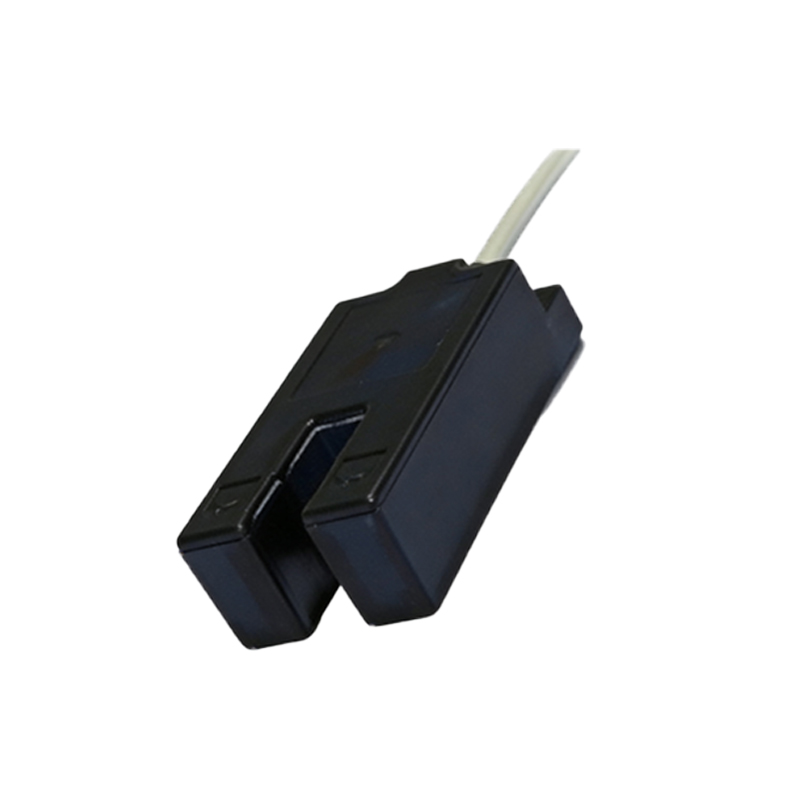
Through-Beam Sensor Configuration
The through-beam, or opposed-mode, sensor offers the longest sensing range and highest reliability for detection. In a logistics warehouse diagram, you would see the emitter unit mounted on one side of a conveyor line and the receiver unit directly opposite. An unbroken beam indicates a clear path, while any object, regardless of its color, surface texture, or material (provided it is not transparent to the light wavelength), will interrupt the beam and trigger the sensor. This configuration is ideal for precise counting of boxes on high-speed lines or for safety light curtains at loading dock doors. Its primary advantage is insensitivity to object color and surface angle, but installation requires precise alignment of two separate units, which can be more complex and costly.
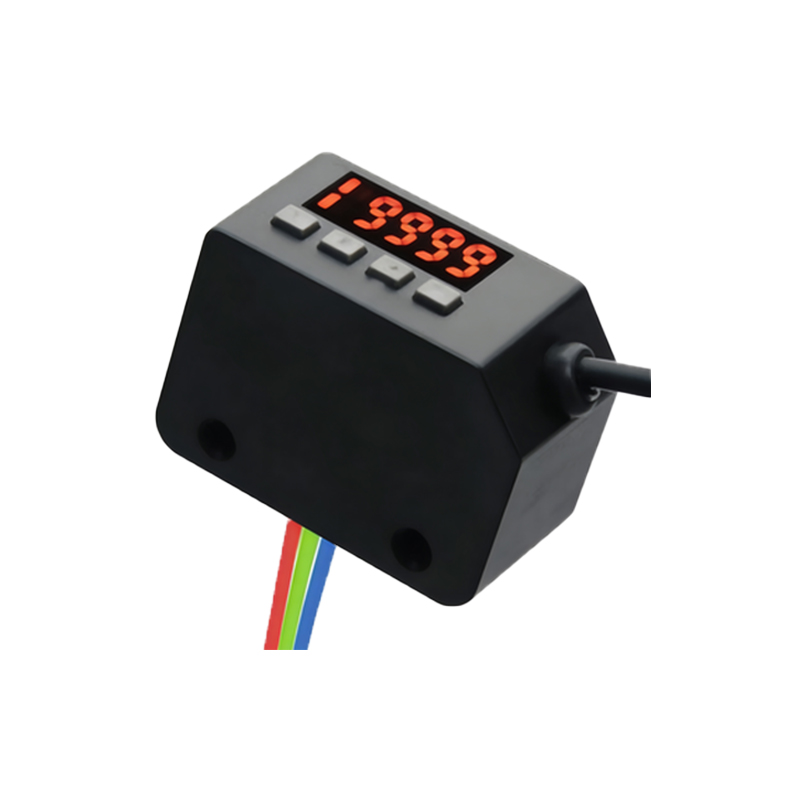
Retro-Reflective Sensor Configuration
Retro-reflective sensors simplify installation by combining the emitter and receiver in a single housing. A specialized reflector, often a corner-cube prism, is mounted opposite the sensor. This prism reflects the light beam directly back to the receiver along the same path. When an object passes between the sensor and the reflector, it blocks the returning beam, causing a detection event. In a logistics diagram, this setup is commonly shown monitoring the entrance of a storage rack or the end of a conveyor lane. It is easier to install and wire than through-beam sensors. However, it can be fooled by highly reflective objects like shiny metal or plastic wrapping, which might reflect enough light to mimic the reflector, causing a missed detection. Modern sensors use polarization filters to mitigate this issue.
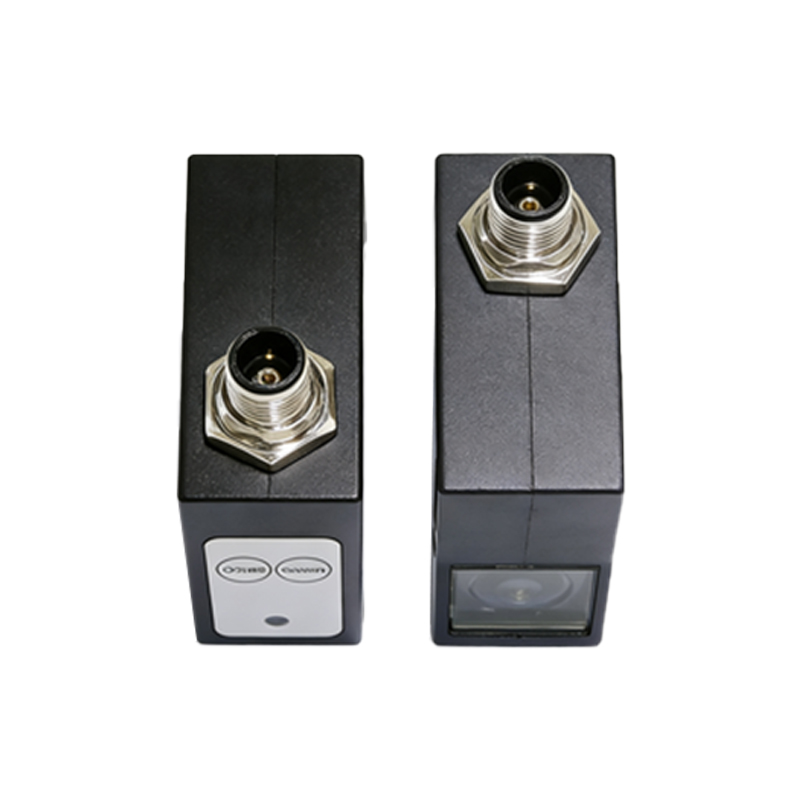
Diffuse Reflective Sensor Configuration
The diffuse reflective, or proximity, sensor is the most compact and easiest to install, as it requires only a single unit and no separate reflector. It emits light and detects what is reflected directly from the target object's surface. A typical application diagram in logistics shows such a sensor mounted above a conveyor, detecting the height of parcels or distinguishing between packages of different reflectivity. Its sensing distance is shorter and highly dependent on the object's color, size, and surface texture—a white box will be detected from a greater distance than a black one. Advanced versions, known as background suppression sensors, use triangulation principles to detect objects only within a specific range, ignoring the background, which is crucial for precise positioning tasks in automated guided vehicles (AGVs) and robotic pick-and-place systems.
Key Applications in Logistics Automation
Photoelectric sensors are the eyes of logistics automation. Detailed system diagrams illustrate their roles: they act as presence sensors at the infeed of sortation systems, ensuring only one package is inducted at a time. They function as edge guides on conveyor belts, detecting parcel overhang. In automated storage and retrieval systems (AS/RS), they provide precise positioning feedback for shuttles and cranes. Barcode and QR code scanners are essentially sophisticated photoelectric sensors that read reflected light patterns. Safety is another critical area; light curtains and safety scanners create invisible protective fields around hazardous machinery like palletizers. The choice of sensor type—through-beam, retro-reflective, or diffuse—is dictated by the specific application's requirements for range, environmental conditions, target characteristics, and required reliability.
Advantages and Selection Criteria
The advantages of photoelectric sensors in logistics are clear: non-contact operation eliminates mechanical wear, high switching speeds enable processing of thousands of items per hour, and they can detect a vast array of materials. When selecting a sensor for a logistics application, engineers must consult technical diagrams and datasheets to evaluate several factors. These include the required sensing distance, the size and optical properties of the target, the ambient light conditions (sunlight, warehouse lighting), environmental challenges like dust, fog, or vibration, the required output type (PNP/NPN, analog, IO-Link), and the response time. Understanding the principle of operation, as illustrated in functional diagrams, is the first step toward specifying the correct sensor to ensure robust, efficient, and fault-free logistics operations.