Introduction to Inductive Proximity Sensing
Inductive proximity sensors are fundamental components in modern industrial automation, providing non-contact detection of metallic objects. The LJM18-15N1 represents a specific model within this category, engineered for reliability and precision in demanding environments. These sensors operate on the principle of electromagnetic induction. An internal oscillator generates a high-frequency electromagnetic field that radiates from the sensor's face. When a metallic target enters this field, eddy currents are induced on the target's surface. This causes a change in the oscillation amplitude within the sensor, which is detected by a threshold circuit, subsequently triggering a solid-state output switch. This mechanism allows for the detection of ferrous and non-ferrous metals without any physical contact, eliminating mechanical wear and enabling high-speed operation.
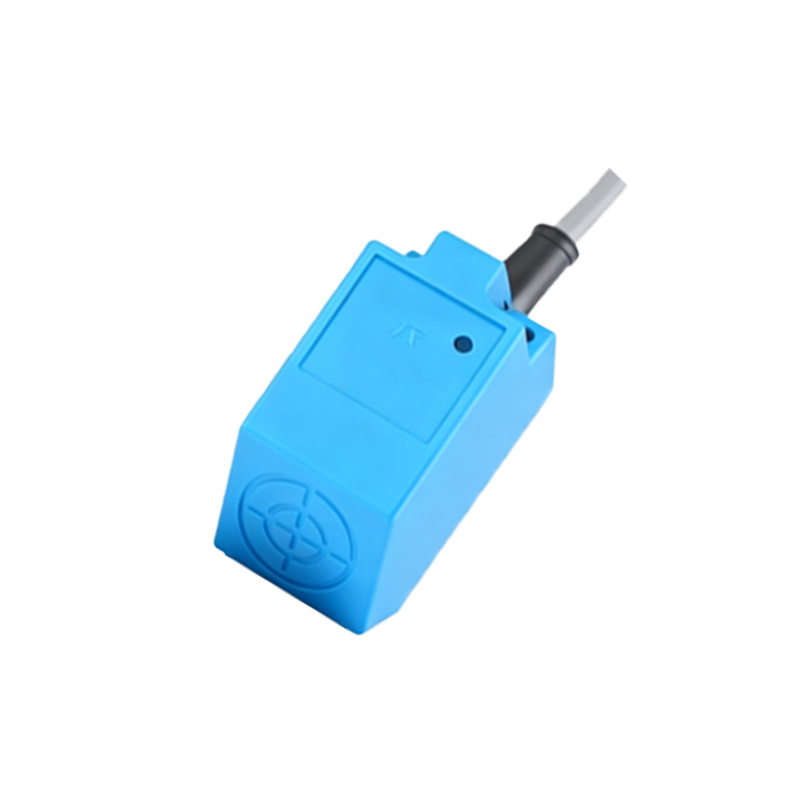
Key Specifications of the LJM18-15N1 Model
The LJM18-15N1 is characterized by its cylindrical M18 housing, a standard form factor in industrial settings. Its nominal sensing distance is specified as 15mm, adhering to the "n1" designation which typically indicates a 1mm standard sensing distance for M18 sensors; the 15mm range signifies an extended or factor-corrected range for specific target materials, often steel. It is crucial to consult the manufacturer's datasheet for exact correction factors for different metals like aluminum, copper, or brass. The sensor typically features a shielded design, allowing for flush mounting in metal without degradation of performance. Operating voltage ranges are commonly 10-30V DC, with outputs available in NPN (sinking) or PNP (sourcing) configurations, and often in Normally Open or Normally Closed logic. Key performance parameters include a high switching frequency, minimal hysteresis, and robust environmental ratings such as IP67 for protection against dust and temporary immersion.
Electrical Characteristics and Wiring
Correct electrical integration is paramount for optimal performance. The LJM18-15N1 is a 3-wire DC sensor. The standard wire color coding involves brown for positive supply voltage (V+), blue for common negative (0V), and black for the switched output signal. For a PNP version, the black wire outputs a positive voltage when activated. For an NPN version, it sinks current to ground when activated. Users must ensure compatibility with the controller's input module (sourcing vs. sinking). Key electrical considerations include the residual current (leakage current) when the sensor is off, and the inrush current during power-up. Proper installation includes using shielded cables in electrically noisy environments and implementing fuses or circuit breakers for overcurrent protection as per the sensor's rated current.
Application Scenarios and Best Practices
The LJM18-15N1 finds extensive use across various industries. Common applications include position sensing in conveyor systems, detecting the presence of metal parts in assembly machines, counting metallic objects, and as end-of-travel limit switches in automated guided vehicles (AGVs) and robotics. For reliable operation, installation best practices must be followed. Maintain the recommended lateral and axial spacing between multiple sensors to prevent mutual interference. Ensure the target object meets the specified size, material, and approach direction (axial). The sensing distance can be affected by surrounding metals, temperature extremes, and strong electromagnetic fields. Regular maintenance involves checking for physical damage, buildup of metallic debris on the sensing face, and verifying the electrical signal integrity.
Advantages and Selection Criteria
The primary advantages of the LJM18-15N1 inductive sensor are its long operational life due to non-contact operation, high switching accuracy and repeatability, resistance to environmental contaminants like oil and coolant, and robust construction for harsh industrial environments. When selecting this or a similar sensor, engineers must evaluate several criteria: the required sensing range for the target material, the housing size and mounting style (threaded barrel or with brackets), the output type (NPN/PNP, NO/NC) to match the PLC, the required electrical connection (pre-wired cable or quick-disconnect), and the necessary ingress protection rating. Understanding these parameters ensures the sensor integrates seamlessly into the control system, providing dependable and maintenance-free operation for years.