Introduction to Through-Beam Photoelectric Sensors
Through-beam photoelectric sensors, often referred to as "beam break" sensors, are fundamental components in modern packaging machinery. These sensors consist of two separate units: a transmitter and a receiver. The transmitter emits a continuous beam of light, typically infrared or laser, which is detected by the receiver positioned directly opposite. When an object, such as a product on a conveyor, passes between the two units, it interrupts the light beam. This interruption triggers an electrical signal that can be used to count items, detect presence, or initiate subsequent actions in the packaging line. Their primary advantage lies in their long sensing range and high reliability, as the receiver only needs to detect the presence or absence of the transmitted beam, making them less susceptible to environmental factors like color or surface finish of the target object.
Core Functionality in Packaging Operations
In through-beam packaging machines, these sensors perform critical tasks that ensure smooth and accurate operation. A primary application is product counting and registration. As items move along the conveyor, each break in the beam is counted, providing precise data for batching or inventory control. Furthermore, they are essential for precise positioning. For instance, before a sealing or labeling station, a sensor can detect the leading edge of a package, signaling the machine to actuate the sealing mechanism at the exact correct moment. This prevents misaligned seals and reduces material waste. Their high-speed response makes them ideal for fast-moving production lines where timing is measured in milliseconds.
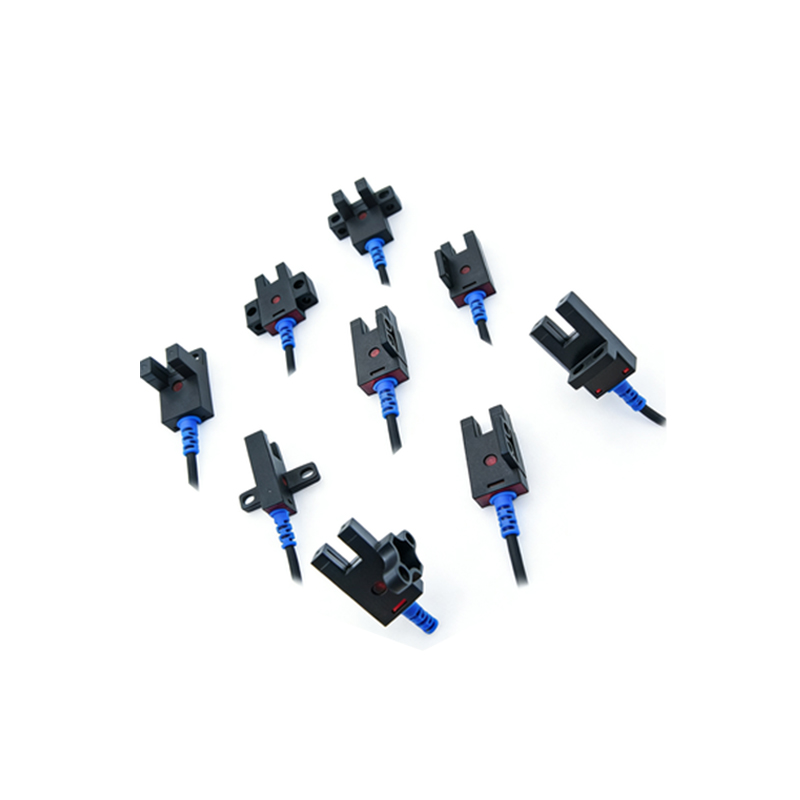
Superiority Over Other Sensing Technologies
Compared to diffuse-reflective or retro-reflective sensors, through-beam models offer distinct benefits in packaging environments. They provide the longest possible sensing distances, often exceeding 10 meters, allowing for flexible machine design. Their operation is largely independent of the target's properties. Whether a package is glossy, matte, transparent, or opaque, the sensor will reliably detect it as long as it is sufficiently opaque to interrupt the beam. This consistency is crucial in packaging lines handling diverse products. Additionally, they exhibit high immunity to ambient light interference and dust, common challenges in industrial settings, ensuring stable performance without frequent recalibration.
Key Design Considerations for Integration
Successfully integrating through-beam photoelectric sensors into a packaging machine requires careful planning. Alignment is paramount; the transmitter and receiver must be precisely aligned to ensure an uninterrupted beam path. Vibration or mechanical drift can misalign them, leading to false triggers or failures. Therefore, robust mounting brackets and periodic maintenance checks are essential. The choice of light source is another critical factor. Infrared LEDs are common for general use, but laser diodes may be selected for applications requiring a very narrow, precise beam over longer distances or for detecting very small objects. Engineers must also consider the sensor's output type (e.g., NPN, PNP, or relay) to ensure compatibility with the machine's programmable logic controller (PLC).
Enhancing Machine Efficiency and Uptime
The implementation of high-quality through-beam sensors directly contributes to increased Overall Equipment Effectiveness (OEE). Their reliability minimizes false stops and defective packages, boosting production throughput. Advanced models feature diagnostic capabilities, such as built-in alignment indicators or signal strength monitors. These tools allow for predictive maintenance; a gradual drop in received signal strength can alert technicians to potential issues like lens contamination or early-stage misalignment before they cause a line stoppage. This proactive approach maximizes machine uptime. Furthermore, their simple, solid-state design typically ensures a long operational life with minimal wear, reducing total cost of ownership.
Future Trends and Smart Sensor Integration
The evolution of through-beam sensors is closely tied to Industry 4.0 and smart manufacturing trends. The next generation of sensors is becoming more intelligent and connected. Modern sensors can communicate directly via IO-Link or Ethernet/IP, transmitting not just a simple on/off signal but also rich parametric data like internal temperature, operating hours, and signal integrity to a central control system. This data enables sophisticated condition monitoring and facilitates integration into digital twin models of the packaging line. Future developments may include enhanced vision-like capabilities within the sensor itself, allowing for simple shape recognition or size verification in addition to basic presence detection, further consolidating functions and simplifying machine design.