Introduction to Proximity Sensing Technology
Proximity sensors are non-contact electronic devices designed to detect the presence or absence of an object within a specific range without physical contact. These sensors have become fundamental components in modern industrial automation, robotics, and safety systems. Their ability to operate reliably in harsh environments—such as those with dust, oil, or extreme temperatures—makes them superior to mechanical limit switches. By emitting an electromagnetic field or a beam of radiation, proximity sensors can sense when a target enters their detection field. The output signal then triggers a control action, such as stopping a conveyor belt, counting objects, or initiating a robotic sequence. The core advantage lies in their longevity and minimal maintenance, as the absence of physical contact eliminates mechanical wear and tear.
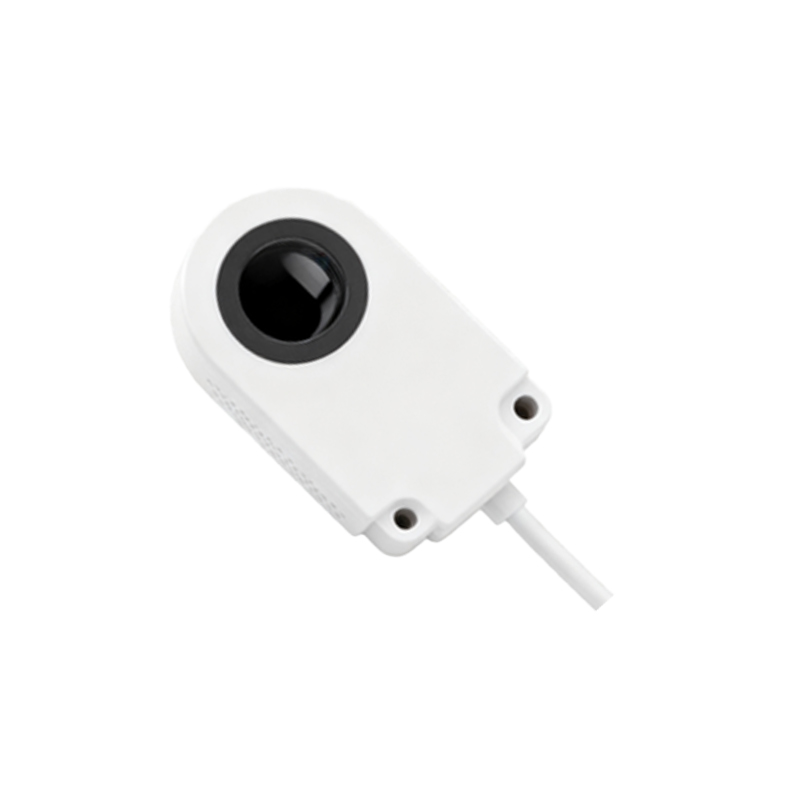
Inductive Proximity Sensors
Inductive proximity sensors are specifically used for detecting metallic objects, primarily ferrous metals like iron and steel, though some versions can sense non-ferrous metals. The operating principle is based on electromagnetic induction. The sensor contains a coil wound around a ferrite core connected to an oscillator. When an AC current passes through the coil, it generates an alternating electromagnetic field at the sensing face. When a conductive metal object enters this field, eddy currents are induced on the object's surface. This causes a change in the oscillation amplitude, which is detected by a threshold circuit, subsequently switching the sensor's output state. Common applications include position sensing of metal parts on assembly lines, detecting the end position of a cylinder in pneumatic systems, and ensuring machine tool safety. Key characteristics include a short sensing range (typically up to 60mm), high switching frequency, and robustness against non-metallic contaminants.
Capacitive Proximity Sensors
Capacitive proximity sensors can detect both metallic and non-metallic materials, including liquids, powders, plastics, and wood. They operate on the principle of capacitance change. The sensor's active face forms one plate of a capacitor, with the ground acting as the other plate. An oscillator circuit creates an electrostatic field. When any material with a dielectric constant different from air approaches the sensing face, it alters the capacitance of the system. This change increases the oscillation amplitude until it reaches a threshold, triggering the output switch. These sensors are ideal for applications like liquid level detection in tanks, monitoring presence of plastic caps on bottles, or sensing powdered material in hoppers. They often feature adjustable sensitivity to compensate for different material properties or to ignore background interference. Their sensing range is generally comparable to or slightly less than inductive types.
Ultrasonic Proximity Sensors
Ultrasonic proximity sensors utilize sound waves beyond the human hearing range (typically above 20 kHz) to detect objects, regardless of their material, color, or transparency. They consist of a transmitter that emits ultrasonic pulses and a receiver that listens for the echo. The sensor calculates the time interval between pulse emission and echo reception to determine the distance to the target. This time-of-flight principle allows for precise distance measurement, not just presence detection. They excel in challenging conditions such as detecting clear glass, viscous liquids, or irregularly shaped objects. Common uses include pallet detection in warehouses, loop control in winding machines, and collision avoidance in automated guided vehicles (AGVs). Factors like temperature, air turbulence, and the object's sound-absorbing properties can influence their performance, but many models include temperature compensation.
Photoelectric Proximity Sensors
Photoelectric sensors use light beams to detect objects. They comprise a light emitter (usually an LED producing visible red, infrared, or laser light) and a photoreceiver. There are three main operating modes for proximity detection: diffuse (reflective), retro-reflective, and through-beam. In the diffuse mode, the emitter and receiver are housed in the same unit. The sensor detects light reflected directly from the target object. This mode is suitable for detecting objects at short to medium ranges. These sensors can detect virtually any material that reflects sufficient light, making them highly versatile. Applications include object counting on packaging lines, detecting labels on bottles, and ensuring correct positioning in electronics assembly. Their performance can be affected by environmental factors like ambient light, dust, fog, or the color and reflectivity of the target object.
Magnetic Proximity Sensors (Reed Switches)
Magnetic proximity sensors, often implemented as reed switches or Hall-effect sensors, detect the presence of a permanent magnet. A reed switch consists of two ferromagnetic, flexible metal reeds sealed within a glass tube filled with inert gas. When a magnet approaches, the reeds magnetize, attract each other, and make contact, closing the circuit. Hall-effect sensors produce a voltage change when exposed to a