Introduction to Photoelectric Sensing Technology
Photoelectric sensors are indispensable components in modern industrial automation, providing non-contact detection of objects based on light modulation. These sensors operate by emitting a beam of light—typically infrared, visible red, or laser—and detecting changes in the received light signal caused by the presence or absence of a target. The core principle involves the interaction between the emitted light and the target's surface characteristics, such as color, reflectivity, or contrast. For detection tasks involving specific patterns like dots or lines, photoelectric sensors offer high precision, reliability, and speed, making them ideal for applications in packaging, assembly, printing, and quality control. Their ability to function in harsh environments with minimal maintenance further solidifies their role in industrial settings.
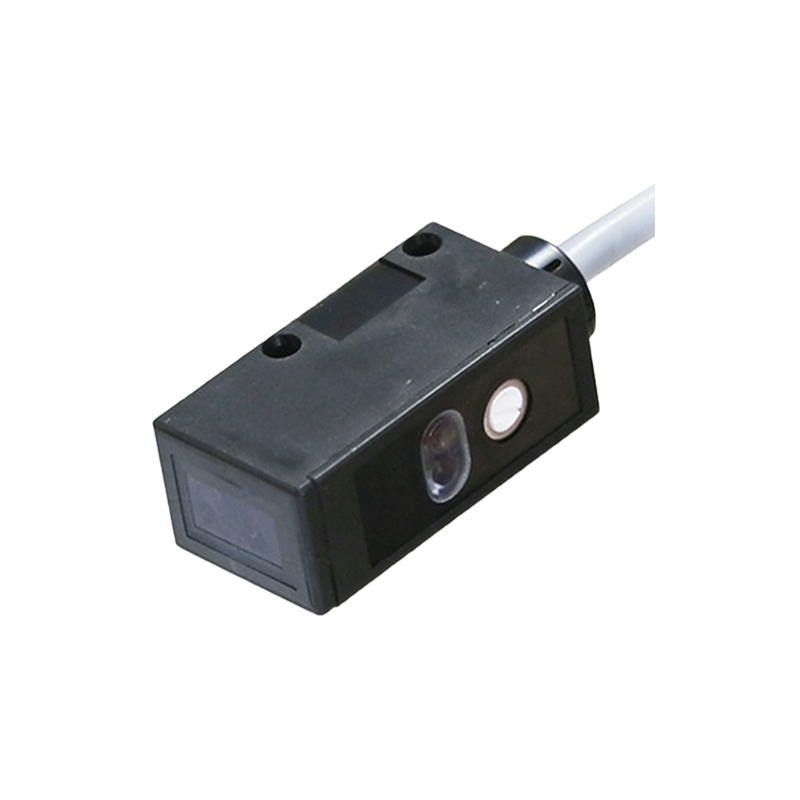
Fundamentals of Dot Detection with Photoelectric Sensors
Dot detection refers to the identification of small, discrete marks or points on a surface, often used for positioning, registration, or verification. Photoelectric sensors configured for dot detection typically utilize a focused light beam and a receiver tuned to detect subtle changes in reflectance. Key to this process is the contrast between the dot and its background. For instance, a black dot on a white substrate absorbs more light, resulting in a significant drop in the reflected signal detected by the sensor. Advanced sensors incorporate adjustable sensitivity thresholds to distinguish dots from noise or minor surface imperfections. Factors influencing dot detection accuracy include the dot's size, color, the sensor's resolution, and environmental conditions like ambient light interference. Proper alignment and calibration are critical to ensure consistent performance.
Principles of Line Detection and Tracking
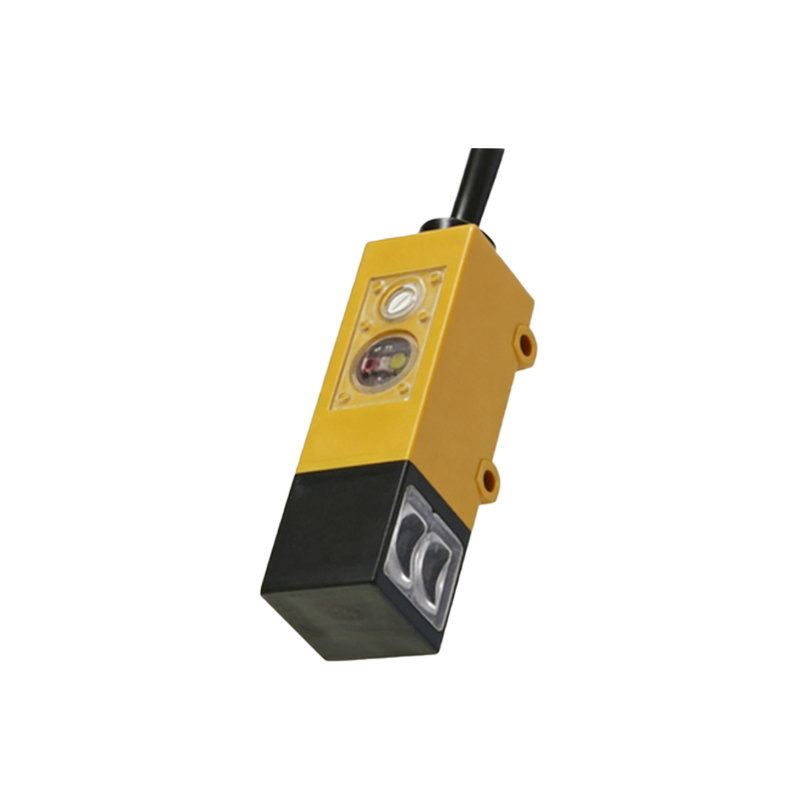
Line detection involves identifying continuous or dashed lines on surfaces, commonly used in guidance systems, edge detection, and path following. Photoelectric sensors for line detection often employ diffuse or reflective sensing modes, where the sensor evaluates the reflectivity along a defined path. A line with a different color or material than the background creates a detectable contrast in light reflection. For precise tracking, sensors may use multiple receiver elements or scanning techniques to monitor the line's position and orientation. The width, color consistency, and contrast of the line relative to the background are crucial parameters. In automated machinery, such sensors enable real-time adjustments to maintain alignment, such as in web guiding or robotic navigation applications.
Color Mark Sensing: Distinguishing Dots and Lines by Hue
Color mark sensors, a specialized subset of photoelectric sensors, are designed to detect specific colors or color contrasts, making them essential for dot and line detection where color differentiation is required. These sensors emit light containing multiple wavelengths and analyze the reflected spectrum to identify hues. For example, they can distinguish a red dot from a green background or detect printed color lines on packaging. The technology relies on the target's spectral reflectance properties, allowing for high accuracy even with low contrast in grayscale. Key considerations include the light source's stability, the sensor's color discrimination capability, and the influence of surface gloss or texture. Applications range from label verification to sorting systems based on color-coded marks.
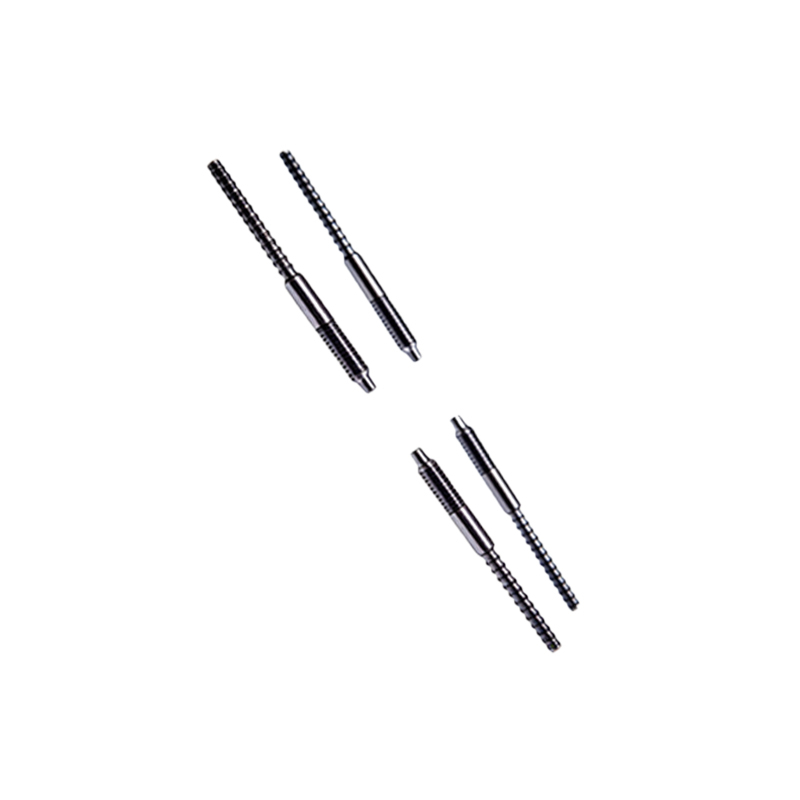
Key Sensor Types: Through-Beam, Retroreflective, and Diffuse
Different photoelectric sensor types offer varying advantages for dot and line detection. Through-beam sensors consist of separate emitter and receiver units, providing high accuracy and long-range detection by measuring light interruption, suitable for precise dot positioning. Retroreflective sensors use a reflector to bounce light back to the receiver, ideal for detecting lines on reflective surfaces. Diffuse sensors, where the emitter and receiver are in one housing, detect light reflected directly from the target, offering flexibility for close-range dot or line detection on non-uniform backgrounds. Each type has trade-offs in terms of setup complexity, environmental robustness, and sensitivity, requiring selection based on specific application needs.
Application Examples in Industrial Automation
In industrial contexts, dot and line detection with photoelectric sensors enhances efficiency and quality. For instance, in printing, sensors detect registration dots to ensure color alignment, preventing misprints. In packaging lines, they identify cut marks or perforation lines on films to trigger sealing or cutting actions. Automotive assembly uses line sensors to guide robots along weld paths, while electronics manufacturing employs dot detection for component placement on PCBs. These applications rely on sensors' fast response times and durability under conditions like vibration, dust, or temperature variations, demonstrating their versatility across sectors.
Optimization and Best Practices for Reliable Detection
To achieve reliable dot and line detection, several best practices should be followed. First, select a sensor with appropriate resolution and sensing distance for the target size and environment. Calibrate sensitivity settings to avoid false triggers from background noise. Use filters or modulated light to reduce ambient light interference. Ensure proper mounting and alignment to maintain consistent beam focus. Regular maintenance, such as cleaning lenses and checking connections, prolongs sensor life. Testing under real operating conditions helps fine-tune parameters, ensuring robust performance in dynamic industrial settings.
Future Trends and Technological Advancements
The future of photoelectric sensing for dot and line detection is shaped by advancements in miniaturization, smart connectivity, and enhanced precision. Emerging sensors integrate IoT capabilities for real-time monitoring and predictive maintenance, reducing downtime. Improvements in laser and LED technology offer higher resolution for detecting smaller dots or finer lines. Machine learning algorithms are being incorporated to adapt to varying surface conditions autonomously. As industries move toward greater automation and quality demands, these innovations will expand the applications and reliability of photoelectric sensors in complex detection tasks.