In the seamless operation of countless devices and systems that define our contemporary world, there exists a silent, unseen sentinel. This guardian operates without a whisper, making instantaneous decisions that enhance safety, improve efficiency, and enable intuitive interactions. It is the proximity sensor, a fundamental component that has evolved from a niche industrial tool into a ubiquitous cornerstone of modern electronics.
At its core, a proximity sensor is a device that detects the presence or absence of an object within a specified range without any physical contact. This non-contact principle is its defining feature and the source of its immense utility. By eliminating mechanical wear and tear, these sensors offer remarkable reliability and longevity, operating in environments where dirt, oil, or vibration would cripple traditional mechanical switches.
The technological landscape of proximity sensors is diverse, with each type employing a distinct physical principle tailored to specific applications. Inductive proximity sensors are the workhorses of industrial automation. They generate an electromagnetic field and detect the eddy currents induced in metallic targets. You'll find them reliably counting metal parts on a conveyor belt, confirming the position of a robotic arm, or ensuring a machine door is safely closed before operation begins.
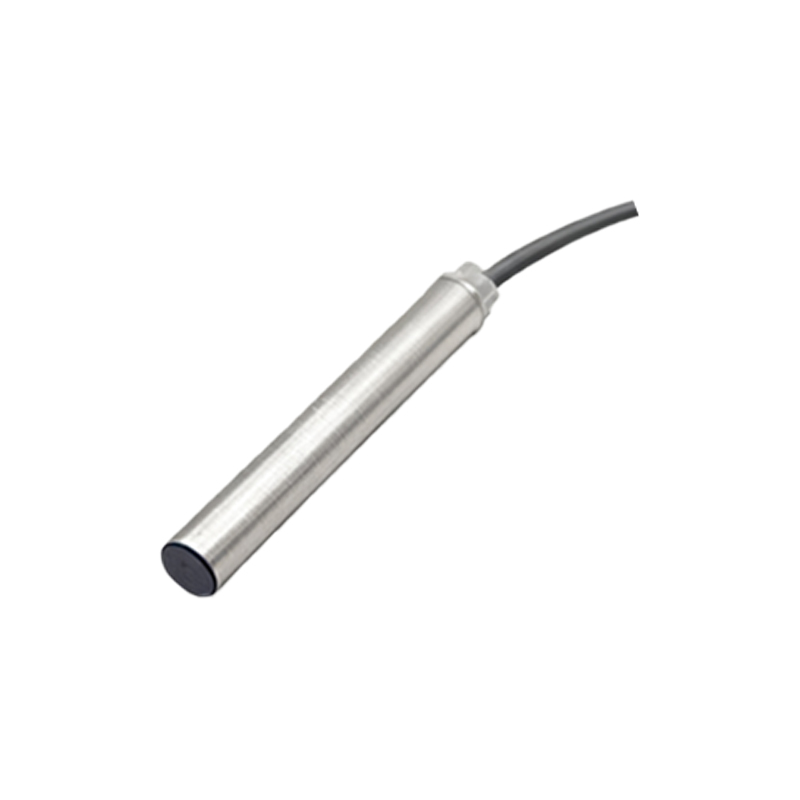
For detecting non-metallic objects—be it plastic, wood, liquid, or even a human hand—capacitive proximity sensors take the lead. They function by measuring changes in capacitance caused by the intrusion of any material into their electrostatic field. This makes them perfect for level detection in tanks containing liquids or granular materials, touch-sensitive control panels, and applications requiring the detection of organic substances.
In scenarios demanding longer detection ranges or precise position sensing of any material, photoelectric sensors are the preferred choice. These devices consist of a light emitter (usually an LED) and a receiver. They detect an object by either the interruption of a light beam (through-beam), the reflection from the object itself (diffuse reflective), or the reflection from a dedicated reflector (retro-reflective). From ensuring a product is properly packaged on a high-speed line to creating safety light curtains around dangerous machinery, their versatility is unparalleled.
Perhaps the most familiar type to the average consumer is the ultrasonic proximity sensor. Emitting high-frequency sound waves and measuring the time for the echo to return, these sensors excel at distance measurement and object detection regardless of color, transparency, or material. They are the key component enabling the humble automatic toilet flusher, the hands-free faucet, and the parking assist systems in vehicles that beep with increasing urgency as you reverse towards an obstacle.
The integration of proximity sensors has fundamentally reshaped user experience in consumer electronics. The simple act of a smartphone screen turning off when raised to your ear during a call—preventing accidental cheek-dialing—is a classic example. Modern laptops use them to conserve power by putting the display to sleep when the user steps away. They enable "always-on" displays that activate only when a hand is waved nearby, balancing information accessibility with battery life.
Beyond convenience, their role in safety is paramount. In automotive applications, they form the sensory foundation for Advanced Driver-Assistance Systems (ADAS). Blind-spot monitoring, automatic emergency braking, and cross-traffic alerts all rely on networks of radar, LiDAR (a laser-based proximity sensing technology), and ultrasonic sensors to perceive the vehicle's surroundings. In industrial settings, safety interlock systems equipped with these sensors prevent machinery from operating if a guard door is open, protecting workers from catastrophic injury.
The future trajectory of proximity sensing is intertwined with the expansion of the Internet of Things (IoT) and smart environments. As buildings become more intelligent, networks of sensors will manage lighting and climate control based on human occupancy, leading to significant energy savings. In robotics and collaborative robots (cobots), advanced proximity sensing allows for safe and fluid human-robot interaction, where the machine can sense a nearby worker and slow down or stop to prevent collisions.
The development continues towards miniaturization, increased sensitivity, and lower power consumption. Emerging technologies like time-of-flight (ToF) sensors, which use infrared light to create precise depth maps, are enabling new features in mobile devices, from improved portrait-mode photography to gesture control. Furthermore, sensor fusion—the intelligent combination of data from multiple sensor types (inductive, capacitive, camera)—is creating systems with contextual awareness far beyond the capability of any single sensor.
From the factory floor to the palm of your hand, proximity sensors perform their duty invisibly. They are a testament to the idea that the most profound technological advancements are often those we no longer notice. By bridging the physical and digital worlds, these unassuming devices continue to push the boundaries of automation, safety, and interactive design, quietly powering a more responsive and intelligent world.