In the realm of industrial automation and quality control, precision is paramount. Laser diameter sensors have emerged as a critical technology for non-contact, high-accuracy measurement of wires, cables, fibers, tubes, and other cylindrical products. Unlike mechanical gauges or traditional optical methods, these sensors utilize advanced laser scanning principles to deliver real-time, reliable data without touching the measured object, thereby eliminating the risk of deformation or damage.
The core operating principle of a laser diameter sensor involves a focused laser beam that is rapidly scanned across the target object. A high-speed receiver on the opposite side detects the laser light. When the beam encounters the object, it is blocked, creating a shadow. The sensor's sophisticated electronics precisely measure the duration of this shadow as the beam scans. Combined with the known, constant scanning speed, the sensor calculates the object's diameter with exceptional accuracy, often down to the micron level. This process occurs thousands of times per second, enabling continuous monitoring on fast-moving production lines.
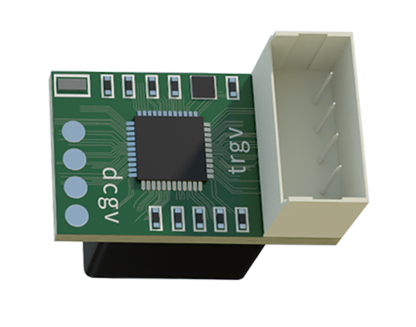
The advantages of implementing laser diameter sensors are substantial. First and foremost is their non-contact nature, which is essential for measuring soft, hot, fragile, or moving materials. They provide instantaneous feedback, allowing for closed-loop control systems that can automatically adjust extruders, rollers, or winders to maintain product dimensions within tight tolerances. This capability directly reduces material waste, improves product consistency, and enhances overall production efficiency. Furthermore, these sensors are largely immune to environmental factors like ambient light or target surface color, especially models employing modulated laser light, ensuring stable performance in harsh industrial settings.
Modern laser diameter sensors offer a range of features to meet diverse application needs. Many models provide analog outputs (e.g., 0-10V, 4-20mA) and digital communication protocols (e.g., Ethernet, RS-485) for seamless integration into factory networks and PLCs. Advanced units include statistical process control (SPC) software, data logging, and alarm functions for out-of-tolerance conditions. Some are designed as compact, single-axis units for basic diameter measurement, while others are dual-axis systems that can measure both horizontal and vertical dimensions simultaneously, useful for detecting ovality or other cross-sectional irregularities.
The applications span numerous industries. In the wire and cable industry, they monitor insulation thickness and conductor diameter. In plastic extrusion, they control the diameter of pipes, hoses, and filaments. The automotive sector uses them for measuring fuel lines, brake hoses, and piston rods. In the manufacturing of optical fibers and medical tubing, where tolerances are extremely tight, laser diameter sensors are indispensable for ensuring quality. They are also vital in the rubber industry for monitoring extruded seals and profiles, and in metalworking for measuring rods and wires during drawing processes.

Selecting the right laser diameter sensor requires careful consideration of several parameters. The measuring range, stand-off distance, and required accuracy are primary factors. Resolution, which is the smallest detectable change in diameter, is also crucial for high-precision tasks. The sampling rate must be high enough to capture sufficient data points on high-speed lines. Environmental conditions such as temperature, dust, and vibration resistance should match the installation site. Finally, the choice between a single-axis and dual-axis model depends on whether ovality measurement is necessary.
Installation and calibration are straightforward but critical for optimal performance. The sensor must be mounted stably, perpendicular to the product's path, to avoid cosine error. Regular calibration using certified precision gauge blocks ensures long-term accuracy. Proper maintenance typically involves keeping the optical windows clean from dust and debris, which is often facilitated by built-in air purge connections.
In conclusion, laser diameter sensors represent a mature yet continuously evolving technology that forms the backbone of precision dimensional control in modern manufacturing. By providing fast, accurate, and non-contact measurement, they empower industries to achieve higher quality standards, optimize material usage, and automate production processes. As Industry 4.0 advances, the integration of these sensors with data analytics and cloud platforms will further enhance predictive maintenance and process optimization, solidifying their role as an essential tool for competitive and efficient industrial operations.