Introduction to Inductive Proximity Sensors
Inductive proximity sensors are non-contact electronic devices widely used in industrial automation for detecting metallic objects, particularly those made of ferrous materials like iron and steel, though they also respond to non-ferrous metals such as copper, aluminum, and brass. These sensors operate on the principle of electromagnetic induction, offering reliable performance in harsh environments where dust, moisture, or vibration may interfere with mechanical switches. Common applications include position sensing, object counting, and safety interlocks in manufacturing, robotics, and automotive systems. Their durability and fast response times make them a staple in modern industrial control systems.
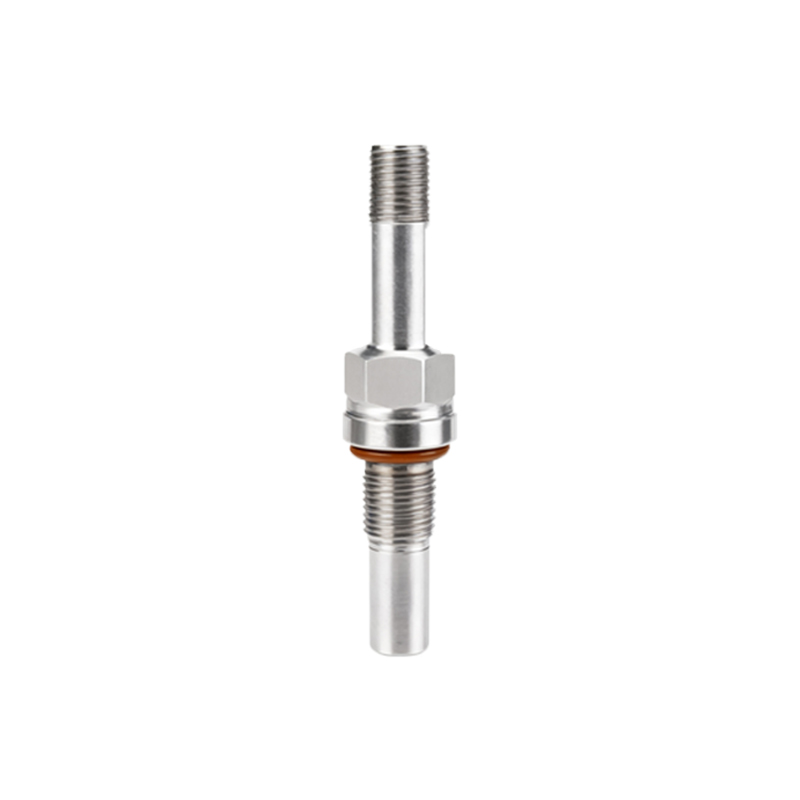
Core Working Principle: Electromagnetic Induction
At the heart of an inductive proximity sensor lies an oscillator circuit that generates a high-frequency alternating magnetic field via a coil wound around a ferrite core. When a conductive metal target enters this magnetic field, eddy currents are induced on the target's surface due to Faraday's law of electromagnetic induction. These eddy currents create their own opposing magnetic field, which interacts with the sensor's original field. This interaction causes a change in the oscillator's amplitude or frequency, depending on the sensor design. The sensor's electronics monitor this change and trigger an output signal when it exceeds a predefined threshold, indicating the presence of a target.
Key Components and Their Functions
An inductive proximity sensor comprises several critical components: the coil and ferrite core, which generate the magnetic field; the oscillator circuit, typically using a Colpitts or Hartley configuration to sustain oscillations; a demodulator that converts the oscillation changes into a DC signal; a Schmitt trigger or comparator for precise switching; and an output stage, which may be NPN, PNP, or analog. The sensor housing is usually made of stainless steel or plastic to protect internal parts from environmental factors. Shielding is often incorporated to limit the magnetic field's range, preventing false triggers from nearby metals, while unshielded variants offer longer detection distances but require careful installation.
Detection Characteristics for Different Metals
The sensor's performance varies significantly with the target material's properties. Ferrous metals like iron have high permeability, enhancing the magnetic field and allowing longer detection ranges. Non-ferrous metals such as copper, aluminum, and brass have lower permeability but higher conductivity, leading to stronger eddy currents but shorter ranges. For copper targets, the detection distance is typically reduced by 30-50% compared to steel due to its lower magnetic permeability. Correction factors, provided in datasheets, help adjust for these variations. Additionally, target size, shape, and orientation affect sensitivity; larger, flat surfaces parallel to the sensor face yield optimal results.
Factors Influencing Sensor Performance
Several factors impact the reliability and accuracy of inductive proximity sensors. Operating temperature can affect coil resistance and oscillator stability, with most sensors rated for -25°C to 70°C. Supply voltage fluctuations may alter switching points, necessitating stable power sources. Mounting conditions, such as embedding in metal, require flush-mounted shielded sensors to avoid interference, while non-flush installations allow extended range. Environmental contaminants like oil or coolant can accumulate on the sensing face, potentially dampening the magnetic field, though modern IP-rated designs mitigate this. Regular calibration and adherence to manufacturer guidelines ensure long-term operation.
Advantages and Limitations in Industrial Use
Inductive proximity sensors offer numerous advantages: they are wear-free due to non-contact operation, have high switching frequencies up to several kHz, and are resistant to dirt and moisture with robust enclosures. They provide precise, repeatable detection without physical force, ideal for high-speed automation. However, limitations include sensitivity only to metals, reduced range for non-ferrous targets like copper, and potential interference from adjacent sensors or strong electromagnetic fields. Cost may be higher than mechanical switches, but their durability often justifies the investment in demanding applications.
Selection and Installation Best Practices
Choosing the right sensor involves considering target material, required sensing distance, environmental conditions, and output type. For copper detection, select sensors with higher frequency oscillators to enhance eddy current response. Installation should ensure proper alignment, with targets approaching axially to the sensing face. Maintain adequate clearance from other metals to prevent shielding effects, and use mounting brackets to minimize vibration. Wiring must follow standards, with shielded cables in noisy environments to prevent electrical interference. Regular testing with actual targets verifies performance before full-scale deployment.
Future Trends and Innovations
Advancements in inductive proximity sensor technology focus on miniaturization, increased intelligence, and enhanced materials. Microsensors with integrated ASICs offer smaller footprints and lower power consumption, suitable for IoT