Introduction to Sensing Technologies
In the world of industrial automation, process control, and electronic device design, sensors play a pivotal role. They are the eyes and ears of a system, converting physical phenomena into measurable electrical signals. Among the vast array of sensors available, Hall effect switches and photoelectric sensors are two prominent types frequently utilized for position detection, speed measurement, and object presence sensing. However, a common point of confusion arises: is a Hall switch a type of photoelectric sensor? The unequivocal answer is no. While both serve similar end functions in many applications, their fundamental operating principles, construction, and ideal use cases are distinctly different. This article will delve into the core technologies of each, highlighting their unique characteristics to clarify this important distinction.
The Operating Principle of a Hall Effect Switch
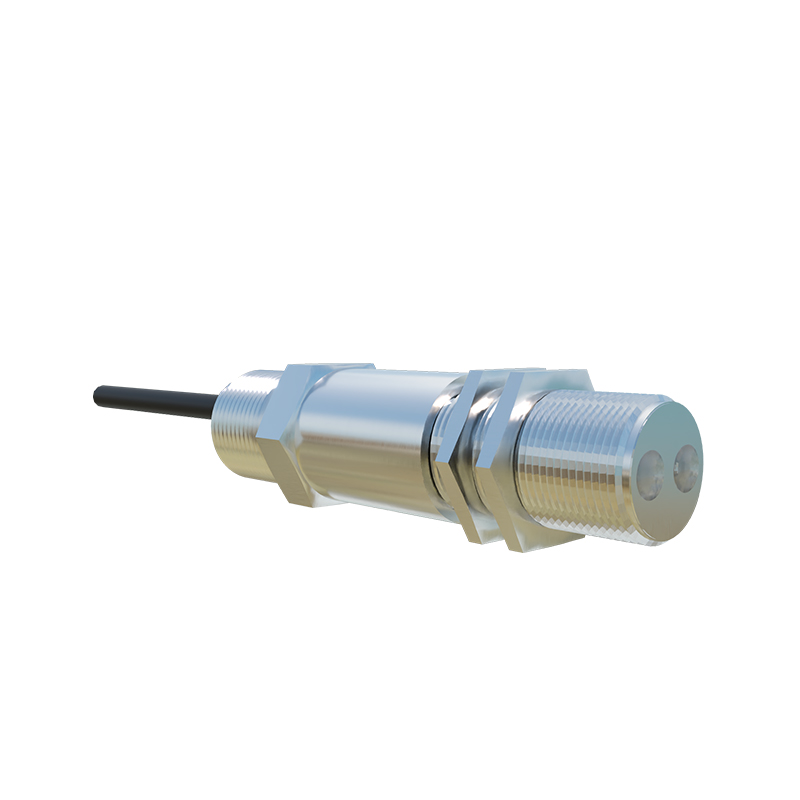
A Hall effect switch is a solid-state device that operates based on a fundamental principle of electromagnetism discovered by Edwin Hall in 1879. The core component is a thin strip of semiconductor material, known as the Hall element. When this element is exposed to a magnetic field and a control current is passed through it, a voltage difference, known as the Hall voltage, is generated perpendicular to both the current and the magnetic field. In a practical Hall switch, this tiny analog voltage is fed into a built-in amplifier and comparator circuit. When the magnetic flux density exceeds a predefined threshold, the integrated circuit triggers, causing the output to switch states—typically from high to low voltage or vice versa. This digital on/off signal is what makes it a "switch." The key takeaway is that Hall switches are triggered solely by the presence and strength of a magnetic field, with no reliance on light.
The Operating Principle of a Photoelectric Sensor
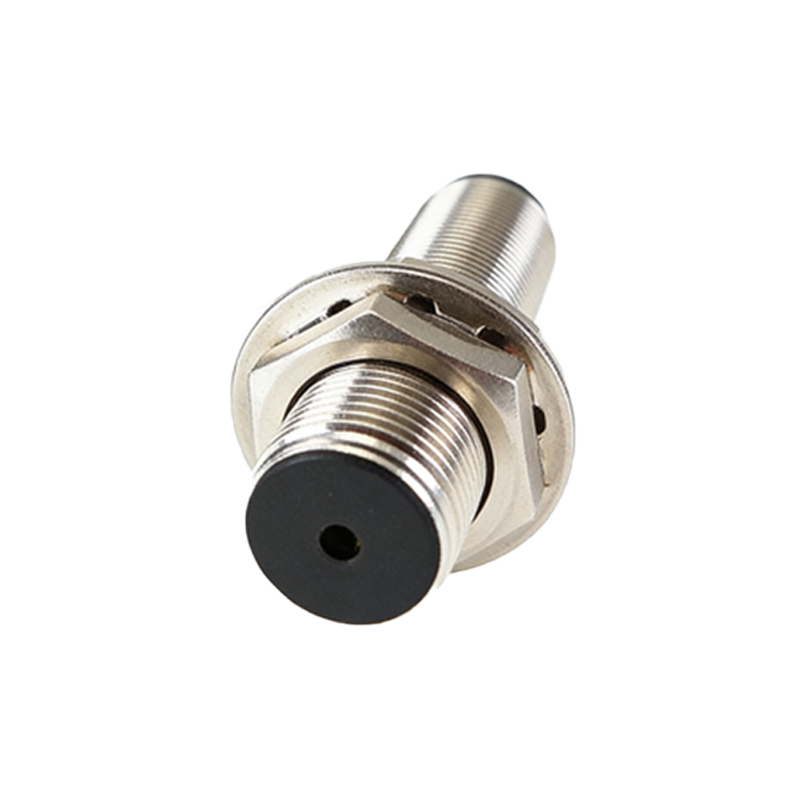
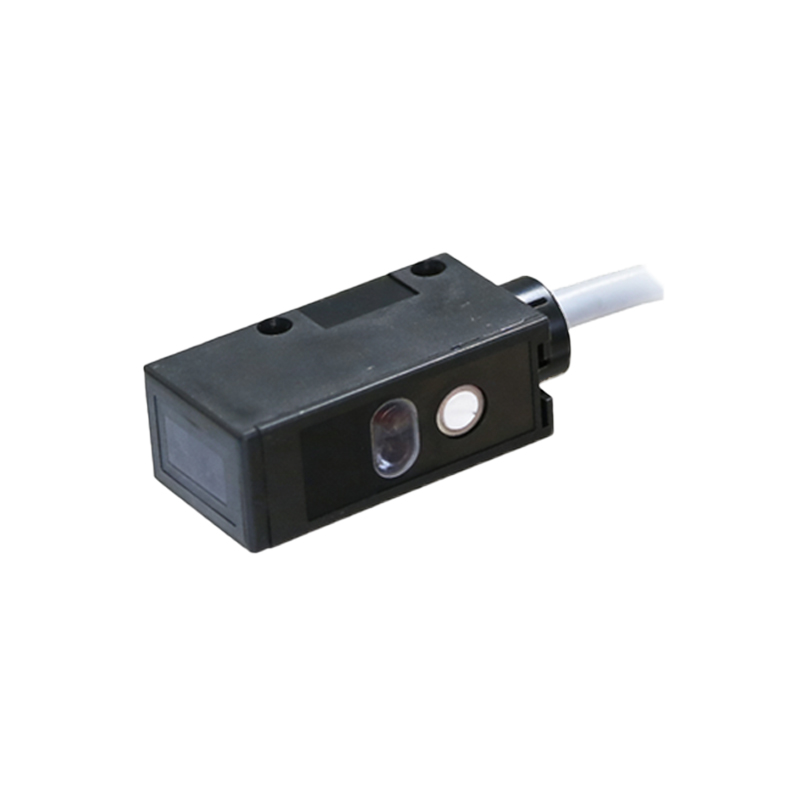
In stark contrast, a photoelectric sensor functions entirely on the principles of light. Its operation involves two core components: a light emitter (usually an LED, laser diode, or sometimes an infrared source) and a light receiver (a phototransistor, photodiode, or similar component). The sensor detects changes in the received light beam. There are three primary modes of operation. The through-beam type has separate emitter and receiver units; an object is detected when it interrupts the light beam. The retro-reflective type uses a single unit and a reflector; detection occurs when the reflected beam is blocked. The diffuse reflective type detects an object by measuring the light reflected directly off the object itself. The receiver converts the received light intensity into an electrical current, which is then processed to provide a switching output. The fundamental trigger here is a change in light properties, not magnetism.
Key Comparative Differences
The difference in operating principles leads to several practical distinctions. First, the stimulus: Hall switches require a magnetic field (from a permanent magnet or electromagnet), while photoelectric sensors require a light beam. Environmental susceptibility is a major differentiator. Hall switches are virtually immune to ambient light, dust, fog, and opaque contaminants. They are robust in dirty, oily, or washdown environments. Photoelectric sensors, however, can be affected by ambient light, and their performance can degrade in the presence of dust, steam, or highly reflective backgrounds. On the other hand, photoelectric sensors typically offer much longer sensing ranges—from centimeters up to several meters—compared to Hall switches, which generally have a range limited to a few centimeters from the magnet. Furthermore, Hall switches require a magnet to be attached to the moving target, whereas photoelectric sensors can detect any object that interrupts or reflects light.
Typical Application Scenarios
Understanding these differences guides proper sensor selection. Hall effect switches excel in applications involving harsh environments and close-proximity detection. Common uses include sensing the position of a door or lid (using a magnet on the moving part), detecting the rotation speed of a gear or motor shaft (with a ring magnet), in automotive systems for crankshaft/camshaft position sensing, and in brushless DC motors for commutation. Photoelectric sensors are the go-to choice for non-contact detection over longer distances. They are ubiquitous on production lines for counting bottles, detecting labels, monitoring fill levels, in packaging machinery, security systems for intrusion detection, and in automated warehousing for pallet positioning. One would not use a Hall switch to detect a transparent glass bottle, nor would one use a photoelectric sensor inside a heavily grease-laden gearbox.
Conclusion and Selection Guidance
To conclude, a Hall switch is definitively not a photoelectric sensor. They are distinct technologies that solve detection problems in different ways. The Hall switch is a magnetic field-activated device, prized for its environmental robustness and reliability in short-range, mechanically coupled applications. The photoelectric sensor is a light-based device, valued for its versatility, longer range, and ability to detect a wide variety of materials without physical contact. The choice between them is not a matter of superiority but of suitability. Engineers must consider the nature of the target, the required sensing distance, the environmental conditions, and the installation constraints. By clearly understanding the core principle—magnetism versus light—one can make an informed decision to ensure optimal system performance and reliability.