What is an Inductive Proximity Sensor?
An inductive proximity sensor is a non-contact electronic device designed to detect the presence or absence of metallic objects within its sensing range without any physical contact. It operates based on the principle of electromagnetic induction. The core component is a coil wound around a ferrite core, which is part of an oscillator circuit. When an alternating current flows through this coil, it generates an oscillating electromagnetic field in front of the sensor face. When a metallic object enters this active field, eddy currents are induced on the surface of the object. These eddy currents draw energy from the oscillator, resulting in a reduction of the oscillation amplitude. The sensor's internal circuitry monitors this amplitude change and triggers a switching output—typically a solid-state transistor or relay—when the amplitude drops below a predefined threshold. This output signal can then be used to control machinery, count parts, or signal an object's position in an automated system.
Key Components and Operating Principle
The fundamental operation hinges on three main parts: the oscillator coil, the detection circuit, and the output circuit. The oscillator generates a high-frequency electromagnetic field. The detection circuit, often comprising a Schmitt trigger or comparator, analyzes the amplitude of the oscillations. The output circuit provides the final electrical signal. The sensing distance, or "switching distance," is a critical specification and is standardized for different sensor sizes and target materials. For instance, a sensor calibrated for mild steel will have a longer nominal sensing distance compared to one for non-ferrous metals like aluminum or copper, as ferrous materials induce stronger eddy currents. The sensor is insensitive to non-metallic materials such as plastic, wood, or liquids, making it ideal for harsh industrial environments where contaminants like dust, oil, or coolant are present.
Common Types and Designs
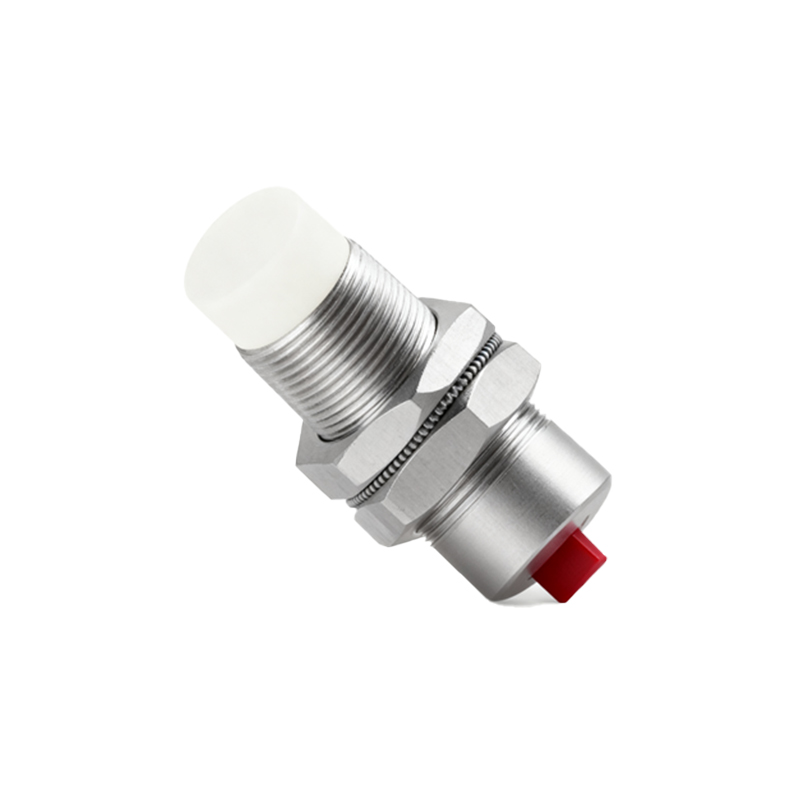
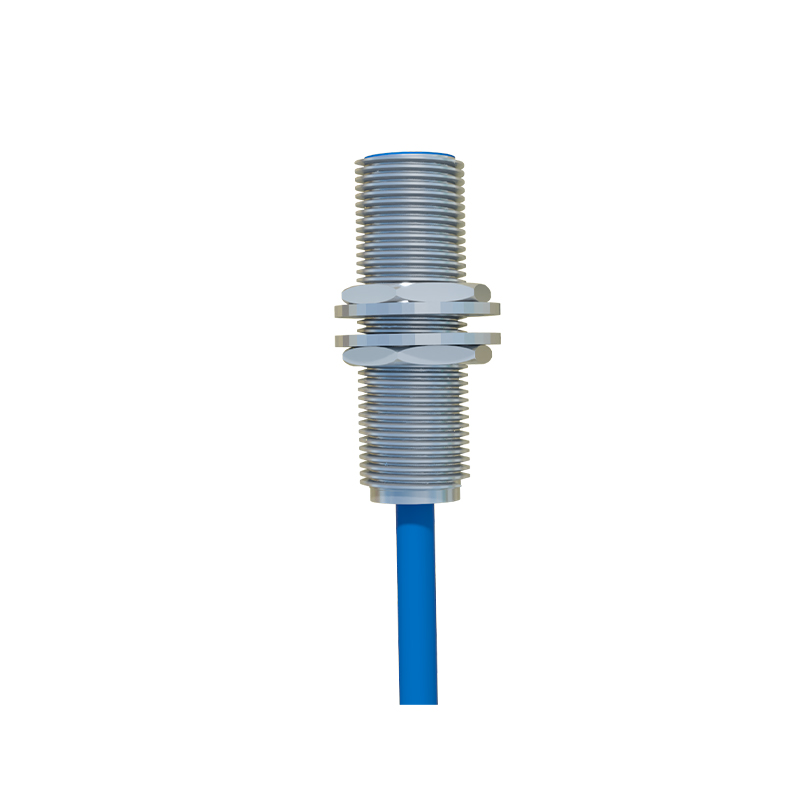
Inductive proximity sensors come in various form factors to suit diverse application needs. The most common housing shapes are cylindrical (barrel-type) and rectangular (block-type). Cylindrical sensors, with threads for easy mounting in a drilled hole, are prevalent. They are further classified by their sensing face: shielded (flush-mountable) or unshielded (non-flush). Shielded sensors can be mounted flush with metal surfaces without affecting their sensing field, whereas unshielded sensors offer a longer sensing range but require clearance around the sensing face. Other specialized types include analog-output sensors that provide a continuous signal proportional to the distance, and all-metal sensors designed to detect all types of metals with nearly equal sensitivity. High-temperature variants and sensors with extended sensing ranges are also available for specific industrial challenges.
Critical Technical Specifications
When selecting an inductive sensor, several key parameters must be considered. The nominal sensing distance (Sn) is the rated operating distance under standard conditions. A safety factor is applied, and the effective operating distance is typically 70-80% of Sn to account for voltage fluctuations and temperature variations. Repeat accuracy refers to the consistency of the switching point. The switching frequency defines how many on/off cycles the sensor can perform per second, which is crucial for high-speed counting. Environmental ratings like IP (Ingress Protection) codes (e.g., IP67) indicate resistance to dust and water immersion. Operating voltage ranges (commonly 10-30V DC or 20-250V AC) and output type (NPN sinking, PNP sourcing, or NO/NC contacts) must match the control system's requirements. Temperature drift is another factor, as extreme temperatures can slightly alter the sensing distance.
Typical Industrial Applications
These sensors are workhorses in factory automation due to their robustness, long service life, and fast response time. Common applications include position detection of machine parts (e.g., checking if a cylinder is extended or retracted), end-of-travel limit sensing, and object counting on conveyor belts. They are extensively used in metal machining centers for tool breakage detection, in assembly lines for part presence verification, and in material handling for pallet positioning. In the automotive industry, they monitor robotic weld gun positions. Their non-contact nature eliminates mechanical wear, making them more reliable than mechanical limit switches in high-cycle applications.
Advantages and Limitations
The primary advantages of inductive proximity sensors are their durability, high switching speed, and ability to function in dirty or wet environments. They are not affected by most non-metallic contaminants. Since there is no physical contact, there is no wear on the sensor or the target, leading to minimal maintenance. However, their limitations are clear: they only detect metals, and the sensing distance is relatively short, typically from a few millimeters up to about 60 millimeters for large-diameter sensors. The sensing performance