Understanding Proximity Sensor Technology
Proximity sensors are non-contact devices designed to detect the presence or absence of an object within a defined sensing range. Their operation is fundamentally based on the interaction between the sensor's emitted field and the target material. The most common types include inductive, capacitive, ultrasonic, and photoelectric sensors. Each type functions on distinct physical principles, which directly dictates the materials they can reliably detect. Inductive sensors, for instance, generate an electromagnetic field to detect metallic objects. Capacitive sensors create an electrostatic field and react to changes in capacitance caused by any material, including non-metals. This core technological difference is the primary factor in determining a sensor's capability to sense materials like wood.
The Core Challenge: Wood's Electrical Properties
Wood, as an organic material, presents specific challenges for sensing technologies. Its primary characteristic is being a non-conductive, dielectric material. It does not conduct electricity and has a relatively low dielectric constant compared to metals or water. For inductive proximity sensors, which rely on inducing eddy currents in conductive targets, wood is essentially invisible. Since wood does not conduct electricity, it cannot disturb the electromagnetic field generated by an inductive sensor. Therefore, standard inductive proximity switches cannot detect wood under any normal operating conditions. This makes them unsuitable for woodworking or lumber applications where non-metal detection is required.
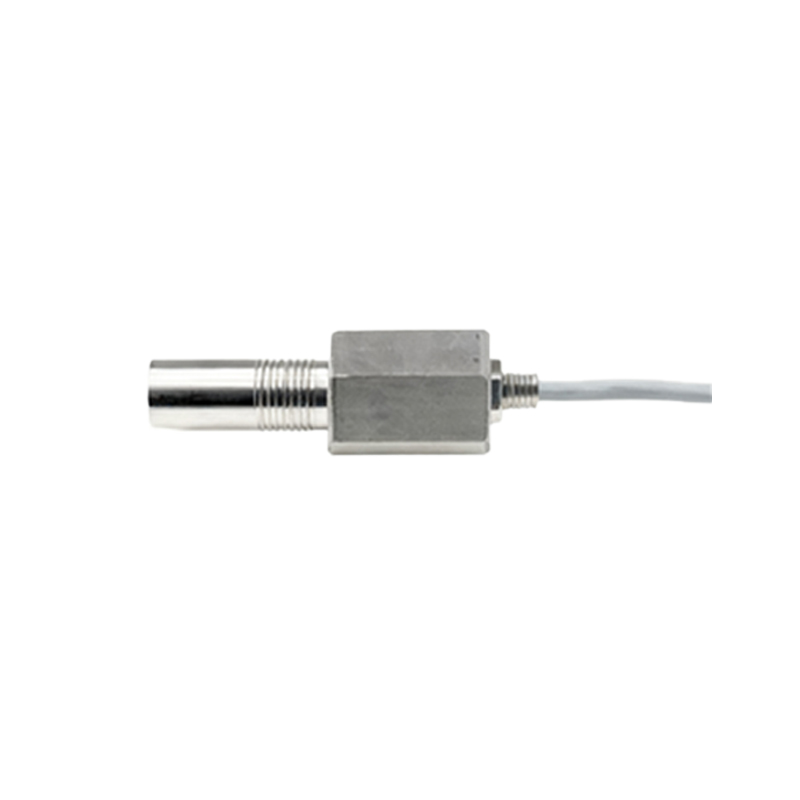
Capacitive Sensors: The Viable Solution for Wood Detection
The most effective and common type of proximity sensor for detecting wood is the capacitive proximity sensor. These sensors can detect both conductive and non-conductive materials by sensing changes in capacitance. A capacitive sensor generates an electrostatic field. When an object enters this field, it alters the capacitance between the sensor's active face and the ground. Since all materials, including wood, have a dielectric constant different from air, they cause a measurable change in capacitance. Dry wood has a modest dielectric constant, but it is sufficient for a sensitive capacitive sensor to register. Factors such as wood density, moisture content, and the sensor's sensitivity setting significantly influence the reliable sensing distance. For optimal performance, capacitive sensors often require calibration for the specific type of wood being detected.
Influence of Wood Moisture Content on Sensing
The moisture content within the wood is a critical variable. Dry wood is a poor conductor and a moderate dielectric. However, as moisture content increases, the wood's electrical properties change. Moist or wet wood exhibits higher conductivity and a significantly increased dielectric constant. This makes it much easier for a capacitive sensor to detect. In fact, a sensor calibrated for dry lumber might trigger erratically or at a longer range if the wood becomes damp. This characteristic can be leveraged in applications where moisture detection is ancillary to presence detection, but it requires careful sensor selection and setup to ensure consistent operation under variable environmental conditions.
Alternative Sensing Technologies for Wood
While capacitive sensors are the primary choice, other proximity sensing technologies can also detect wood, albeit with different considerations. Ultrasonic sensors use sound waves to measure the time-of-flight to an object. They detect wood reliably regardless of its color, surface finish, or material composition, as long as the surface is sufficiently reflective to sound waves. Photoelectric sensors, especially diffuse or retro-reflective types, can detect wood effectively. However, performance may vary with the wood's color (dark wood absorbs more light) and surface texture. For instance, a rough-sawn surface may scatter light differently than a polished one. These sensors offer longer ranges than capacitive sensors but may be influenced by ambient light or dust common in wood processing environments.
Practical Application and Configuration Tips
For successful integration in applications involving wood, proper sensor selection and configuration are paramount. When using capacitive sensors, choose models with adjustable sensitivity. This allows fine-tuning to the specific wood type and to ignore background interference. The sensor should be mounted stably, as vibration can affect capacitance readings. Shielding is also crucial; non-shielded (non-flush) capacitive sensors have a larger sensing field and may detect unintended targets, while shielded (flush) models have a more focused field. For consistent detection of dry wood, consider sensors specifically rated for non-metallic material detection. Always consult the sensor's datasheet for the specific reduction factor for wood, which indicates the reduced sensing range compared to a standard steel target.
Conclusion and Industry Recommendations
In summary, standard inductive proximity sensors cannot detect wood. Capacitive proximity sensors are the most suitable and widely used technology for this purpose, capable of sensing wood due to its dielectric properties. The detection reliability and range are heavily dependent on the wood's moisture content and density. For applications requiring long-range or where wood surface properties vary greatly, ultrasonic or photoelectric sensors present viable alternatives. The key