Introduction to Photoelectric Sensing Principles
At the core of every photoelectric sensor lies its light source, the fundamental component responsible for generating the optical signal used for detection. These sensors operate on the principle of emitting a beam of light and then detecting changes in the received light's properties. The interaction between the emitted light and the target object—be it through reflection, interruption, or beam reception—triggers the sensor's output. The choice of light source directly influences the sensor's performance, reliability, and suitability for specific applications. Key parameters such as wavelength, intensity, modulation capability, and physical size are determined by the light source technology employed. Understanding the characteristics of different light sources is therefore the first critical step in selecting the optimal photoelectric sensor for any industrial automation, packaging, material handling, or safety application.
Incandescent Lamps: The Traditional Choice
Historically, incandescent lamps were among the first light sources used in early photoelectric sensors. These lamps produce light by heating a filament wire to a high temperature until it glows. Their primary advantage was the generation of broad-spectrum, visible white light, which simplified alignment during installation and setup. However, their use in modern industrial sensors has become exceedingly rare due to significant drawbacks. Incandescent bulbs have a very short operational lifespan, often only a few thousand hours, and are highly susceptible to failure from vibration and shock. Their light output is unmodulated, making them vulnerable to interference from ambient light sources like sunlight or factory lighting. Furthermore, they are inefficient, converting most of their electrical energy into heat rather than light. For these reasons, they have been almost entirely superseded by solid-state light sources in contemporary sensor design.
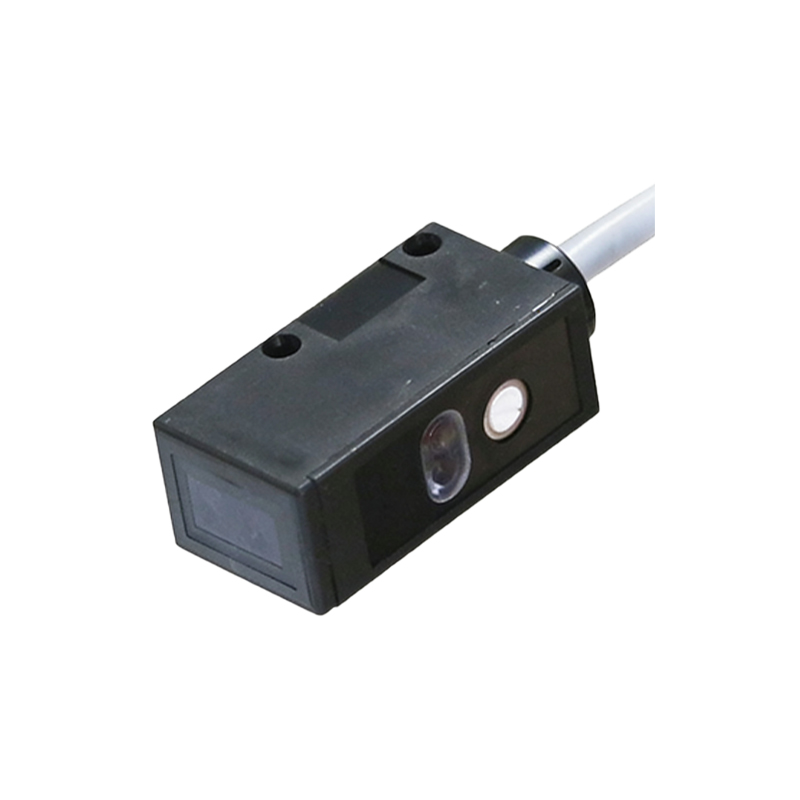
Light Emitting Diodes (LEDs): The Modern Standard
Light Emitting Diodes (LEDs) represent the dominant and most versatile light source technology in photoelectric sensors today. Their adoption revolutionized sensor design, offering unparalleled benefits. LEDs are solid-state semiconductor devices that emit light when an electric current passes through them. They are available in a wide range of discrete wavelengths, including visible red, green, blue, and invisible infrared. Key advantages include an exceptionally long service life, often exceeding 100,000 hours of continuous operation. They are highly resistant to mechanical shock and vibration. Crucially, their fast switching speed allows for easy modulation, where the light is pulsed at a specific high frequency. This enables the sensor's receiver to distinguish the modulated signal from constant ambient light, dramatically improving noise immunity and sensing range. Their small size, low power consumption, and minimal heat generation make them ideal for compact and efficient sensor designs.
Laser Diodes: Precision and Long-Range Sensing
For applications demanding high precision, very small spot sizes, or exceptionally long sensing ranges, laser diodes are the preferred light source. A laser diode produces a coherent, monochromatic, and highly collimated beam of light. This results in a very small, intense point of light that diverges minimally over distance. This characteristic allows for the precise detection of extremely small objects, exact edge detection, or accurate positioning. Laser-based sensors can achieve sensing ranges that are orders of magnitude greater than standard LED-based sensors. They are indispensable in industries such as semiconductor manufacturing, precision assembly, and logistics for measuring object height or width. Due to the concentrated energy, laser products are classified for eye safety (e.g., Class 1, Class 2). Modern sensor designs incorporate safety features to ensure compliance with international laser safety standards without compromising performance.
Specialized Wavelengths: Infrared, Red, and Blue LEDs
The wavelength of the light source is a critical selection criterion, as it determines how the light interacts with different materials. Infrared LEDs are the most common, offering the longest range and best immunity to visible ambient light. They are used for general-purpose detection of opaque objects. Visible red LEDs are popular where visual beam alignment is necessary, simplifying setup and troubleshooting. Blue LEDs and green LEDs have unique properties. Their shorter wavelength provides higher energy and is more effectively reflected by certain challenging materials. For instance, blue light is excellent for detecting transparent objects like glass or plastic bottles, or for sensing marks on a contrasting background (e.g., a blue LED can be optimal for detecting a white mark on a brown cardboard box). Selecting the correct wavelength is essential for overcoming application-specific challenges related to target color, transparency, or background interference.
Modulation Techniques and Ambient Light Rejection
A defining feature of modern LED and laser-based photoelectric sensors is the use of modulation. Instead of emitting a constant beam, the light source is pulsed at a specific high frequency (e.g., several kHz). The sensor's receiver circuit is tuned to recognize only light pulsing at that exact frequency. This technique makes the sensor virtually immune to interference from steady-state ambient light sources, such as incandescent, fluorescent, or sunlight. It allows sensors to operate reliably in brightly lit environments and significantly boosts the effective signal-to-noise ratio, enabling longer sensing distances and more stable detection. The choice of modulation frequency can also be strategic; some sensors use a variable frequency to avoid crosstalk when multiple sensors are installed in close proximity.
Key Selection Criteria for Optimal Performance
Choosing the right light source involves evaluating several application-specific factors. First, consider the *sensing range* and required *spot size*; laser diodes excel for long-range, small-spot needs. Second, evaluate the *target characteristics*: material (metallic, plastic, transparent), color, and surface finish (matte, glossy). A glossy surface may require a polarized sensor model to avoid false triggers from specular reflection. Third, assess the *environmental conditions*: presence of dust, fog, steam, or intense ambient light. Infrared light may penetrate certain airborne contaminants better than visible light. Fourth, factor in *alignment needs*; visible light aids setup. Finally, consider *regulatory and safety requirements*, especially for laser devices. Consulting with sensor manufacturers or technical datasheets that detail the light source specifications is always recommended to ensure a robust and reliable solution.
Future Trends and Advancements
The evolution of photoelectric sensor light sources continues. Trends include the development of LEDs with even higher output intensities and more precise wavelength tolerances. Multi-wavelength or tunable light sources embedded in a single sensor housing are emerging for advanced applications requiring material discrimination or color detection. Furthermore, the integration of VCSEL (Vertical-Cavity Surface-Emitting Laser) technology is gaining traction. VCSELs offer performance similar to edge-emitting laser diodes but with lower cost, lower power consumption, and the ability to be fabricated in arrays, opening new possibilities for miniaturized and smart sensor systems. As Industry 4.0 and IoT connectivity become standard, the light source will remain a pivotal element, with its data contributing to predictive maintenance and overall system intelligence.