Introduction to Microwave Sensing Technology
Microwave detector proximity sensors represent a sophisticated class of non-contact sensing devices that utilize electromagnetic waves in the microwave frequency spectrum, typically ranging from 1 GHz to over 100 GHz. Unlike optical or ultrasonic sensors, these devices emit low-power, continuous-wave or modulated microwave signals towards a target. The core principle hinges on the Doppler effect or frequency shift, where the reflected signal's characteristics change based on the target's motion, distance, and material properties. This technology is renowned for its ability to penetrate various non-metallic materials like plastics, glass, and thin walls, enabling detection through obstacles—a unique advantage in industrial settings. The sensors are largely immune to environmental factors such as dust, smoke, fog, and ambient light, making them exceptionally reliable in challenging conditions where other sensor types might fail.
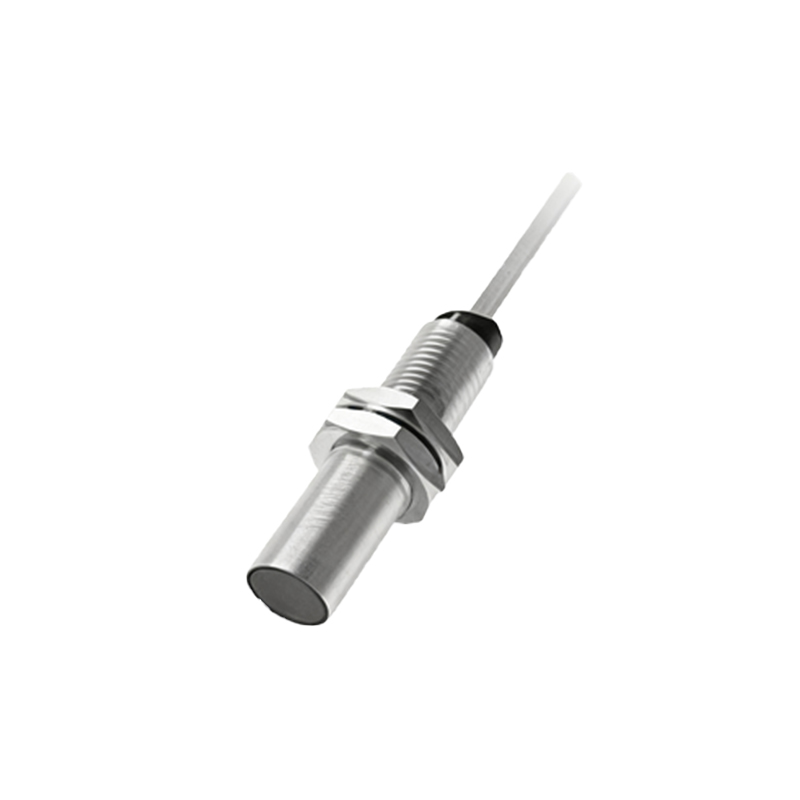
Core Operating Principles and Signal Processing
The fundamental operation involves a microwave generator, typically a Gunn diode or a similar solid-state component, which produces the transmitted signal. A portion of this signal is directed to a mixer along with the reflected signal from a potential target. When a target moves within the detection field, it induces a Doppler shift in the reflected frequency. This shift is directly proportional to the target's velocity relative to the sensor. The mixer outputs a low-frequency beat signal, which is then amplified, filtered, and processed by integrated circuitry. Advanced models employ Frequency Modulated Continuous Wave (FMCW) techniques for precise distance measurement, not just motion detection. By linearly modulating the transmitted frequency over time and analyzing the frequency difference between transmitted and received signals, the sensor can accurately calculate the distance to a stationary or moving object, providing vital data for process control and automation.
Key Advantages Over Alternative Sensor Types
Microwave proximity sensors offer several distinct benefits that dictate their selection for specific applications. Their primary strength is material penetration; they can reliably detect objects behind plastic covers, conveyor belts, or within non-metallic containers. They are completely unaffected by color or optical transparency, solving problems faced by photoelectric sensors. Performance remains stable across extreme temperature ranges and in the presence of airborne contaminants. Furthermore, they provide a longer sensing range compared to many capacitive or inductive proximity sensors, often extending several meters. The sensitivity is highly adjustable, allowing for fine-tuning to ignore background interference or to detect very subtle movements, such as breathing or minor vibrations in machinery, which is crucial for predictive maintenance and security applications.
Primary Industrial and Commercial Applications
The application spectrum for microwave detector proximity sensors is vast and growing. In industrial automation, they are deployed for presence detection on conveyor systems, especially where products are in opaque packaging or behind guards. They serve as effective traffic monitors for counting vehicles or triggering doors and gates, unaffected by weather. In the security sector, they form the heart of motion detectors for indoor and outdoor intrusion alarm systems, capable of covering large volumetric spaces. A specialized application is in automatic lighting control for warehouses and hallways, where they provide energy savings by detecting human movement. Emerging uses include level sensing in silos containing granular materials, touchless control interfaces, and even in automotive systems for blind-spot detection or automatic trunk opening.
Critical Selection Criteria and Installation Guidelines
Selecting the appropriate microwave sensor requires careful consideration of several parameters. The required sensing range and field of view are paramount; specifications define the maximum distance and detection pattern (curtain, focused beam, or volumetric). Operating frequency is another key factor, with lower frequencies (e.g., 10.525 GHz common in X-band) offering better material penetration, while higher frequencies provide more precise resolution. Output type must match the control system, with options including digital (PNP/NPN), analog (4-20mA, 0-10V), or relay contacts. Environmental ratings for ingress protection (IP) and temperature are essential for harsh environments. During installation, it is crucial to minimize false triggers by avoiding alignment towards moving machinery parts, metal surfaces that cause reflections, or areas with heavy radio frequency interference. Proper mounting and shielding ensure stable performance and longevity.
Integration with Modern Industrial Networks
Contemporary microwave proximity sensors are increasingly intelligent and network-ready. Many models feature IO-Link communication, enabling detailed parameterization, remote diagnostics, and process data monitoring directly from a central controller. This digital integration allows for predictive maintenance by tracking signal strength or internal temperature, alerting operators to potential failures before they cause downtime. Integration into larger Industrial Internet of Things (IIoT) ecosystems facilitates data aggregation for analytics, optimizing overall equipment effectiveness (OEE). The ability to digitally adjust sensitivity, time delays, and output logic via software streamlines commissioning and adaptation to changing production lines, reducing maintenance overhead and enhancing system flexibility.