Introduction to the QS10S-AK360CN6 Proximity Sensor
The QS10S-AK360CN6 represents a robust and reliable solution in the realm of inductive proximity sensors. Designed for industrial automation environments, this sensor is engineered to detect metallic objects without physical contact, ensuring longevity and reducing mechanical wear. Its construction typically features a cylindrical metal housing, providing excellent resistance to environmental factors such as oil, coolant, and dust. The "AK360CN6" designation often indicates specific characteristics like sensing distance, output configuration, and connection type, making it a precise tool for machine builders and maintenance engineers seeking dependable object detection in harsh conditions.
Key Technical Specifications and Operating Principles
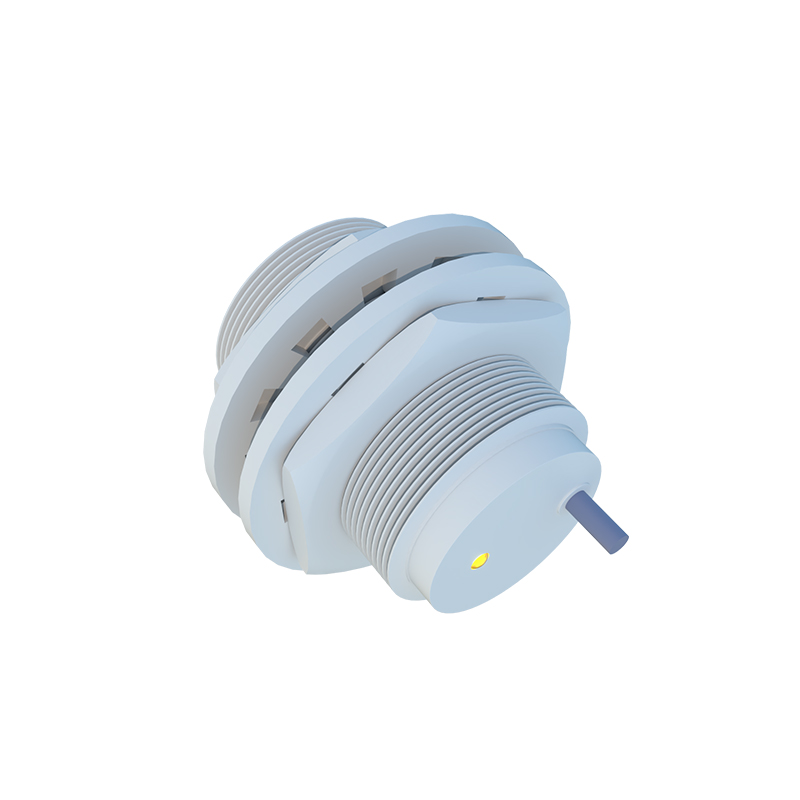
Operating on the principle of electromagnetic induction, the QS10S-AK360CN6 generates an oscillating electromagnetic field from its sensing face. When a metallic target enters this field, eddy currents are induced, causing a change in the oscillation amplitude. This change is detected by the sensor's circuitry, triggering a solid-state output signal. Key specifications typically include a nominal sensing range, often around 10mm for this series, though exact figures must be verified with the manufacturer's datasheet. It commonly operates on a DC supply voltage, such as 10-30V DC, and provides a PNP normally open (NO) or normally closed (NC) output. The housing is usually rated IP67, ensuring protection against temporary immersion and dust ingress, which is critical for washdown areas or dirty industrial floors.
Wiring and Installation Considerations
Proper installation is paramount for optimal performance. The QS10S-AK360CN6 typically features a pre-wired cable or a quick-disconnect connector system. The standard wiring configuration involves three wires: brown for positive supply voltage (+V), blue for common negative (0V), and black for the switched output signal. It is crucial to ensure correct polarity and to install the sensor with adequate clearance from surrounding metal objects to prevent false triggering—a practice known as providing sufficient "flush-mounting" capability. Mounting should be secure to avoid vibration-induced failures, and the sensing face should be kept clean from debris buildup that could attenuate the sensing field.
Common Industrial Applications and Use Cases
This sensor's durability and non-contact operation make it ideal for numerous applications across manufacturing and processing industries. It is frequently deployed for position sensing, such as detecting the presence of a metal part on a conveyor, verifying the open or closed status of a metal door or guard, and counting metallic objects on a production line. In machine tools, it can be used for tool breakage detection or end-of-travel limit sensing. Its robust design also suits packaging machinery, automotive assembly lines, and material handling systems where reliable detection of pallets, carts, or actuators is required under challenging conditions.
Advantages Over Mechanical Limit Switches
The QS10S-AK360CN6 offers significant advantages compared to traditional mechanical limit switches. Since there is no physical contact with the target, there is no mechanical wear on the sensor itself, leading to a dramatically longer operational lifespan. It provides high-speed switching capabilities, capable of detecting objects at frequencies often exceeding several hundred Hertz, which is essential for fast-moving production lines. Furthermore, its solid-state output is more resistant to vibration and shock. The sealed housing provides superior environmental resistance, making it a more suitable choice for modern automated facilities where downtime must be minimized.
Troubleshooting and Maintenance Guidelines
Despite their reliability, proximity sensors can encounter issues. Common problems with units like the QS10S-AK360CN6 include failure to detect targets, constant output activation, or intermittent operation. Troubleshooting should begin by verifying the power supply voltage and polarity at the sensor's terminals. Next, check for the presence of the correct target material (ferrous metals are typically sensed at the rated distance; non-ferrous metals may reduce it). Inspect the sensing face for contamination and ensure no adjacent metal is causing interference. Regular maintenance primarily involves visual inspection for physical damage and cleaning the sensing face with a soft cloth. Unlike mechanical devices, no lubrication or contact adjustment is needed.
Selection Criteria and Compatible Alternatives
When selecting a sensor like the QS10S-AK360CN6 for a specific application, several factors must be evaluated. The primary consideration is the required sensing distance and the material of the target object. The environmental conditions (temperature, exposure to chemicals, washdown requirements) dictate the necessary ingress protection (IP) rating. The electrical load of the connected device (e.g., PLC input, relay coil) must be within the sensor's output current rating.