Introduction to Four-Wire Photoelectric Sensors
Four-wire photoelectric sensors are fundamental components in industrial automation, renowned for their reliability in detecting objects, colors, and surface contrasts. Unlike simpler two-wire models, the four-wire configuration typically separates the power supply lines from the output signal lines. This design offers distinct advantages, including more stable operation, the ability to handle different output types (like NPN or PNP transistors), and often, enhanced diagnostic capabilities. The "four-wire" designation specifically refers to the electrical connections: two for power (commonly 12-24V DC) and two for the switched output signal. This architecture is particularly well-suited for precise tasks such as black and white line detection, where consistent performance is critical.
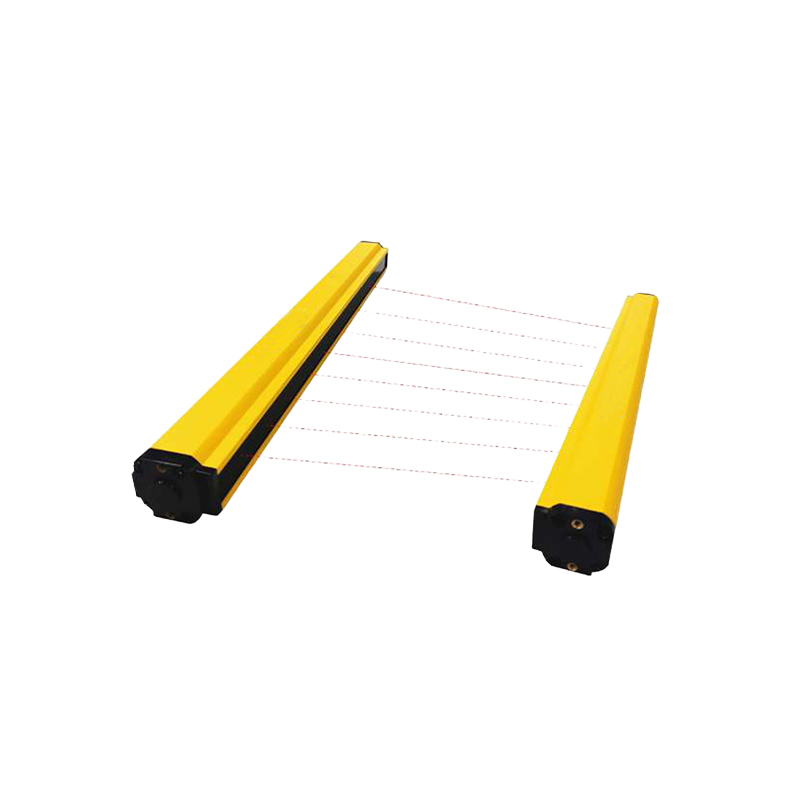
The Principle of Black and White Line Detection
The core operation hinges on the principle of diffuse reflection or sometimes retro-reflection. A sensor designed for contrast detection emits a focused beam of light, usually from an LED, onto a target surface. A receiver within the sensor then measures the intensity of the reflected light. The key metric is the reflectivity of the surface. A white line, typically painted or taped on a darker background (like a factory floor or a conveyor), has high reflectivity. It scatters a significant amount of light back to the receiver. Conversely, a black line exhibits low reflectivity, absorbing most of the incident light and returning a weak signal. The sensor's internal circuitry is calibrated to recognize this dramatic difference in reflected light intensity, triggering a clean, digital output signal change when the transition from one surface to the other is detected.
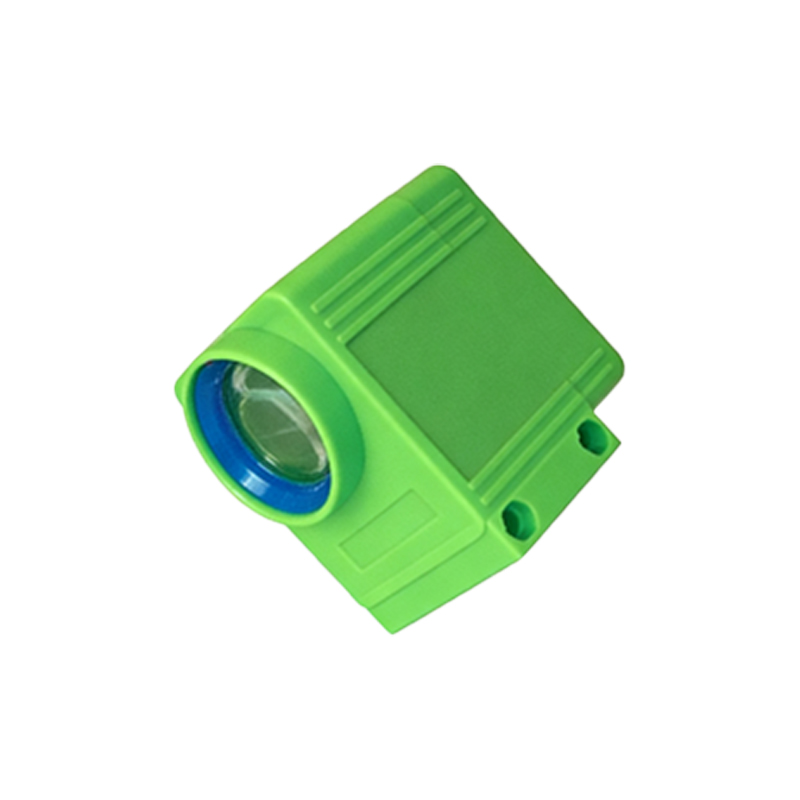
Sensor Configuration and Key Parameters
Successful implementation requires careful attention to several configuration parameters. First, the sensing distance must be set correctly, ensuring the focal point of the light beam is optimal for the specific application. Second, the sensitivity or threshold setting is paramount. This adjustment defines the light intensity level at which the output switches. It must be fine-tuned to reliably distinguish between the black and white surfaces under the actual operating conditions, accounting for ambient light and surface texture. Many four-wire sensors feature a teach-in function or a potentiometer for this precise calibration. Additionally, the response time of the sensor must be fast enough to detect lines at the required speed, often critical in high-velocity applications like packaging or sorting.
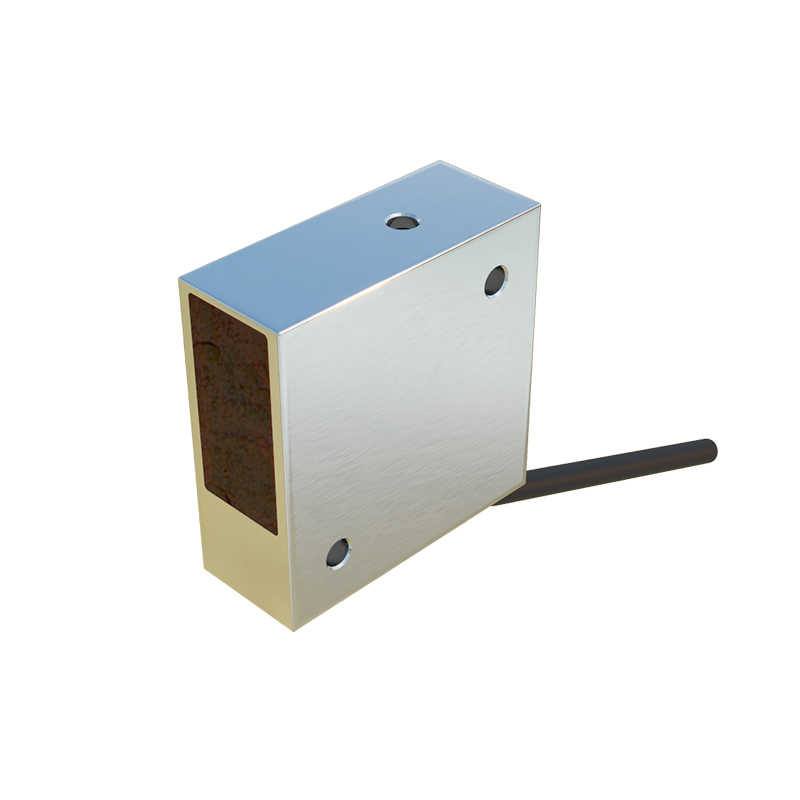
Output Types and Wiring Considerations
The four-wire design commonly supports both sinking (NPN) and sourcing (PNP) transistor outputs, providing flexibility for integration with various programmable logic controllers (PLCs) and control systems. The wiring is straightforward: the brown wire is typically connected to the positive DC voltage supply, and the blue wire to the common negative or ground. The remaining two wires are for the output signal; for an NPN sensor, the black wire is the output (sinking to ground when active) and the white wire may be for a second complementary output or not used. For a PNP sensor, the black wire is the output (sourcing voltage when active). Correct wiring according to the datasheet is essential to prevent damage and ensure proper logic operation in the control system.
Typical Industrial Applications
Black and white line detection using four-wire photoelectric sensors is ubiquitous in automation. A primary application is in automated guided vehicles (AGVs) and mobile robots, where the sensors follow a pre-defined path marked by tape on the floor, enabling precise navigation. In printing and labeling machinery, these sensors detect registration marks (often black on a white substrate) to ensure accurate cutting, folding, or printing alignment. Packaging lines use them to detect product positions on conveyors, initiate actions like filling or capping, and verify label placement. Their robustness and precision make them indispensable for quality control, where they can identify misaligned components or incorrect labels based on contrast.
Advantages Over Other Sensor Types
Compared to two-wire sensors, four-wire models offer superior electrical noise immunity and more stable signal switching, which is crucial for the subtle differences in black/white detection. They also allow for a wider range of output configurations. When compared to color sensors for simple contrast tasks, four-wire photoelectric sensors are generally more cost-effective, faster in response, and simpler to set up. Their focused beam and adjustable sensitivity make them less susceptible to interference from surrounding objects or varying ambient light conditions than some proximity sensors, providing a reliable and maintenance-free solution for harsh industrial environments.
Installation and Troubleshooting Tips
For optimal performance, install the sensor perpendicular to the target surface to maximize the reflected signal. Ensure the sensing path is free of obstructions and clean the lens regularly to prevent false triggers from dust accumulation. Common issues include failure to detect the line, which may be due to incorrect sensitivity setting, improper sensing distance, or a dirty lens. Intermittent operation can often be traced to loose wiring connections or electrical noise interference on the power lines; using shielded cables and proper grounding can mitigate this. Always consult the manufacturer's manual for specific diagnostic indicators, as many modern four-wire sensors include LED status lights for power and output state.