Introduction to Metal Proximity Sensors
Metal proximity sensors are fundamental components in modern industrial automation, designed to detect the presence or absence of metallic objects without physical contact. Operating on electromagnetic principles, these sensors generate an oscillating electromagnetic field. When a metallic target enters this field, it induces eddy currents, causing a change in the sensor's oscillation amplitude or frequency. This change is detected and converted into a switch signal. Their non-contact nature makes them exceptionally reliable for harsh environments where mechanical wear, dirt, oil, and vibration are prevalent. From assembly lines and robotic arms to material handling and machine safety systems, metal proximity sensors provide the critical "eyes" for automated processes, ensuring precision, efficiency, and operational safety.
High Reliability and Long Service Life
A paramount feature of inductive proximity sensors is their exceptional reliability and longevity. Since detection occurs without physical contact, there is no mechanical wear on the sensor or the target. This eliminates issues common to mechanical limit switches, such as contact bounce, pitting, and eventual failure. The sensing face is typically encapsulated in a robust housing made of materials like PBT or nickel-plated brass, offering high resistance to impacts, abrasion, and environmental stressors. With no moving parts to degrade, these sensors can perform millions of switching cycles, ensuring consistent operation over extended periods with minimal maintenance. This durability translates directly into reduced downtime and lower total cost of ownership for industrial facilities.
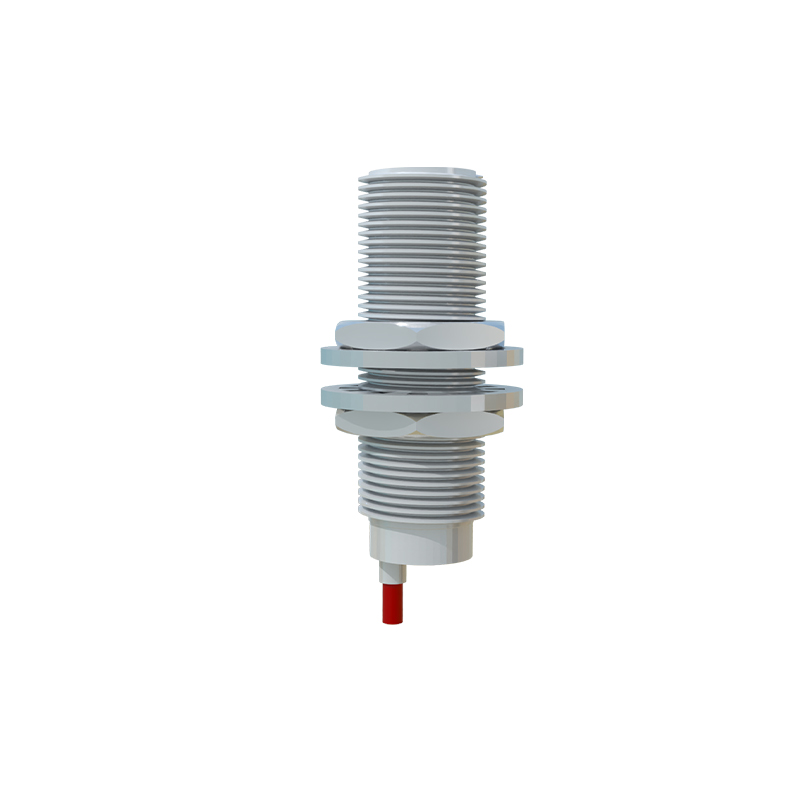
Superior Environmental Resistance
Engineered for demanding industrial settings, metal proximity sensors exhibit outstanding environmental resistance. They are commonly available with high IP (Ingress Protection) ratings, such as IP67 or IP69K, making them dust-tight and capable of withstanding high-pressure water jets. Their housings are resistant to oils, coolants, and many chemical agents. Furthermore, they are designed to operate reliably across a wide temperature range, often from -25°C to +70°C or beyond. This rugged construction allows them to function flawlessly in foundries, welding shops, machining centers, and outdoor applications where exposure to contaminants, moisture, and thermal extremes would incapacitate less robust sensing technologies.
Fast Response and High Switching Frequency
Speed is critical in high-cycle automation. Metal proximity sensors offer extremely fast response times, typically in the range of microseconds. This allows them to detect objects moving at very high speeds without missing a trigger event. Coupled with high switching frequencies—often up to several kilohertz—they can handle rapid succession of targets on fast-moving conveyor belts or in indexing applications. This feature is indispensable for maintaining high throughput in packaging, sorting, and precision assembly operations where every millisecond counts. The consistent and lag-free signal ensures precise timing control for downstream actuators and controllers.
Detection Range and Sensing Characteristics
The sensing range, or nominal range (Sn), is a key specification. Standard ranges vary from a few millimeters to several tens of millimeters. It's important to note that the effective sensing distance can be influenced by the target material's properties; ferrous metals like steel are detected at the nominal range, while non-ferrous metals like aluminum or copper typically have a reduced sensing range (often 30-60% of Sn). Sensors are also characterized by their repeat accuracy, hysteresis, and the influence of adjacent metals. Modern sensors incorporate shielding to minimize side and rear interference, allowing for flush mounting in metal brackets. Understanding these characteristics is essential for correct sensor selection and installation to avoid false triggers or missed detections.
Output Configurations and Electrical Compatibility
Metal proximity sensors are available in various output configurations to interface seamlessly with control systems. The two primary types are DC (NPN sinking or PNP sourcing) and AC models. DC 3-wire sensors are most common in modern PLC-based systems. They also come with different output functions: Normally Open (NO), Normally Closed (NC), or programmable. Analog output versions (4-20 mA or 0-10V) provide continuous distance information rather than just a switch signal. Additionally, features like short-circuit protection, reverse polarity protection, and overload protection are standard, safeguarding both the sensor and the connected control circuitry from electrical faults.
Compact and Versatile Design
Advancements in manufacturing have led to increasingly compact sensor designs without compromising performance. Miniature and sub-miniature cylindrical sensors (e.g., M5, M8, M12 threads) and rectangular block-style sensors allow for installation in space-constrained applications. This versatility extends to mounting options, sensing directions (front, side, or even tubular styles), and connection methods (cable or quick-disconnect connectors). Specialized variants include weld-field immune sensors for environments with strong electromagnetic interference from welding equipment, and high-temperature models for applications