Introduction to Proximity Sensing Technology
Proximity sensors are fundamental components in modern industrial automation, providing non-contact detection of objects. Among the various types, the three-wire proximity sensor stands out as one of the most common and reliable configurations used in machinery and control systems worldwide. These sensors operate on the principle of generating an electromagnetic field and detecting changes caused by a target object entering this field. The three-wire design specifically refers to the wiring configuration: one wire for power supply, one for ground, and one for the output signal. This setup offers a significant advantage over two-wire sensors by providing a more stable and precise output, which is crucial for high-speed or sensitive applications. Their ability to function without physical contact eliminates mechanical wear and tear, leading to enhanced durability and reduced maintenance costs in harsh industrial environments.
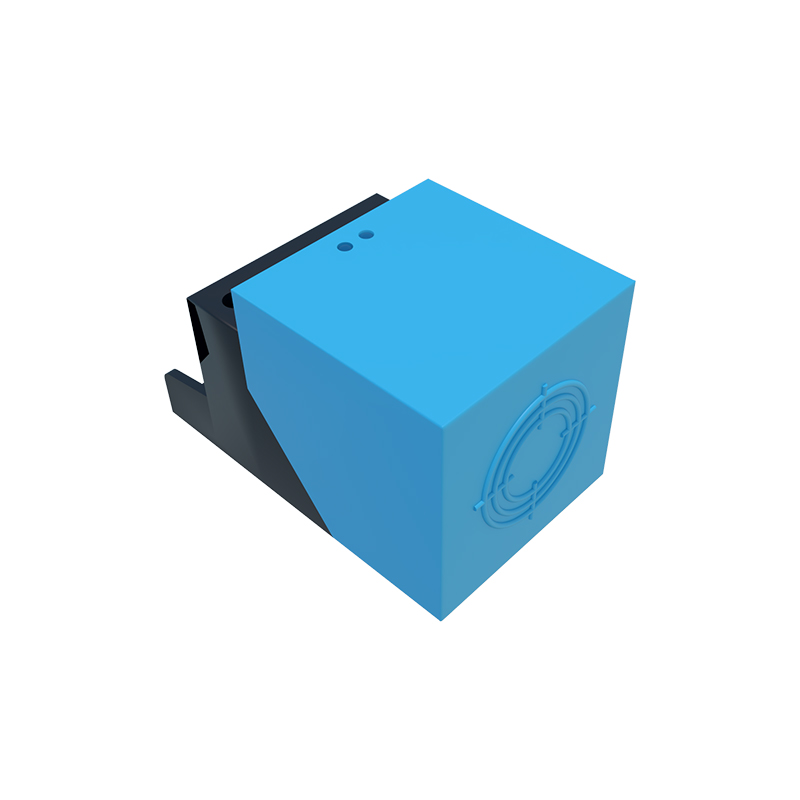
Anatomy of a Three-Wire Proximity Sensor
A standard three-wire inductive proximity sensor, the most prevalent type for metal detection, consists of several key internal components. The core is an oscillator circuit that generates a high-frequency electromagnetic field at the sensing face. This field is emitted by a coil wound around a ferrite core. When a metallic target enters this active field, eddy currents are induced on the target's surface. These eddy currents absorb energy from the oscillator, causing its amplitude to decrease. This change is detected by a threshold circuit, which then triggers a solid-state output switch—either a transistor configured as NPN (sinking) or PNP (sourcing). The three wires are distinctly colored for easy identification: typically brown for positive DC supply voltage, blue for common ground (0V), and black for the switched output signal. This color coding is standardized per international norms like IEC 60947-5-2, ensuring consistency and safety during installation.
Wiring Configurations: NPN vs. PNP Outputs
The functionality of a three-wire sensor is defined by its output transistor type, leading to two primary wiring configurations: NPN and PNP. An NPN output sensor, often described as a "sinking" sensor, switches the negative or ground side of the load. In this setup, the load (e.g., a PLC input, relay coil) is connected between the sensor's black output wire and the positive supply voltage. When the sensor activates, it connects the load to ground, completing the circuit and allowing current to flow. Conversely, a PNP output sensor, known as a "sourcing" sensor, switches the positive side of the load. Here, the load is connected between the sensor's output and ground. Activation connects the load to the positive supply. The choice between NPN and PNP is critical and depends on the control system's design. Asian and European markets often prefer PNP sensors, while NPN is common in North America. Selecting the wrong type can lead to a non-functional circuit, emphasizing the need for careful review of controller specifications.
Key Advantages in Industrial Settings
The three-wire design offers several compelling benefits that justify its widespread adoption. First, it provides a physically separate path for the power and signal circuits. This separation minimizes electrical noise interference on the output signal, resulting in higher switching accuracy and reliability, especially in environments with variable frequency drives or heavy machinery. Second, these sensors typically offer faster response times and higher switching frequencies compared to two-wire versions, making them ideal for high-speed counting or positioning tasks. Third, they allow for a wider range of load connections and are compatible with a vast array of programmable logic controllers (PLCs), counters, and data acquisition systems. Their solid-state output is also capable of handling millions of switching cycles without failure. Furthermore, the dedicated output wire enables diagnostics, such as short-circuit and overload protection, which are often built into modern sensors to prevent damage.
Critical Selection Criteria and Installation Tips
Selecting the correct three-wire proximity sensor requires careful consideration of several application parameters. The sensing range, or nominal range (Sn), must be chosen with a safety margin, typically using 60-80% of the rated distance to account for target material, temperature variations, and voltage fluctuations. The target material is paramount; standard inductive sensors detect ferrous metals (like steel) at the full range, while non-ferrous metals (like aluminum or copper) have a reduced effective range. Environmental factors such as ambient temperature, presence of chemicals, or washdown requirements dictate the needed housing material (e.g., nickel-plated brass, stainless steel) and ingress protection (IP) rating. During installation, it is crucial to ensure the sensor is mounted securely and without stress. Maintain the recommended lateral and axial spacing between multiple sensors to prevent mutual interference. Always verify