Introduction to Photoelectric Sensing Technology
Photoelectric sensors are pivotal components in modern industrial automation, designed to detect the presence, absence, or distance of objects using light. These sensors operate by emitting a light beam—typically infrared, visible red, or laser—and then measuring changes in the received light. When the beam is interrupted or reflected by an object, the sensor's receiver detects this alteration, triggering an output signal. This principle enables precise, non-contact detection, making photoelectric sensors ideal for applications involving moving objects, such as conveyor systems, packaging machinery, and robotic assembly lines. Their ability to function reliably in harsh environments, coupled with fast response times, has cemented their role as a cornerstone in industrial sensing.
Key Components and Working Principles
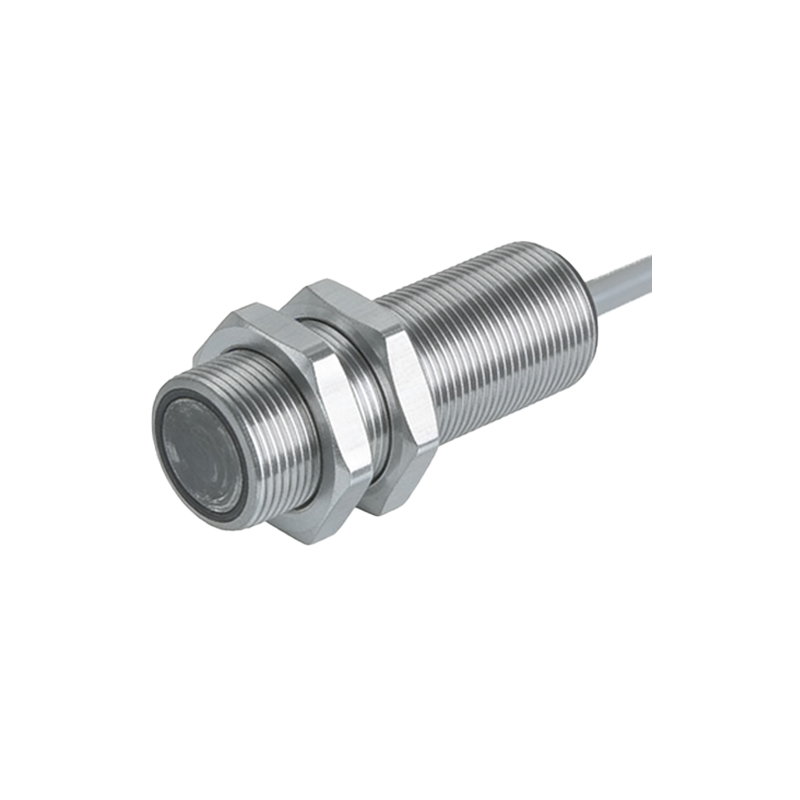
A photoelectric sensor comprises three main elements: an emitter, a receiver, and a control circuit. The emitter generates a focused light beam, which travels toward the target area. The receiver, positioned to capture the light, converts optical signals into electrical ones. Depending on the configuration, sensors may use through-beam, retro-reflective, or diffuse reflective modes. In through-beam setups, the emitter and receiver face each other directly; object detection occurs when the beam is broken. Retro-reflective sensors employ a reflector to bounce light back to the receiver, while diffuse reflective types rely on light scattering from the object itself. For moving objects, through-beam and retro-reflective modes are often preferred due to their higher accuracy and immunity to ambient light interference.
Detecting Moving Objects: Techniques and Challenges
Detecting moving objects requires sensors to adapt to dynamic conditions, such as varying speeds, orientations, and surface properties. Photoelectric sensors excel here by offering adjustable sensing ranges and response frequencies. For instance, in high-speed conveyor belts, sensors with rapid response times (often in microseconds) can track objects seamlessly without missing detections. Techniques like background suppression in diffuse sensors help ignore distant objects, focusing only on targets within a specified range. Challenges include dealing with reflective or transparent materials, which may cause false triggers. To mitigate this, polarized filters or specialized algorithms are integrated to enhance reliability. Additionally, environmental factors like dust, moisture, or vibration must be considered, leading to the use of ruggedized housings and IP-rated designs.
Applications in Industrial Automation
In industrial settings, photoelectric sensors are deployed across diverse scenarios to monitor moving objects. On assembly lines, they count products, verify placements, or trigger robotic actions. In logistics, sensors manage sorting systems by detecting package dimensions and positions. Automotive manufacturing relies on them for part alignment and safety interlocks. A notable example is in bottling plants, where sensors ensure containers are correctly filled and capped while moving at high speeds. By integrating with PLCs (Programmable Logic Controllers), these sensors enable real-time feedback, optimizing throughput and minimizing errors. Their versatility extends to hazardous areas, where intrinsically safe models prevent ignition risks.
Advancements and Future Trends
Recent innovations have expanded the capabilities of photoelectric sensors for moving object detection. The advent of IO-Link communication allows for smart sensors that provide diagnostic data, such as contamination levels or alignment status, facilitating predictive maintenance. Laser-based sensors offer finer resolution for detecting small or fast-moving items. Additionally, multi-function sensors combine detection with measurement tasks, like width or speed calculation. Future trends point toward increased integration with IoT (Internet of Things) platforms, enabling remote monitoring and analytics. As industries embrace Industry 4.0, photoelectric sensors will evolve with enhanced connectivity, AI-driven adaptability, and energy-efficient designs, further solidifying their indispensability in automation.
Best Practices for Implementation
To maximize effectiveness when detecting moving objects, several best practices should be followed. First, select the appropriate sensor type based on the application: through-beam for long-range, high-precision needs, or diffuse reflective for compact installations. Ensure proper alignment and mounting to avoid misreads caused by vibration. Calibrate sensing ranges and thresholds to account for object speed and environmental conditions. Regular maintenance, such as lens cleaning and output testing, prevents degradation over time. It's also advisable to use sensors with teach-in functions for easy setup. By adhering to these guidelines, engineers can achieve reliable, continuous operation, reducing downtime and enhancing system efficiency.