Introduction to Photoelectric Sensors and Photocouplers
In the realm of electrical and electronic engineering, components that utilize light for operation are fundamental to countless applications. Two such critical components are photoelectric sensors and photocouplers, often referred to as optocouplers. While both leverage the properties of light, typically from an LED, and a light-sensitive receiver, their primary functions, design philosophies, and application domains are distinctly different. A common point of confusion arises from this shared photonic principle, leading to the question: Is a photoelectric sensor simply a type of photocoupler? The short answer is no. This article delves into the technical distinctions, explaining why these devices, though related in concept, serve unique purposes in industry and electronics.
Core Function and Operational Principle
The fundamental difference lies in their core operational intent. A photocoupler is designed primarily for electrical isolation and signal transfer. It encapsulates an LED and a photodetector (like a phototransistor, photodiode, or photo-TRIAC) in a single, light-tight package. When a current is applied to the input LED, it emits infrared or visible light. This light falls on the photodetector, causing it to conduct electricity, thereby creating an electrical signal at the output that is a replica of the input signal. Crucially, there is no electrical connection between the input and output; they are isolated by the light beam, which protects sensitive circuits from high voltages, noise, and ground loops on the other side.
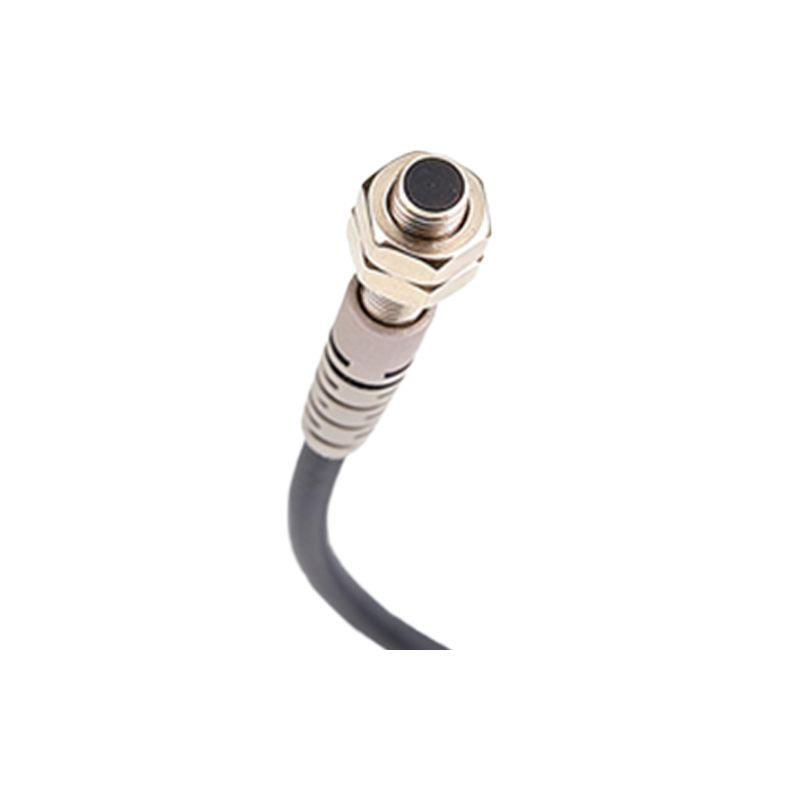
In stark contrast, a photoelectric sensor is designed for detection and measurement. Its primary function is to sense the presence, absence, or distance of an object by using a light beam. A typical photoelectric sensor has separate, often distant, emitter and receiver units (in through-beam types) or a combined unit (in retro-reflective and diffuse reflective types). It does not aim to transfer a specific electrical signal from one circuit to another. Instead, it outputs a simple switching signal (ON/OFF) or an analog value based on whether the emitted light beam is received, interrupted, or reflected by a target object. The focus is on the interaction with the external environment.
Internal Structure and Packaging
The structural design further highlights their divergent purposes. A photocoupler is a monolithic, integrated component. Its LED and photodetector are housed together in a small, opaque IC package, such as a DIP or SOP, to prevent any external light from interfering with the signal transfer. The light path is internal and fixed, typically just a few millimeters. This compact, sealed design is optimized for mounting on a printed circuit board (PCB) alongside other ICs.
A photoelectric sensor, however, is often a more complex assembly. While it contains similar photonic elements, the emitter and receiver are optically designed to project a focused beam over a distance—from centimeters to many meters. The housing is rugged, designed for industrial environments, with lenses to collimate the light and may include features like adjustable sensing ranges, alignment indicators, and various output connection types (e.g., connector, cable, or terminal block). It is a sensor system meant for mechanical installation in a machine or production line.
Key Performance Parameters
The critical parameters for evaluation differ significantly. For a photocoupler, key specs include isolation voltage (often 2.5kV to 10kV), current transfer ratio (CTR), response speed (rise/fall time), and output type. Engineers select them based on the required isolation strength and signal fidelity.
For a photoelectric sensor, the defining parameters are sensing range, response time, light source type (red light, laser, infrared), output type (PNP/NPN transistor, analog, relay), and environmental ratings (IP67, NEMA). Features like background suppression, teach-in functionality, and immunity to ambient light are paramount. The performance is measured by its reliability in detecting objects under varying industrial conditions.
Typical Applications in Industry
Their applications rarely overlap. Photocouplers are ubiquitous in circuit design for safety and noise immunity. They are found in switch-mode power supplies to provide feedback across the isolation barrier, in microcontroller I/O isolation, in communication interfaces, and in driving triacs for AC load control. They are board-level components.
Photoelectric sensors are workhorses of factory automation. They are used for object detection on conveyor belts, counting bottles, checking fill levels, detecting broken parts, positioning robots, and in packaging machinery. They interface directly with programmable logic controllers (PLCs) to control mechanical processes. Their role is at the system and machine level, interacting with the physical world.
Conclusion: Complementary Technologies
In summary, while both photoelectric sensors and photocouplers are optoelectronic devices that convert electrical signals to light and back, they are not the same. A photocoupler is an isolation component for electrical circuits, characterized by its integrated, signal-transfer-focused design. A photoelectric sensor is a detection device for automation, characterized by its separated optics and environment-interactive design. They are complementary technologies born from a common photonic principle but engineered to solve entirely different problems. Understanding this distinction is crucial for electrical engineers and automation specialists to select the correct component for their specific design challenge, ensuring both circuit safety and system reliability.