Understanding the Core Technology
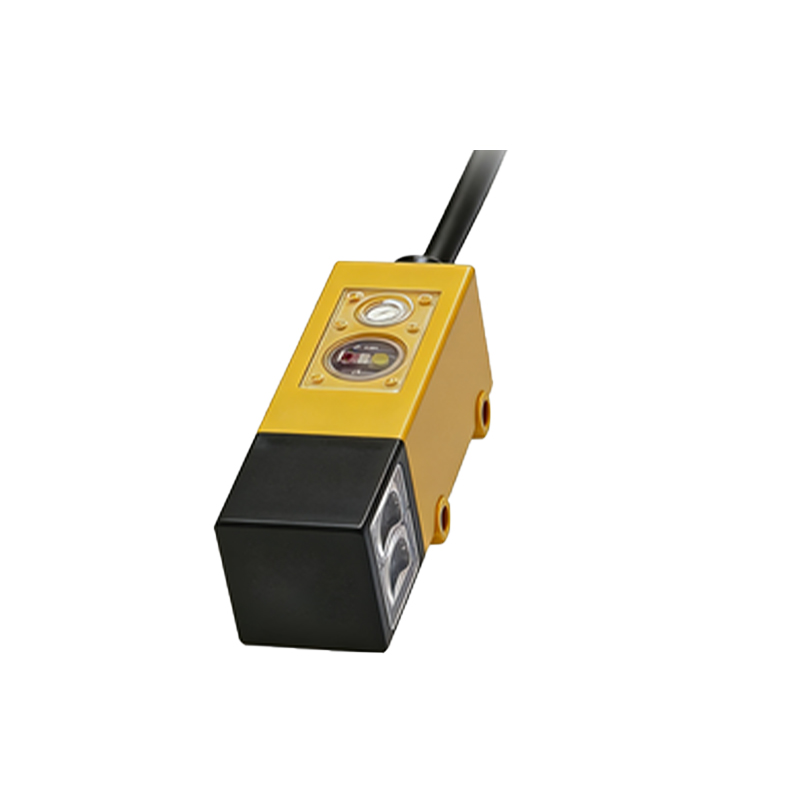
The fundamental appeal of low-cost photoelectric sensors lies in their efficient use of established, reliable optical principles. These sensors typically employ modulated infrared LED light sources and silicon phototransistor or photodiode receivers. The cost reduction is achieved not by compromising the core sensing principle, but through high-volume manufacturing, optimized component sourcing, and streamlined housing designs. Modern production techniques allow for consistent performance in through-beam, retro-reflective, and diffuse reflective sensing modes, making them versatile for basic detection tasks. The electronics are designed for robustness, often incorporating basic environmental compensation to handle ambient light variations common in industrial settings.
Primary Operational Characteristics
Budget-friendly photoelectric sensors offer a distinct set of performance characteristics tailored for standard applications. Sensing range is typically limited compared to premium models, with diffuse sensors often effective up to 1 meter and through-beam versions reaching several meters. Response speed is adequate for many conveyor and part detection tasks, commonly in the millisecond range. A key feature is their simplified output, usually providing a solid-state relay or transistor (NPN/PNP) switching signal. They frequently operate on a wide range of DC voltages (10-30V DC) for easy integration. The housing is often made from industrial-grade plastics like PBT or ABS, providing basic resistance to dust and moisture, typically rated at IP67.
Common Limitations and Trade-offs
Selecting a low-cost sensor involves understanding inherent trade-offs. Precision and stability may be lower, with potential for slight drift over temperature extremes or over extended operational life. The sensing beam might be less collimated, making them slightly more susceptible to background interference in cluttered environments. Advanced features like precise background suppression, high-speed analog output, or sophisticated diagnostics (like IO-Link) are usually absent. The construction, while durable, may not withstand extreme mechanical shock or highly corrosive atmospheres as well as hardened, premium units. These limitations define their ideal application space.
Typical Industrial Application Scenarios
These sensors excel in high-volume, non-critical detection roles across manufacturing and packaging. Common uses include basic object detection on conveyors, counting bottles or boxes, verifying the presence of a part in an assembly fixture, and detecting the open/closed position of a door or gate. They are widely deployed in material handling for jam detection, in simple automated machinery for position verification, and in commercial equipment like vending machines for product availability sensing. Their reliability and simplicity make them a first choice for applications where the environment is relatively controlled and the consequence of a missed detection is minimal.
Key Selection Criteria for Engineers
For an engineer, specifying a low-cost photoelectric sensor requires careful consideration of a few critical parameters. First, determine the necessary sensing range and mode (through-beam for longest range, diffuse for single-sided mounting). Second, verify the required response time aligns with the machine cycle speed. Third, confirm the electrical compatibility (voltage, output type, and current rating) with the PLC or controller. Fourth, assess the environmental conditions, especially temperature, dust, and potential for washdown. Finally, consider mounting constraints and the need for adjustable brackets. Reputable suppliers provide clear datasheets allowing for direct comparison of these essential specs.
The Value Proposition in Automation
The proliferation of low-cost photoelectric sensors has democratized automation, enabling cost-effective sensing solutions for small to medium enterprises and for high-count applications in large plants. They lower the barrier to entry for implementing basic automation, allowing engineers to allocate budget to more critical system components. Their widespread availability and standardization simplify maintenance and inventory management. When applied within their designed operational envelope, they deliver an exceptional return on investment through reliable performance, reduced downtime, and minimal total cost of ownership, forming the unsung backbone of countless automated systems worldwide.