Introduction to the GL-8HB Proximity Sensor
The GL-8HB represents a significant advancement in non-contact sensing technology, designed specifically for demanding industrial environments. As a robust inductive proximity sensor, it excels in detecting the presence of metallic objects without any physical contact. This capability is fundamental to modern automation, enabling precise control in assembly lines, packaging machinery, and robotic systems. The sensor's reliability stems from its solid-state construction, which eliminates moving parts prone to wear and tear. Engineers and system integrators favor the GL-8HB for its consistent performance, long operational life, and minimal maintenance requirements, making it a cornerstone component in countless automation solutions worldwide.
Core Technical Specifications and Operating Principles
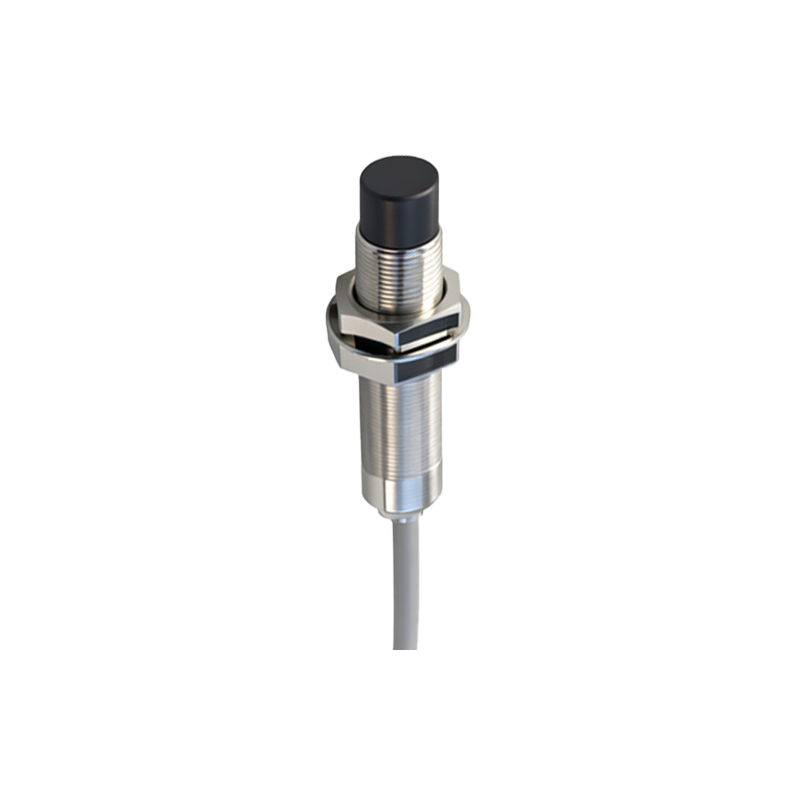
Operating on the principle of electromagnetic induction, the GL-8HB generates a high-frequency oscillating electromagnetic field from its sensing face. When a metallic target enters this field, eddy currents are induced on the target's surface, causing a change in the oscillation amplitude within the sensor's coil. This change is detected by the internal circuitry, which subsequently triggers a solid-state switching output. Key specifications typically include a sensing range of 8mm, a choice between NPN (sinking) or PNP (sourcing) output configurations, and a standard operating voltage of 10-30V DC. Its housing is often constructed from nickel-plated brass or stainless steel, providing an IP67 protection rating that ensures resistance to dust ingress and temporary immersion in water, crucial for harsh factory conditions.
Electrical Output Characteristics and Wiring
Understanding the electrical interface is critical for seamless integration. The GL-8HB is available in both 3-wire and 4-wire configurations, with the 3-wire version being the most common. The output can be either normally open (NO) or normally closed (NC), providing flexibility for different control logic requirements. The switching frequency, often up to 1kHz, defines how quickly the sensor can respond to passing targets, a vital parameter for high-speed applications. Proper wiring is essential; for an NPN model, the load is connected between the output wire (black) and the positive supply (brown), while the blue wire is connected to 0V. For a PNP model, the load is connected between the output and 0V. Incorrect wiring is a common source of installation failure.
Installation Considerations and Environmental Factors
Correct installation maximizes sensor performance and longevity. A primary consideration is maintaining the proper flush-mounting or non-flush-mounting distance as specified. Non-flush models offer a longer sensing range but require careful positioning to avoid interference from surrounding metals. The sensor should be mounted securely to minimize vibration-induced errors. Environmental factors such as ambient temperature, which typically ranges from -25°C to 70°C, and the presence of strong electromagnetic fields from nearby motors or welding equipment must be evaluated. Furthermore, for sensing different metals like steel, aluminum, or brass, a correction factor must be applied to the nominal sensing distance, as different materials affect the electromagnetic field differently.
Application Scenarios in Modern Industry
The versatility of the GL-8HB finds applications across diverse sectors. In automotive manufacturing, it is used for part presence verification, robotic arm end-position detection, and counting components on conveyors. In material handling, it detects the position of pallets, cranes, and elevator floors. Packaging machinery utilizes these sensors to confirm product placement, control filling levels, and monitor seal integrity. Its robust design also makes it suitable for metalworking, where it can detect tool position, monitor spindle orientation, or act as a limit switch on CNC machines. The ability to function reliably in environments with coolant, oil, or metal chips is a key advantage.
Troubleshooting Common Operational Issues
Even with a reliable device like the GL-8HB, occasional issues may arise. A frequent problem is failure to detect the target, which can be caused by an incorrect sensing distance, an unsuitable target material (e.g., non-metallic), or a misaligned sensor. Intermittent operation might indicate loose wiring connections or voltage fluctuations outside the specified range. If the sensor output is constantly active, it could be due to sensor damage or metallic debris stuck near the sensing face. A systematic approach—checking power supply, wiring, target material and size, and environmental conditions—is the most effective troubleshooting methodology. Always refer to the manufacturer's datasheet for specific diagnostic LED indicators.
Advantages Over Alternative Sensing Technologies
Compared to mechanical limit switches, the GL-8HB offers superior speed, longevity, and reliability due to its non-contact operation.