Introduction to M15 Proximity Sensors
M15 proximity sensors represent a critical category of non-contact sensing devices widely utilized in industrial automation. Characterized by their compact 18mm diameter cylindrical housing, these sensors are engineered for reliable detection of metallic objects without physical contact. The "M15" designation typically refers to the sensor's thread size, which is a standardized metric thread (M15 x 1), facilitating easy installation in a vast array of machinery and control systems. Their primary function is to detect the presence or absence of a target, converting this information into an electrical signal for processing by programmable logic controllers (PLCs) or other control units. This capability is fundamental to modern manufacturing, enabling precise positioning, counting, and safety interlocking in automated processes.
Core Operating Principles and Technologies
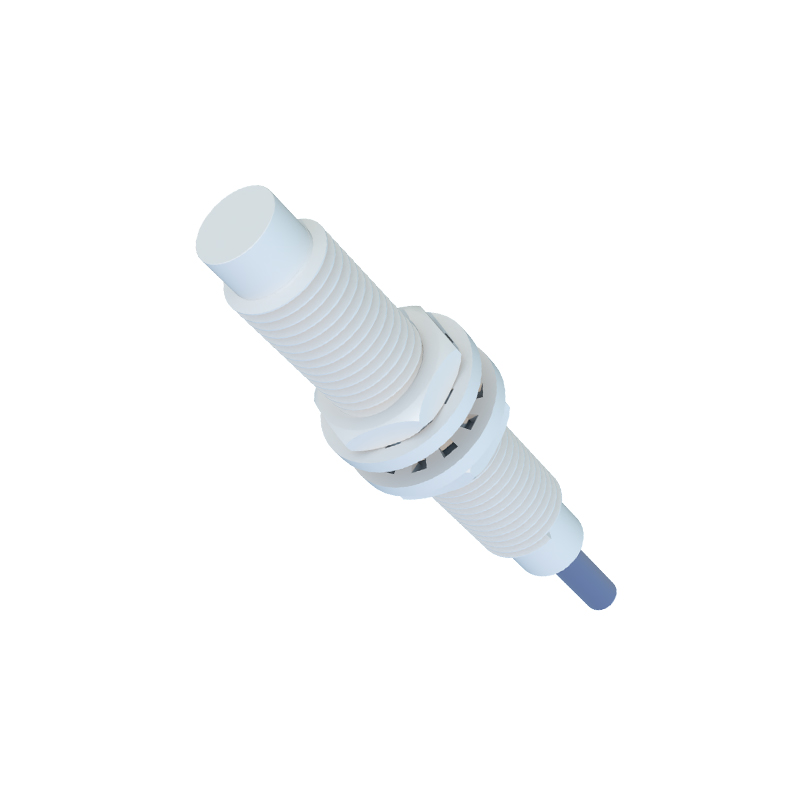
The operational efficacy of M15 sensors hinges on advanced electromagnetic and electronic principles. The most prevalent type is the inductive proximity sensor, which generates an oscillating electromagnetic field from its sensing face. When a conductive metal target enters this field, eddy currents are induced on the target's surface. This action dampens the oscillation within the sensor's internal LC circuit. The sensor's electronics detect this amplitude change and trigger a solid-state switch, altering the output state. Key specifications include sensing distance, which for a standard M15 inductive sensor is typically up to 5mm, and the type of output (e.g., NPN, PNP, NO, NC). These sensors are predominantly designed for ferrous metals like steel and iron, offering the longest sensing range, but they can also detect non-ferrous metals, albeit with a reduced range.
Key Technical Specifications and Selection Criteria
Selecting the appropriate M15 proximity sensor requires a meticulous analysis of application parameters. The rated operating distance, or "Sn," is a nominal value under ideal conditions (mild steel target). Engineers must account for a reduction factor when detecting different metals. The supply voltage range (commonly 10-30V DC) must match the control system's power. Output configuration is crucial: PNP (sourcing) and NPN (sinking) outputs must be correctly interfaced with the controller's input card. Environmental ratings, notably the Ingress Protection (IP) code (e.g., IP67, IP69K), define the sensor's resilience against dust and water ingress, which is vital for harsh environments like washdown areas in food processing. Additional considerations include switching frequency, temperature tolerance, housing material (often nickel-plated brass or stainless steel), and the presence of built-in protection against short-circuit, overload, and reverse polarity.
Installation, Wiring, and Configuration Best Practices
Proper installation is paramount for optimal performance and longevity. The sensor should be mounted securely using its M15 thread, ensuring it is not over-torqued to avoid damaging the housing. A critical rule is to maintain adequate clearance around the sensor body; metallic mounting surfaces or adjacent sensors can diminish the effective sensing range if placed too close. Wiring must adhere to the manufacturer's diagram, distinguishing between brown (V+), blue (V-), and black (output) wires for standard DC three-wire models. Shielding and routing cables away from high-power lines minimize electromagnetic interference. For precise detection, the target should approach the sensor's sensing face perpendicularly. Some advanced models feature LED indicators for diagnostic purposes, showing power status and output switching, which greatly aids in commissioning and troubleshooting.
Common Industrial Applications and Use Cases
The versatility of M15 proximity sensors makes them indispensable across numerous sectors. In automotive assembly lines, they verify the presence of components like pistons or gears before a machining operation. Packaging machinery employs them for high-speed bottle or can counting on conveyor belts. In material handling, they act as limit switches to confirm the position of robotic arms or sliding gates. Metalworking applications include tool breakage detection on CNC machines and monitoring spindle position. Their robust construction also allows for integration into hydraulic systems and mobile equipment. By providing a reliable binary signal, they form the foundational layer of feedback for complex automation sequences, ensuring both efficiency and safety.
Troubleshooting and Maintenance Guidelines
Despite their ruggedness, sensors can malfunction. Systematic troubleshooting begins with verifying the power supply voltage at the sensor's terminals. A non-illuminating power LED typically indicates a wiring or supply issue. If the power LED is on but the output does not switch, the target material, size, and approach speed should be checked against the sensor's specifications. Accumulation of metallic swarf or debris on the sensing face can cause erratic behavior and requires regular cleaning. Environmental factors like extreme temperatures or chemical exposure beyond the sensor's rating can lead to failure