Introduction to Photoelectric Sensors in Industrial Textile Machinery
Photoelectric sensors are indispensable components in modern industrial automation, particularly within the textile manufacturing sector. In agent setting machines, also known as tentering or stenter machines, these sensors play a critical role in ensuring precise fabric handling, consistent quality, and operational safety. Their primary function is to detect the presence, position, or movement of fabric edges, selvedges, or guiding elements without physical contact. This non-contact detection method is crucial for delicate fabrics, high-speed operations, and environments laden with lint and fibers, where mechanical sensors would fail or cause damage. The reliability and accuracy of photoelectric sensors directly impact the efficiency of the setting process, which involves stretching and heat-setting fabric to achieve desired dimensions, finish, and stability.
Core Operating Principles and Technologies
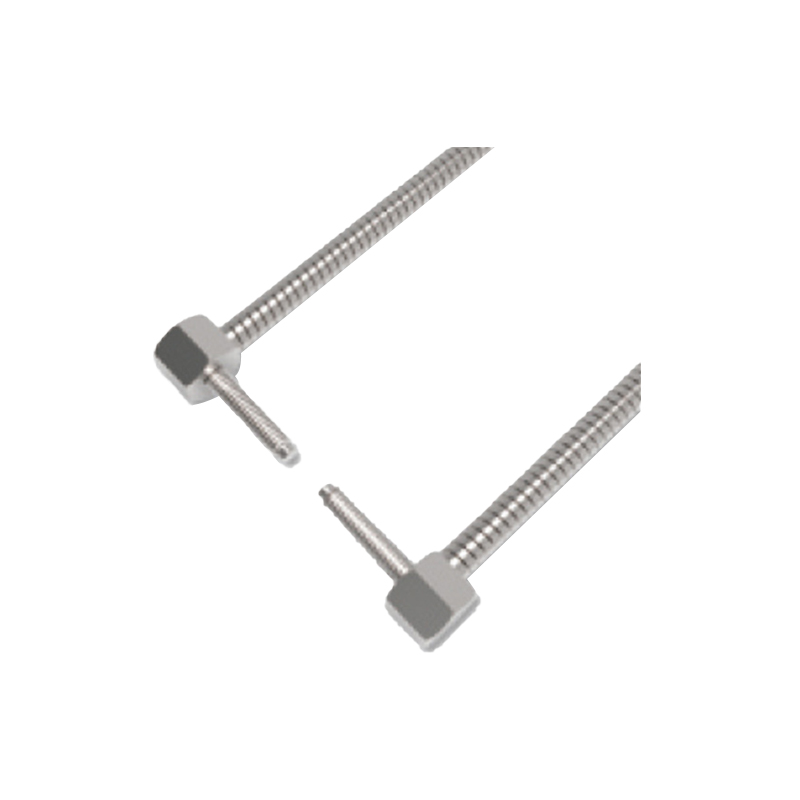
The fundamental principle of a photoelectric sensor involves a light emitter and a receiver. The emitter, typically an LED, projects a beam of light—often infrared, red, or laser—toward a target. The receiver detects changes in this light beam. In agent setting machines, three main sensing modes are employed. Through-beam sensors consist of separate emitter and receiver units. The fabric edge or guide breaks the beam, triggering a detection signal. This mode offers the longest sensing range and highest reliability but requires precise alignment of two separate components. Retro-reflective sensors use a single unit containing both emitter and receiver, which detects light reflected from a dedicated reflector. The target breaks this reflected beam. Diffuse reflective sensors, the most common for edge detection, detect light reflected directly off the fabric surface itself. Advanced models utilize background suppression technology to ignore reflections from distant objects, focusing only on the fabric edge at a preset distance.
Key Application Points in Agent Setting Machines
The primary application is fabric edge guiding and selvedge control. Sensors are mounted on both sides of the machine's entry or exit zones to monitor the position of the fabric selvedge. The sensor output is fed to a controller that automatically adjusts the guiding rollers or pins, ensuring the fabric remains centered and uniformly stretched across its width. This prevents bowing, skewing, and uneven tension, which are critical defects. Another vital application is broken end detection. Sensors monitor the continuity of the fabric web. If a tear or break occurs, the sensor immediately signals the machine to stop, preventing fabric waste and potential damage to the machine's heating chambers or rollers. Furthermore, sensors are used for safety interlocking on access doors and for detecting the presence of fabric on specific rollers or conveyors within the machine's complex pathway.
Selection Criteria for Harsh Textile Environments
Selecting the right photoelectric sensor for an agent setting machine requires careful consideration of the operating environment. The sensor housing must be robust, typically rated at IP67 or higher, to withstand high temperatures from nearby drying chambers, oil mist from chains, and pervasive textile lint and dust. The optical lens should have anti-fouling coatings to minimize maintenance. Sensing range is critical; it must be sufficient to accommodate the full width adjustment of the machine. Response time must be fast enough to keep up with high line speeds, often exceeding 100 meters per minute. For edge detection on varied fabrics, the sensor must have adjustable sensitivity to reliably detect different colors, textures, and transparencies—from dark heavy denim to sheer polyester. Finally, the output type (PNP/NPN, analog, or IO-Link) must be compatible with the machine's existing PLC or control system.
Installation, Alignment, and Calibration Best Practices
Proper installation is paramount for optimal performance. Sensors should be mounted on stable, vibration-free brackets. For through-beam types, precise alignment is essential; a laser alignment tool is often recommended. The sensing beam should be perpendicular to the fabric plane. The sensing point should be positioned just at the expected fabric edge, considering its natural flutter. During calibration, the sensitivity is adjusted so the sensor reliably detects the fabric edge but ignores background objects like machine frames or stray threads. Many modern sensors feature teach-in buttons or remote teach-in capabilities via IO-Link for quick setup. Regular cleaning of the lens with appropriate, non-abrasive materials is a necessary part of preventive maintenance to avoid false triggers caused by accumulated lint.
Troubleshooting Common Sensor Issues
Common problems include false triggering and failure to detect. False triggers are often caused by ambient light interference, reflective backgrounds, or buildup on the lens. Solutions include using sensors with modulated light to ignore ambient light, adjusting sensitivity, installing light shields, or switching to a polarized retro-reflective model. Failure to detect can result from misalignment, a dirty lens, a faulty power supply, or the fabric color/type falling outside the sensor's effective range. A systematic approach involves checking power and wiring, verifying alignment, cleaning the lens, and testing with a standard target. Monitoring the sensor's stability LED (if available) provides immediate diagnostic feedback. In networks, IO-Link sensors offer detailed diagnostic data like signal strength, temperature, and operating hours directly to the control system.
The Future: Smart Sensors and Industry 4.0 Integration
The evolution of photoelectric sensors in this field is geared towards intelligence and connectivity. IO-Link sensors are becoming standard, enabling not only parameter setting and diagnostics from the control cabinet but also predictive maintenance. The sensor can report decreasing signal strength, indicating a dirty lens before a fault occurs. Integration with machine-wide IoT platforms allows for data collection on edge stability trends, which can be analyzed to predict fabric quality issues or optimize machine settings for different materials. Furthermore, advancements in vision-based sensor systems and laser triangulation sensors offer even higher precision for demanding applications, providing not just binary detection but precise distance measurement of the fabric edge for ultra-fine control.