Introduction to Proximity Sensing Technology
Proximity sensors are fundamental components in modern industrial automation, providing non-contact detection of metallic objects. Among the diverse range available, the 220V Normally Open (NO) proximity sensor holds a significant position due to its direct compatibility with common industrial control voltages and its intuitive operational logic. These sensors are designed to detect the presence or absence of a target without any physical contact, thereby eliminating mechanical wear and enabling high-speed, reliable operation in demanding environments. The "220V" designation refers to the operating supply voltage, typically AC, which aligns with standard industrial power systems, simplifying installation and reducing the need for additional power conversion equipment. The "Normally Open" configuration describes the state of the sensor's output switch when no target is within its sensing range.
Operating Principle and Internal Mechanism
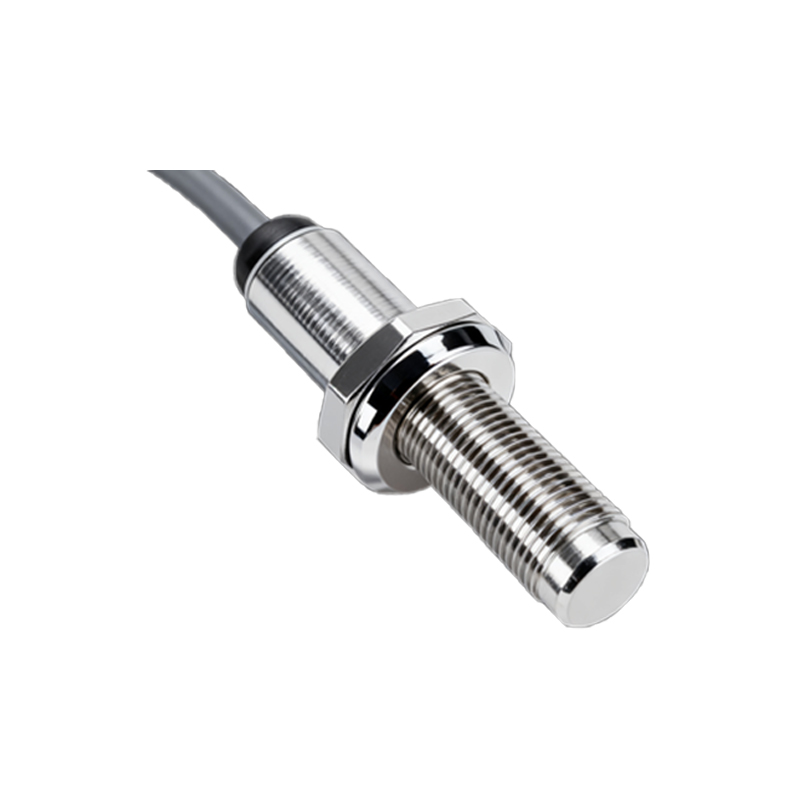
A 220V Normally Open inductive proximity sensor primarily operates on the principle of electromagnetic induction. The core component is an oscillator circuit that generates a high-frequency electromagnetic field at the active sensing face. When a metallic target enters this field, eddy currents are induced on the target's surface. This causes a change in the oscillation amplitude within the sensor. A subsequent trigger circuit detects this change and commands the output switching element—often a solid-state relay or a robust triac—to change state. In the NO configuration, the output circuit remains open (non-conducting) when the sensor is idle. Upon detecting a valid target within its specified sensing distance, the output circuit closes, allowing current to flow and thus signaling the presence of the target to the connected controller, such as a PLC or relay.
Key Specifications and Selection Criteria
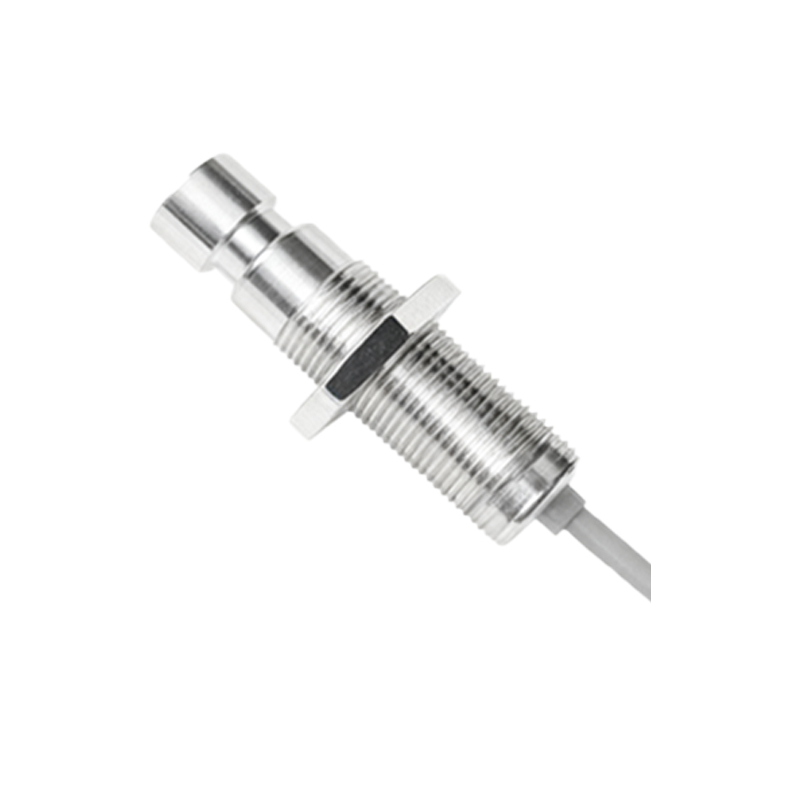
Selecting the correct 220V NO proximity sensor requires careful consideration of several technical parameters. The sensing distance, or nominal range, is crucial and must be chosen with a safety margin to account for mechanical tolerances and environmental factors. The housing material, typically nickel-plated brass, stainless steel, or PBT plastic, must be selected based on the application environment (e.g., resistance to chemicals, coolants, or physical impact). The electrical specifications are paramount: ensure the sensor's voltage range (e.g., 20-250V AC) encompasses your supply voltage, and verify its output current rating meets or exceeds the load requirement. Other critical factors include the switching frequency (how many operations per second), temperature rating, and the presence of built-in protection features like short-circuit, overload, and reverse polarity protection.
Wiring and Installation Best Practices
Proper installation is key to reliable and long-lasting sensor performance. A standard 3-wire 220V AC NO proximity sensor typically has brown (live/L), blue (neutral/N), and black (output) wires. The brown wire connects to the phase line (220V AC), the blue wire to the neutral, and the black wire carries the switched output to the load. It is imperative to follow the manufacturer's wiring diagram exactly. The sensor should be mounted securely to minimize vibration. Maintain a clearance between adjacent sensors and between the sensor and metal mounting surfaces to prevent mutual interference. Always de-energize the circuit before making connections. For longevity, avoid operating the sensor continuously at its maximum rated current and ensure it is not subjected to excessive voltage transients from the supply line.
Typical Industrial Applications and Use Cases
The 220V NO proximity sensor finds extensive use across various industries due to its robustness and simplicity. In material handling, they are used for position detection on conveyor systems, palletizers, and automated storage/retrieval systems. In machine tools, they serve as limit switches for axis positioning, tool changer verification, and part presence detection. Packaging machinery utilizes them to count products, detect fill levels, and monitor seal positions. Their NO logic is often preferred in safety-interlock circuits where a broken wire or sensor failure results in an open circuit (safe state). They are also commonly employed in control panels to detect door closure for operator safety.
Advantages and Limitations
The primary advantages of using a 220V Normally Open proximity sensor are direct high-voltage interface, elimination of mechanical contact wear, high operational speed, and long service life. The NO output is intuitive for "make-on-presence" control logic. However, certain limitations must be acknowledged. They are generally designed for metallic targets, primarily ferrous metals, with reduced sensing ranges for non-ferrous metals like aluminum or copper. The sensing range is relatively short compared to other technologies like ultrasonic sensors. Performance can be affected by extreme temperatures, strong electromagnetic fields, and the presence of conductive dust or chips. Understanding these constraints is essential for successful application.