Introduction to Schmidt Photoelectric Sensors
Schmidt photoelectric sensors represent a cornerstone of modern industrial automation, offering unparalleled precision in object detection, positioning, and quality control. These devices operate on the fundamental principle of converting light signals into electrical outputs. By emitting a beam of light—typically infrared, visible red, or laser—and analyzing the reflected or received signal, they can detect the presence, absence, or distance of an object with remarkable accuracy. The core components include an emitter, a receiver, and a signal processing unit. The emitter generates the light beam, which is then either reflected off a target (in reflective models) or interrupted by it (in through-beam models). The receiver captures the returning light or notes its absence, and the sophisticated electronics translate this into a clear, switch-like digital signal or an analog output proportional to distance. This seamless conversion from optical to electrical data is what makes Schmidt sensors indispensable in environments demanding high reliability and repeatability.
Key Technologies and Operating Modes
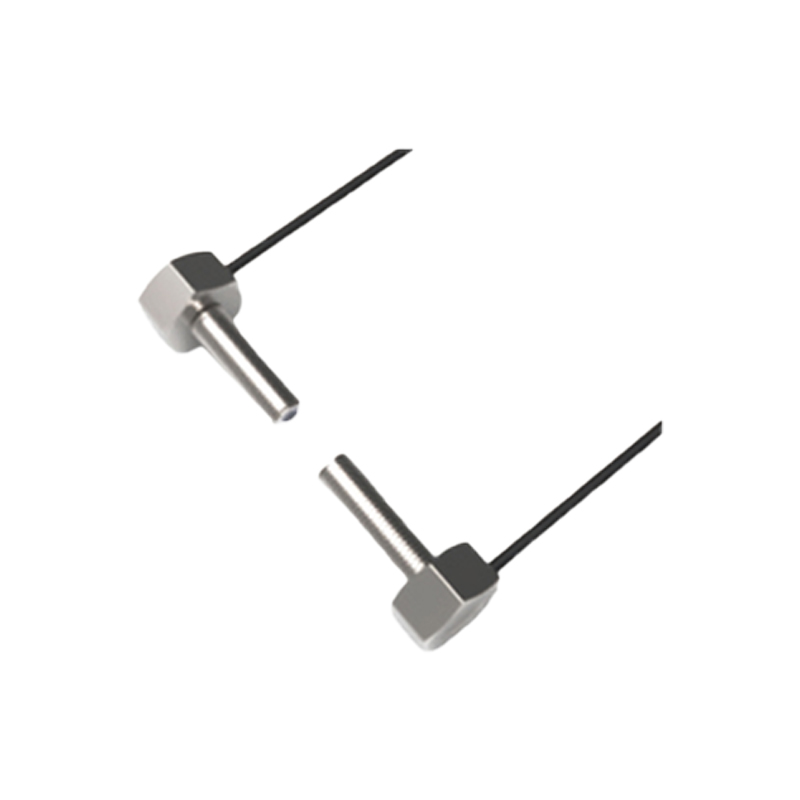
The efficacy of Schmidt photoelectric sensors stems from their diverse operating modes, each tailored for specific application challenges. The through-beam sensor, with separate emitter and receiver units, offers the longest sensing range and highest reliability, as it detects the direct interruption of the light beam. It is ideal for detecting opaque objects or in environments with airborne contaminants. The retro-reflective mode utilizes a single housing containing both emitter and receiver, along with a reflector. It detects objects that break the beam reflected from the reflector, providing a good balance of range and ease of installation. The diffuse reflective sensor, also a single-unit device, detects light reflected directly from the target object itself. This mode is highly versatile for detecting objects at varying distances and is commonly used in packaging and material handling. Advanced models incorporate background suppression technology, which uses triangulation to ignore reflections from surfaces beyond a set distance, and fiber optic versions for extreme temperatures or tight spaces.
Superior Performance in Harsh Environments
Industrial settings often present severe challenges, including dust, moisture, vibration, and extreme temperatures. Schmidt photoelectric sensors are engineered to thrive under these conditions. Their housings are typically constructed from robust materials like stainless steel or high-grade plastics with IP67, IP68, or IP69K ingress protection ratings, ensuring resistance to water and dust. The optical lenses are designed to be self-cleaning or resistant to coating by oils and coolants. Furthermore, advanced electronic components are selected and shielded to withstand electromagnetic interference (EMI) and voltage spikes common in industrial power networks. Many models feature potentio-free outputs (NPN or PNP) and short-circuit protection, enhancing their integration safety with Programmable Logic Controllers (PLCs) and other control systems. This rugged design philosophy ensures minimal downtime and maintenance, a critical factor for continuous production lines.
Application Spectrum Across Industries
The versatility of Schmidt photoelectric sensors enables their deployment across a vast industrial landscape. In automotive manufacturing, they are crucial for robotic assembly guidance, part presence verification on conveyor belts, and weld seam tracking. The packaging industry relies on them for label detection, fill level control, and carton counting. In the food and beverage sector, sensors with hygienic designs monitor bottle cap placement, detect transparent films, and control packaging line flow. Logistics and warehousing utilize them for parcel dimensioning, palletizing, and automated guided vehicle (AGV) navigation. Furthermore, in electronic assembly, miniature sensors perform precise PCB component placement checks. The ability to detect objects regardless of material (metal, plastic, glass, wood) and surface characteristics (color, texture) makes them a universal sensing solution.
Integration with Industry 4.0 and Smart Systems
As Industry 4.0 reshapes manufacturing, Schmidt photoelectric sensors are evolving into intelligent data points. Modern IO-Link enabled sensors go beyond simple switching; they transmit rich diagnostic data such as signal strength, operating temperature, and contamination levels to higher-level control systems. This facilitates predictive maintenance, where potential failures are identified before they cause stoppages. Integration with Ethernet/IP, PROFINET, or other industrial Ethernet protocols allows for real-time data exchange and remote configuration. This connectivity turns a simple detection event into valuable process information, enabling finer process optimization, traceability, and seamless integration into Manufacturing Execution Systems (MES) and the Industrial Internet of Things (IIoT).
Selection Criteria and Installation Best Practices
Selecting the optimal Schmidt photoelectric sensor requires a careful analysis of the application parameters. Key factors include the required sensing range, the size and material of the target object, the required response speed, the environmental conditions, and the desired electrical output. For instance, a small, glossy object may require a diffuse sensor with background suppression, while a long-range detection in a dusty area would necessitate a through-beam model. During installation, precise alignment is paramount for through-beam and retro-reflective types. Mounting must be secure to avoid misalignment from vibration. The sensing field should be kept clear of reflective backgrounds or obstructions that could cause false triggers. Regular maintenance, primarily lens cleaning and checking for physical damage, ensures long-term, reliable operation and sustains the sensor's specified performance metrics.