Understanding Analog Signal Output in Photoelectric Sensors
Photoelectric sensors are fundamental components in industrial automation, primarily known for their digital on/off switching capabilities. However, a significant and powerful variant operates by generating an analog output signal. Unlike a simple presence detection, these sensors provide a continuous voltage or current signal that is proportional to the intensity of the received light. This analog signal carries rich information about the target's characteristics, such as its distance, transparency, reflectivity, or surface condition. The core principle remains the same: an emitter projects a light beam (often LED-based for visible, red, or infrared light) towards a target. The receiver, a photodiode or phototransistor, then detects the amount of light that is either reflected back (in diffuse or retro-reflective models) or interrupted (in through-beam models). The key differentiator in analog sensors is the subsequent signal processing circuitry that converts this varying light intensity into a smooth, continuous electrical output.
The Signal Chain: From Photon to Voltage
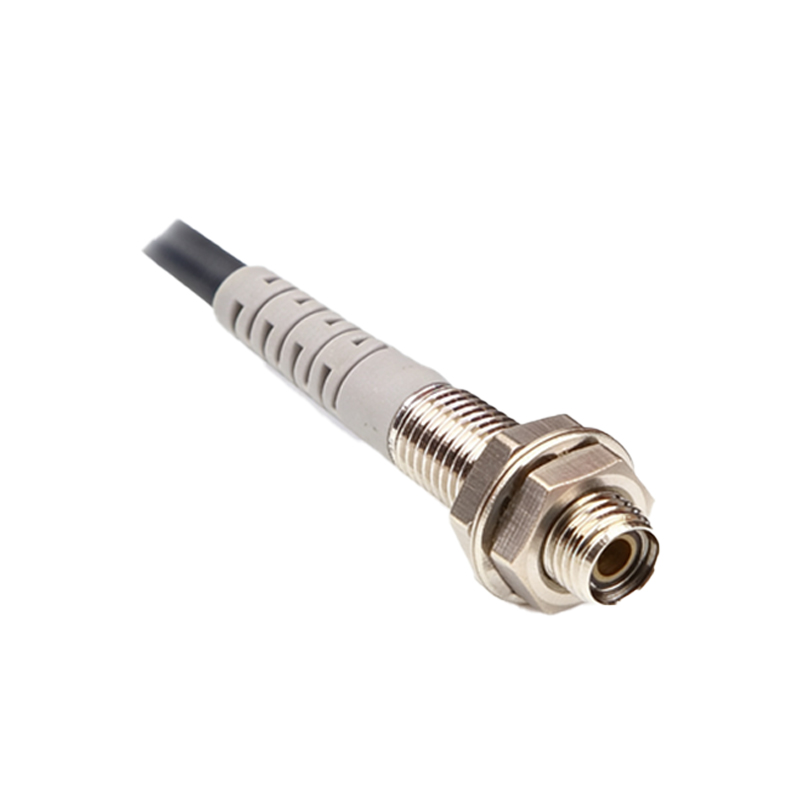
The journey of an analog signal begins at the receiver's photodetector. When photons strike the active area of the photodiode, they generate a small photocurrent. This current is inherently analog and varies linearly with the incident light intensity under normal operating conditions. This微弱 current is first fed into a transimpedance amplifier (TIA), a critical circuit that converts the current into a more manageable voltage while also providing a low-impedance output. The voltage at this stage is still a raw representation of the light level. It then typically passes through additional operational amplifier stages for further amplification, filtering, and conditioning. Filtering is essential to remove high-frequency noise from ambient light sources (like fluorescent lamp flicker) or electrical interference. The final conditioned analog output is usually standardized to a common industrial range, such as 0-10V DC or 4-20mA current loop, ensuring compatibility with programmable logic controllers (PLCs), data acquisition systems, and analog input modules.
Key Advantages of Analog Reception
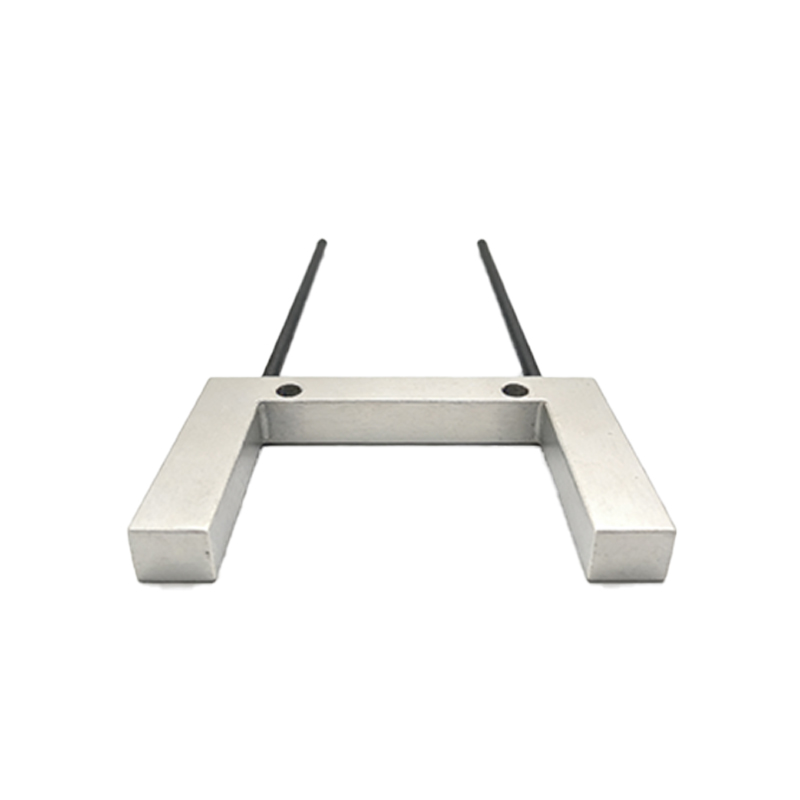
The primary advantage of analog signal reception is the ability to perform precise measurement and gradation, not just detection. This enables applications far beyond binary decisions. For instance, in web tension control, an analog sensor can measure the exact position of a material edge, allowing for real-time, proportional correction. In transparency inspection, it can differentiate between various levels of opacity or detect minute contaminants. In distance sensing (using the triangulation principle in certain models), it provides a continuous position feedback. This granular data allows for smoother process control, higher quality assurance through trend monitoring, and the ability to set multiple setpoints or warning zones within a single sensor's range. It reduces the need for multiple discrete sensors and offers a more elegant solution for complex monitoring tasks.
Challenges and Noise Considerations
Working with analog signals from photoelectric sensors introduces specific engineering challenges, with electrical noise being the foremost. The small signal levels at the photodetector stage are susceptible to electromagnetic interference (EMI) from motors, drives, and power lines. Cross-talk between the sensor's own emitter drive circuit and the receiver can also induce noise. To mitigate this, sensor design employs careful shielding, twisted-pair cabling for output signals, and robust filtering algorithms. Environmental factors pose another significant challenge. Dust, dirt, or condensation on the lens can attenuate the light signal, causing drift in the analog output. Changes in ambient temperature can affect the performance of both the LED emitter and the semiconductor receiver, leading to baseline drift. High-quality analog sensors incorporate temperature compensation circuits and often feature teach-in functions to auto-calibrate to the current environmental conditions.
Application Examples in Modern Industry
The applications for photoelectric sensors with analog output are vast and critical. In the packaging industry, they are used for fill-level control of liquids or powders in transparent containers, where the analog signal decreases proportionally as the level rises. In automotive assembly, they precisely measure the gap and flushness between body panels. Printers and copiers utilize them to monitor toner density or paper thickness. In pharmaceutical manufacturing, they verify the correct color or coating uniformity of tablets. Furthermore, in solar panel production, analog sensors measure the reflectance and surface texture of silicon wafers. Each application leverages the continuous, proportional nature of the analog signal to provide feedback for closed-loop control systems, ensuring consistent product quality and optimizing manufacturing processes.
Selecting and Implementing Analog Sensors
Successful implementation requires careful selection. Key parameters include the sensing range, required resolution, response time, and the type of analog output (voltage vs. current). Current loop outputs (4-20mA) are generally preferred for long-distance transmission due to their inherent noise immunity. The light source type (visible, red, laser) must be chosen based on the target material and environmental lighting. During installation, proper alignment is crucial, especially for reflective modes. The sensor should be mounted securely to minimize vibration effects. Electrical installation must follow best practices: using shielded cables, grounding the shield at the controller end only, and routing signal lines away from high-power cables. Regular maintenance, including lens cleaning and periodic recalibration using the teach function, is essential to maintain long-term accuracy and reliability of the analog measurement.