Introduction to Diffuse Reflection Photoelectric Sensors
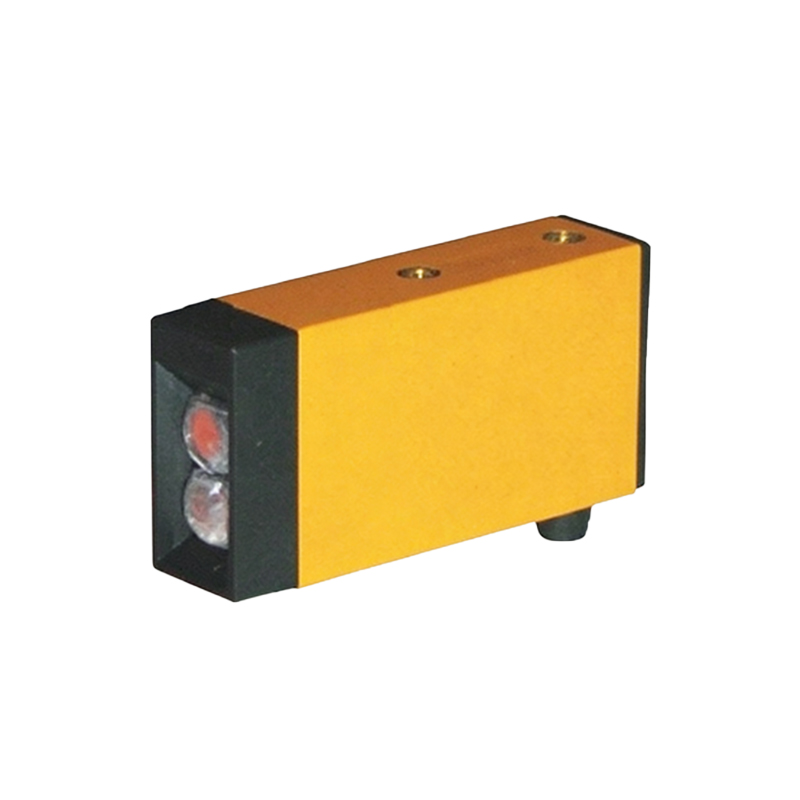
Diffuse reflection photoelectric sensors, often simply called diffuse sensors, are a fundamental component in modern industrial automation. Unlike through-beam or retro-reflective sensors, diffuse sensors house both the light emitter (typically an LED or laser diode) and the receiver within a single housing. They operate by emitting a beam of light—commonly visible red, infrared, or laser light—toward a target object. The sensor detects the object when a sufficient amount of this emitted light is scattered or "diffusely reflected" off the object's surface and back to the integrated receiver. This self-contained design eliminates the need for a separate reflector or receiver unit, simplifying installation and reducing system complexity. Their versatility makes them suitable for a vast array of applications, from detecting the presence of components on a conveyor belt to monitoring fill levels in transparent containers.
Operating Principle and Key Components
The core operating principle hinges on the physics of light reflection. When the emitted light strikes a surface, it can be reflected in a specular (mirror-like) or diffuse manner. Most industrial targets have matte or uneven surfaces, causing light to scatter in many directions. The sensor's receiver, a phototransistor or photodiode, is precisely aligned to capture a portion of this scattered light. The onboard electronics then evaluate the intensity of the received signal. A detection occurs when this intensity exceeds a pre-set threshold. Key internal components include the light source, the optical lens that focuses the beam, the photoelectric receiver, and a signal processing circuit. Advanced models incorporate background suppression technology, which uses triangulation to measure distance, allowing the sensor to ignore objects beyond a specific range and only detect targets within a defined "window."
Advantages in Industrial Settings
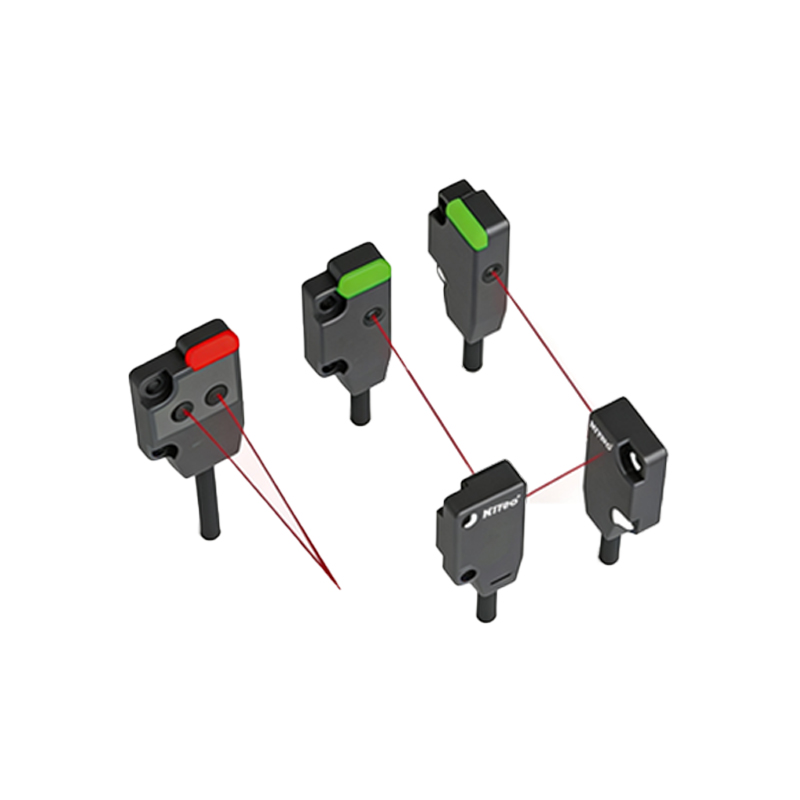
The popularity of diffuse reflection sensors in factories and production lines is driven by several compelling advantages. Their single-unit design drastically cuts down on wiring, mounting hardware, and alignment time compared to through-beam systems. This leads to lower installation costs and easier maintenance. They are highly effective for detecting objects at relatively short to medium ranges, typically from a few millimeters up to several meters, depending on the model and light source power. Modern diffuse sensors are remarkably robust, built with industrial-grade housings (often IP67 or higher) to withstand dust, moisture, vibrations, and electromagnetic interference. Furthermore, their ability to detect a wide variety of materials—including metal, plastic, wood, glass, and even liquids—provides exceptional application flexibility without requiring physical contact.
Critical Selection Criteria and Configuration
Selecting the correct diffuse sensor requires careful consideration of several application-specific parameters. The sensing range is paramount and must account for the target's size, color, and surface texture. Dark, matte, or absorbent surfaces reflect less light, effectively reducing the sensor's nominal range. For such challenging targets, sensors with a higher excess gain (a measure of surplus light energy) are necessary. Response time, or switching frequency, is critical for high-speed production lines to ensure no objects are missed. The type of light source is also a key choice: red LED light is common and cost-effective; infrared LED is invisible and less susceptible to ambient light interference; laser models offer a precise, focused beam for small object detection or exact positioning. Proper configuration involves adjusting the sensitivity potentiometer or using teach-in functions to set the optimal detection threshold for the specific target and environmental conditions.
Common Applications and Use Cases
Diffuse reflection photoelectric sensors are ubiquitous across nearly every manufacturing sector. In packaging and material handling, they are used for carton presence detection, bottle counting on fill lines, and verifying label application. Within automated assembly, they ensure components are correctly positioned before a robotic arm engages. A specialized application is the detection of transparent objects, such as glass or plastic bottles, where polarized diffuse sensors use a filter to eliminate glare from shiny surfaces. They are also employed in level detection, monitoring the presence or absence of material in a bin or silo. In robotics, compact diffuse sensors act as non-contact limit switches or part verification sensors. Their reliability and non-contact nature prevent product damage and reduce mechanical wear.
Installation Tips and Troubleshooting Guidelines
Successful installation begins with secure mounting to minimize vibration-induced false triggers. The sensor should be positioned so the beam is perpendicular to the target surface for maximum signal return. It is crucial to consider the environment: strong ambient light (e.g., sunlight or welding arcs) can saturate the receiver, necessitating sensors with modulated light signals or protective shrouds. Dusty or steamy environments may require more frequent lens cleaning. Common troubleshooting steps include verifying power supply connections, checking for obstructions in the beam path, and re-evaluating the sensitivity setting if the target material has changed. A gradual loss of sensing range often indicates lens contamination. Understanding the sensor's indicator lights (power, stability, and output status) is essential for rapid diagnostics and minimizing machine downtime.
Future Trends and Technological Developments
The evolution of diffuse reflection sensors is closely tied to advancements in Industry 4.0 and smart manufacturing. Future trends point toward increased miniaturization, allowing sensors to fit into tighter spaces on increasingly compact machinery. Enhanced connectivity through IO-Link is becoming standard, enabling digital parameter setting, remote monitoring, and predictive maintenance data collection directly from the sensor. There is also a growing integration of advanced functionalities, such as precise distance measurement (using time-of-flight or CMOS chip triangulation) directly within standard diffuse sensor housings, blurring the lines between simple presence detection and ranging sensors. Furthermore, improvements in LED and laser diode efficiency will continue to extend sensing ranges and improve performance on low-reflectivity targets, ensuring these sensors remain a cornerstone of industrial automation.