The Unsung Heroes of Your Pocket
Tucked away beneath the glossy screen and sleek chassis of your smartphone lies a suite of sophisticated photoelectric sensors, working silently to bridge the gap between the digital world and our physical reality. These components, which detect light, proximity, and various forms of radiation, are fundamental to the core functionalities we often take for granted. From adjusting screen brightness to enabling secure facial recognition, photoelectric sensors are the invisible workhorses that make modern smartphones intuitive and responsive. Their operation is based on the photoelectric effect, where light photons striking a material generate an electrical signal. This principle is ingeniously adapted into various sensor types, each serving a distinct and critical purpose within the mobile ecosystem, transforming light into actionable data that drives the user experience.
Core Types and Their Functions
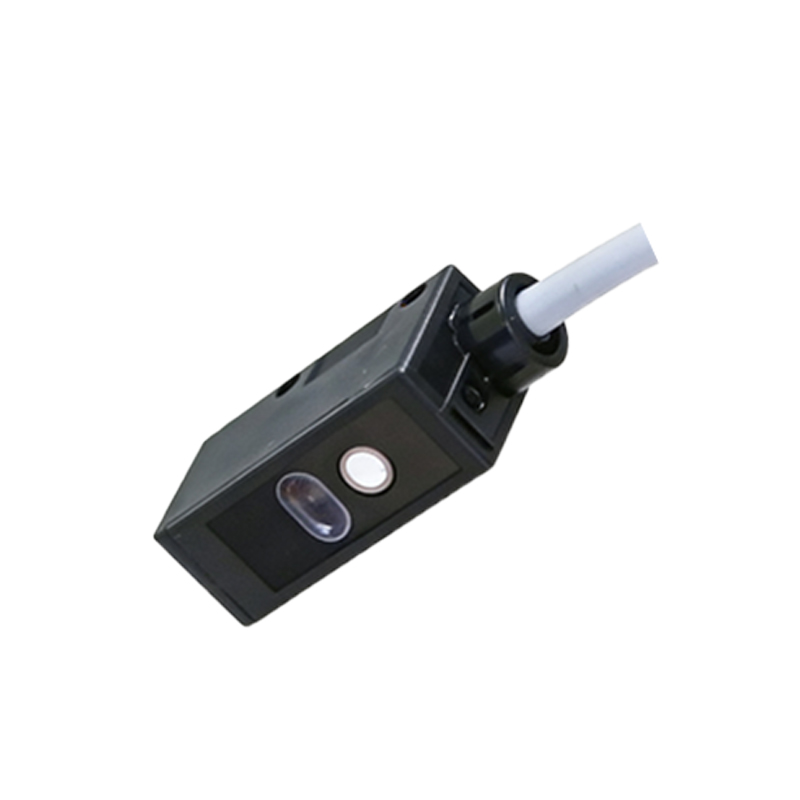
The ambient light sensor is perhaps the most ubiquitous. It continuously measures the intensity of light in the environment and communicates with the phone's processor to dynamically adjust the screen's brightness. This not only ensures optimal readability in both bright sunlight and dark rooms but also contributes significantly to battery conservation. The proximity sensor, typically combining an infrared (IR) LED and an IR light detector, plays a crucial role during phone calls. By emitting an invisible IR beam and measuring its reflection, it detects when the phone is held close to the user's ear and automatically turns off the display to prevent accidental touch inputs and save power.
Enabling Biometric Security and Imaging

A more advanced application is found in biometric systems. The flood illuminator and dot projector in modern 3D facial recognition systems (like Face ID) are complex arrays of photoelectric components. The flood illuminator bathes the user's face in invisible infrared light, while the dot projector casts a grid of over 30,000 IR dots onto it. An IR camera then reads this pattern, creating a precise depth map of the facial geometry. This depth data, processed by a secure neural engine, allows for highly accurate and secure authentication, showcasing the pinnacle of photoelectric sensor integration.
Beyond the Visible Spectrum
Photoelectric sensors in smartphones also extend human perception beyond visible light. Some devices incorporate UV index sensors, using photodiodes sensitive to ultraviolet wavelengths to provide users with real-time sun exposure risk assessments. While not yet standard, this demonstrates the potential for health and environmental monitoring. Furthermore, the primary camera's image sensor itself—a CMOS (Complementary Metal-Oxide-Semiconductor) sensor—is a vast array of millions of microscopic photodiodes (pixels). Each pixel converts incoming photons into electrons, with the accumulated charge defining the color and brightness of that point in the final digital image, making it the most complex photoelectric device in the phone.
Design, Integration, and Challenges
Integrating these sensors presents significant engineering challenges. They must be extremely miniaturized, energy-efficient, and reliably accurate. A major design hurdle is placement; sensors need an unobstructed "view" of the outside world, which conflicts with the desire for edge-to-edge displays. This has led to innovative solutions like under-display sensor placement, pinhole cutouts, and sophisticated notch designs. Engineers must also meticulously calibrate each sensor to account for manufacturing variances and prevent interference from internal components or external environmental noise, such as ambient infrared heat.
The Future Sensing Horizon
The future trajectory of photoelectric sensors in mobile technology points towards greater integration and new capabilities. We are moving towards systems where multiple sensing modalities (light, proximity, depth) are fused into single, multifunctional modules, saving space and power. Research into hyperspectral imaging sensors, which can capture data across a wide range of wavelengths, could enable phones to analyze material composition, detect food freshness, or monitor vital signs like blood oxygen saturation (SpO2) with greater accuracy. As these sensors become more sensitive and computationally assisted, the smartphone will evolve from a communication tool into a comprehensive personal environmental and health dashboard.
Conclusion: The Essential Interface
In conclusion, photoelectric sensors form an essential sensory interface for smartphones, allowing them to perceive and react to their surroundings. They are key enablers of convenience, security, and innovative features that define contemporary mobile interaction. From the simple automatic brightness adjustment to the complex secure facial unlock, these components demonstrate how fundamental physics—the photoelectric effect—is harnessed to create seamless and intelligent user experiences. As miniaturization and sensor fusion advance, their role will only become more profound, embedding deeper awareness and context into the devices we rely on every day.