Introduction to Proximity Switch Sensors
Proximity switch sensors, often simply called proximity sensors, are non-contact electronic devices designed to detect the presence or absence of an object within a specified range without any physical contact. These robust components are fundamental in modern industrial automation, providing reliable detection for machinery, conveyor systems, robotic arms, and safety interlocks. Their ability to operate in harsh environments—resistant to dirt, oil, and vibration—makes them indispensable in manufacturing, packaging, and automotive assembly lines. Unlike mechanical limit switches, proximity sensors have no moving parts that can wear out, leading to significantly longer service life and reduced maintenance costs. The core principle involves generating an electromagnetic field or a beam of radiation; any target entering this field causes a change in the signal, which is then converted into an electrical output.
Key Types and Operating Principles
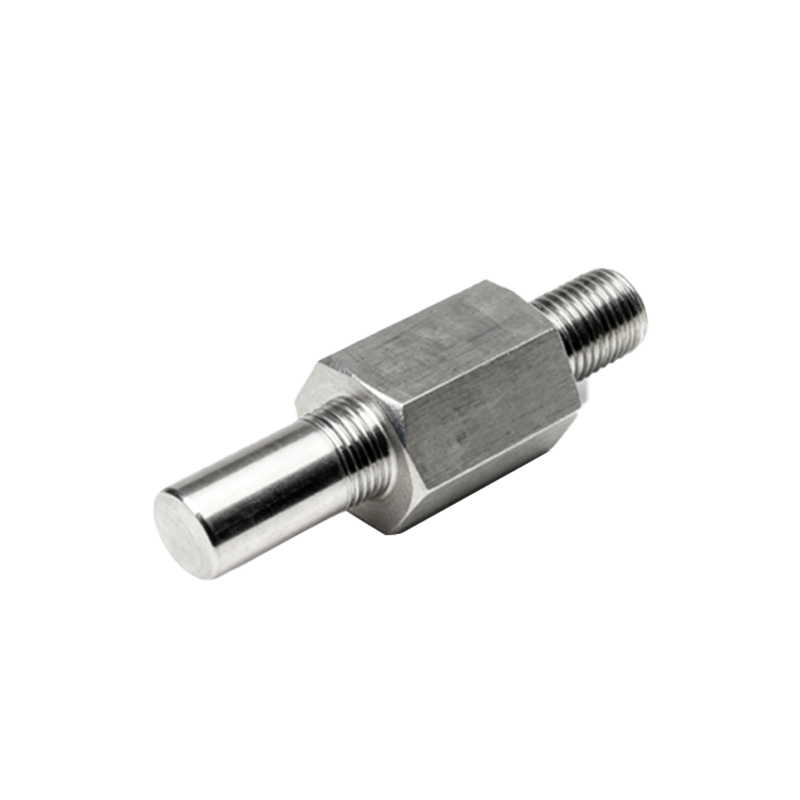
There are several primary types of proximity sensors, each suited for different materials and applications. Inductive proximity sensors are the most common in industrial settings. They generate an oscillating electromagnetic field and detect only metallic objects, typically ferrous metals like steel and iron. When a metal target enters this field, it induces eddy currents, causing a change in oscillation amplitude that triggers the sensor's output switch. Capacitive proximity sensors, on the other hand, can detect both metallic and non-metallic materials, including liquids, plastics, and wood. They function by measuring changes in capacitance between the sensor and the target. Ultrasonic sensors use sound waves, making them ideal for detecting objects of varying composition and for distance measurement. Finally, photoelectric sensors utilize a light beam (visible, infrared, or laser) and are excellent for long-range detection and sensing transparent objects.
Selecting the Right Practical Model
Choosing the correct practical proximity sensor requires careful consideration of several key parameters. First, define the sensing distance or range required for the application, always considering a safety factor as environmental conditions can affect nominal ranges. The target material is crucial; for metal detection, inductive sensors are standard, while capacitive or ultrasonic models are needed for other materials. The sensor's housing is another critical factor; cylindrical metal or plastic housings in various sizes (e.g., M8, M12, M18, M30) are typical, with specific ingress protection (IP) ratings like IP67 or IP69K for washdown or dusty environments. Output configuration is equally important: PNP (sourcing) or NPN (sinking) transistor outputs are standard for DC models, while some offer analog current (4-20mA) or voltage (0-10V) outputs for distance-proportional signals. Always verify the electrical specifications, including operating voltage, current consumption, and switching frequency.
Installation and Wiring Best Practices
Proper installation is paramount for reliable sensor operation. Mount the sensor securely, ensuring it is aligned correctly with the target's approach path. For inductive sensors, be mindful of the installation environment; mounting them flush in metal may reduce the effective sensing distance, while non-flush mounting allows for the full nominal range. Maintain adequate clearance between multiple sensors to prevent mutual interference, often referred to as "crosstalk." Wiring must be performed according to the manufacturer's diagram. Shielded cables are recommended for long cable runs or in electrically noisy environments to prevent electromagnetic interference (EMI). Always implement proper grounding techniques. For DC sensors, ensure the correct polarity is observed, and connect the load (e.g., a PLC input, relay, or indicator lamp) in series with the sensor's output and the power supply.
Common Applications and Troubleshooting Tips
Practical applications for proximity sensors are vast. They are used for object counting on production lines, determining the position of machine parts (like cylinder end-of-stroke detection), monitoring bin levels, and ensuring safety by verifying guard doors are closed. In automated warehousing, they detect pallet presence on conveyors. For troubleshooting, a systematic approach is best. If a sensor fails to detect, first check the power supply and LED indicator status. Verify the target is within the sensing range and is of the correct material. Inspect for physical damage, accumulated debris on the sensing face, or misalignment. Use a multimeter to check the output voltage when activated. Environmental factors like extreme temperature, strong magnetic fields, or chemical exposure can also cause failure, so ensure the sensor's specifications match the operating conditions.
Advantages and Future Trends
The advantages of using modern proximity switch sensors are clear: high reliability, fast response times, long operational life, and resistance to environmental challenges. They enable precise control and feedback in automated systems, increasing efficiency and productivity. Looking forward, trends point toward increased miniaturization, allowing sensors to fit into tighter spaces