Introduction to Photoelectric Sensor Technology
Photoelectric sensors are fundamental components in industrial automation, utilizing light beams to detect the presence, absence, or distance of objects. Their operation is based on the emission of light from a transmitter, which is then received by a photodetector. Any interruption or change in this light beam triggers an output signal. These sensors are prized for their non-contact detection, long sensing ranges, high speed, and reliability in harsh environments. The core technology enables precise detection of a vast array of materials, regardless of color, surface texture, or material composition, making them indispensable in modern manufacturing, packaging, material handling, and safety systems.
Through-Beam (Opposed) Sensors
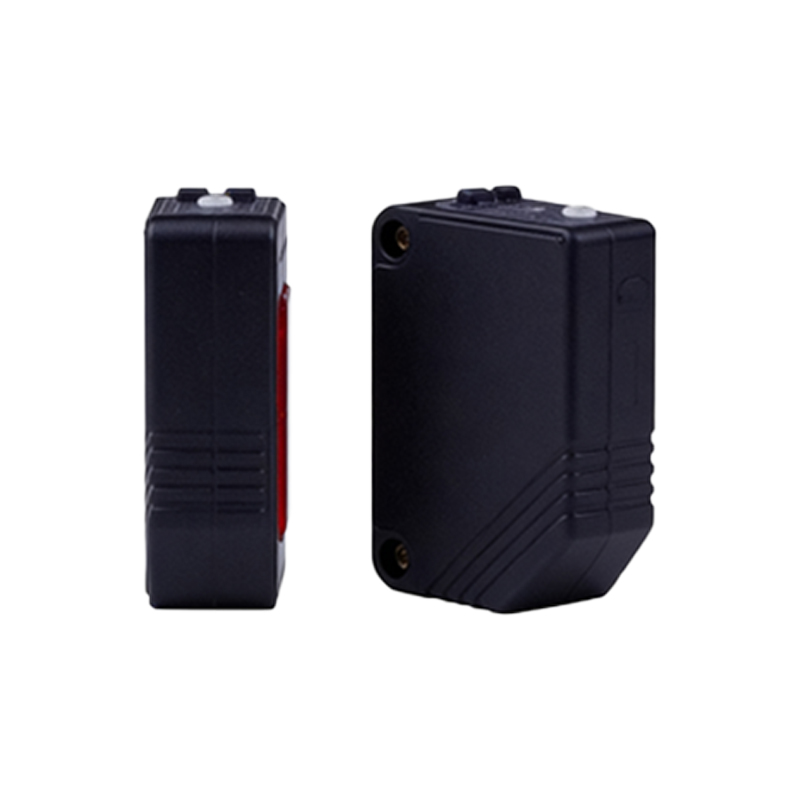
Through-beam sensors, also known as opposed-mode sensors, consist of two separate units: a transmitter and a receiver placed directly opposite each other. The transmitter emits a continuous beam of light to the receiver. Detection occurs when an object physically interrupts this beam. This model offers the longest possible sensing range among photoelectric types, often exceeding 100 meters in some specialized models. They provide extremely high reliability and are immune to object color, reflectivity, or surface finish. Common applications include detecting large objects on conveyors, monitoring break-in points on safety curtains, and counting objects on high-speed production lines. Their primary limitation is the need for precise alignment and installation of two separate components.
Retroreflective Sensors
Retroreflective sensors house both the transmitter and receiver in a single housing. They operate by projecting a light beam onto a specialized reflector, often a corner-cube or tape, which returns the light directly back to the receiver. An object is detected when it blocks this reflected beam. These models offer a good balance of range and convenience, with sensing distances typically up to 10-15 meters. They are easier to install and align than through-beam sensors since only one device and a reflector need to be mounted. However, they can be confused by highly reflective objects that might mimic the reflector. To combat this, many modern retroreflective sensors use polarized light filters, which allow them to distinguish the unique reflection from a genuine corner-cube reflector.
Diffuse (Proximity) Sensors
Diffuse sensors, or proximity-mode sensors, also integrate the emitter and receiver into one unit. They detect an object by measuring the light reflected directly off the object's surface. The sensor's emitted light hits the target, and a portion scatters back to the receiver. This design allows for a very compact, single-unit installation. Sensing ranges are shorter, typically from a few millimeters up to about 2 meters, depending on the target's reflectivity. A significant challenge with diffuse sensors is background suppression. Advanced models feature background suppression technology, which uses triangulation to only detect objects within a precise, defined distance, ignoring more distant surfaces. They are widely used for detecting objects on conveyors, in packaging machines, and for level detection.
Fiber Optic Photoelectric Sensors
Fiber optic photoelectric sensors separate the sensing head from the amplifier unit. The amplifier contains the light source and detector electronics, while flexible fiber optic cables transmit light to and from the sensing point. This model is ideal for applications in extremely confined spaces, high-temperature environments, or areas with high electromagnetic interference. The small sensing head can be threaded into tight locations, and the amplifier can be mounted remotely in a protected control cabinet. Fiber optic sensors are available in through-beam, retroreflective, and diffuse styles by using different cable tips. They are commonly used in semiconductor manufacturing, small parts assembly, and inside machinery where space is at a premium.
Specialized Sensor Models: Color Mark and Luminescence
Beyond basic presence detection, specialized photoelectric sensor models perform more complex tasks. Color mark sensors are designed to detect specific color contrasts or marks on packaging, labels, or products. They use a focused beam and sophisticated electronics to distinguish subtle differences in reflected light wavelength. Luminescence sensors detect materials that glow (luminesce) when exposed to ultraviolet (UV) light. They emit UV light and have a receiver tuned to the visible light emitted by the target material, such as invisible security marks, special adhesives, or certain plastics. These specialized models are critical in quality control, sorting, and verification processes in printing, pharmaceutical, and automotive industries.
Key Selection Criteria and Industry Trends
Selecting the correct photoelectric sensor model requires analyzing several factors: required sensing distance, object size and material, environmental conditions (dust, moisture, ambient light), required response speed, and output type (PNP/NPN, analog, IO-Link). The industry is trending towards miniaturization, increased intelligence, and enhanced connectivity. Modern sensors now commonly feature built-in diagnostics, adjustable parameters via pushbuttons or software, and industrial communication protocols like IO-Link. This connectivity allows for remote configuration, predictive maintenance data, and seamless integration into Industry 4.0 and smart factory ecosystems, providing greater operational visibility and efficiency.